Fashion design is more than creating attractive clothes. It combines creativity, technical knowledge, textiles, construction, cultural research, business thinking, and an understanding of how people interact with clothing. For students who want to build a successful career in fashion, learning from an experienced professor can make a major difference.
The top best 5 fashion design professors featured in this article represent different approaches to fashion education. Some combine professional industry experience with teaching, while others focus on research, menswear, sustainability, textiles, experimental design, or creative innovation.
Choosing a great fashion professor is important because professors can help students develop their personal design language, improve technical skills, understand the fashion industry, and build stronger portfolios. A good professor does not simply teach students how to follow trends. Instead, they encourage students to develop original ideas and turn those ideas into meaningful designs.
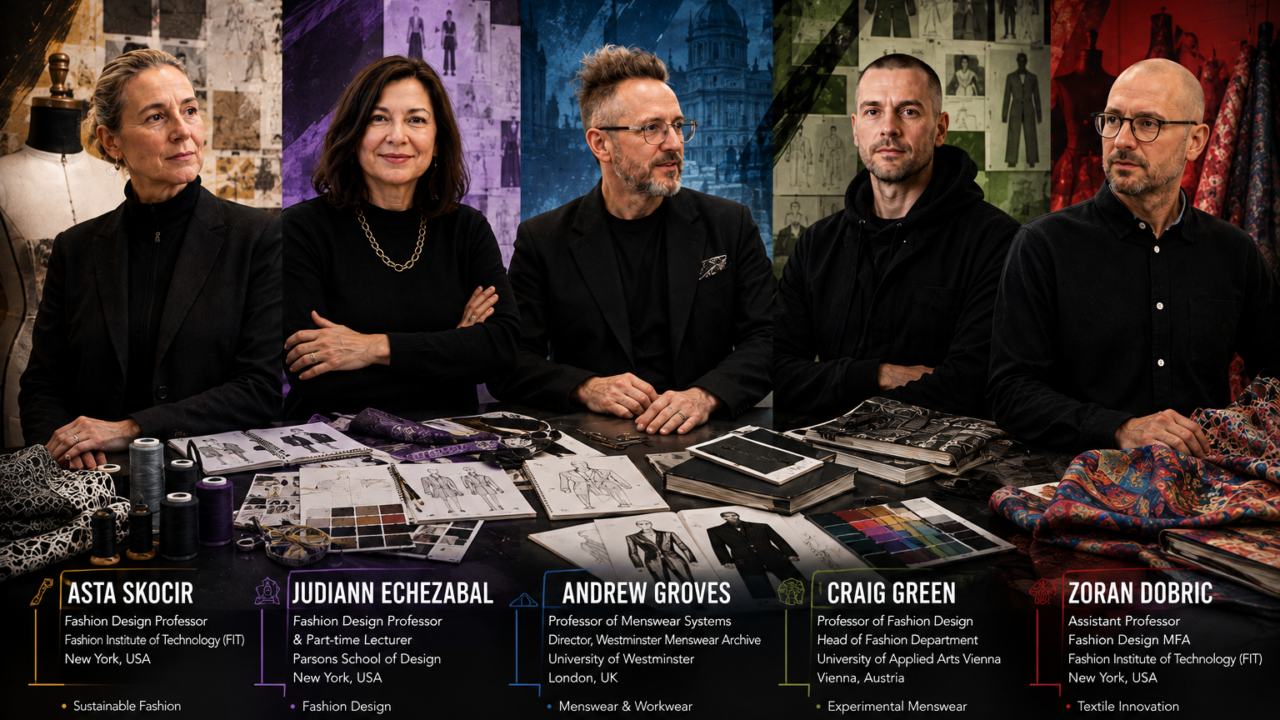
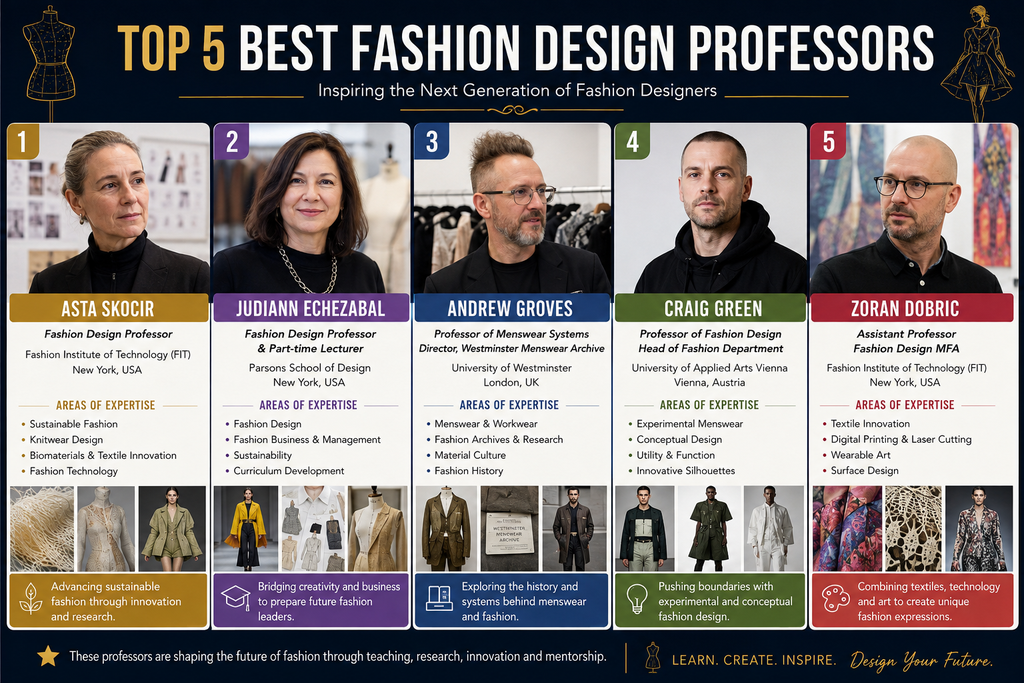
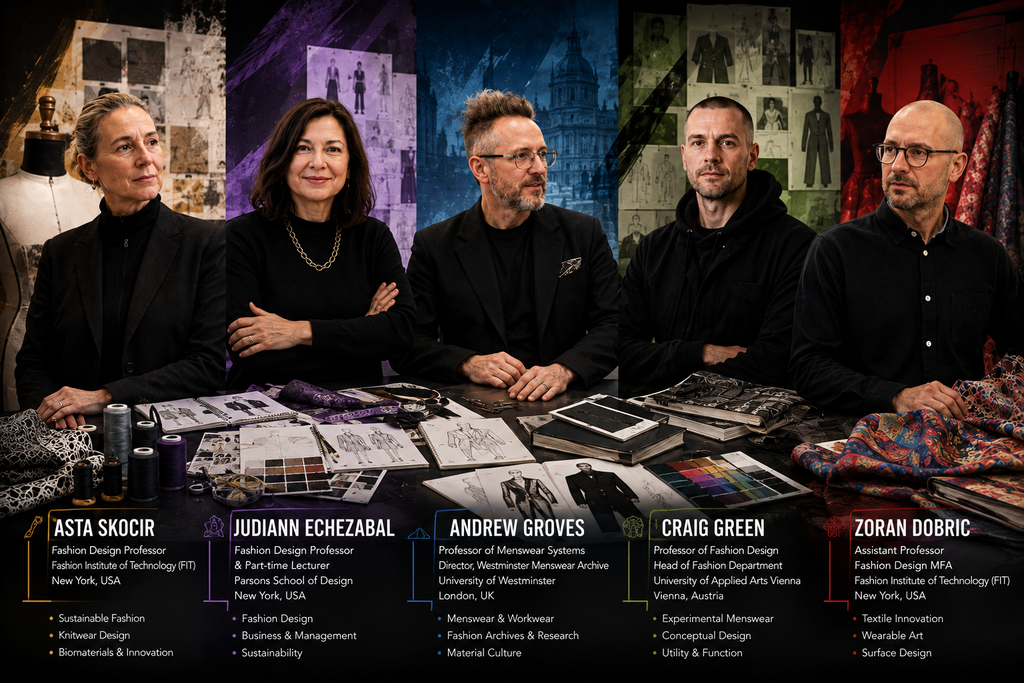
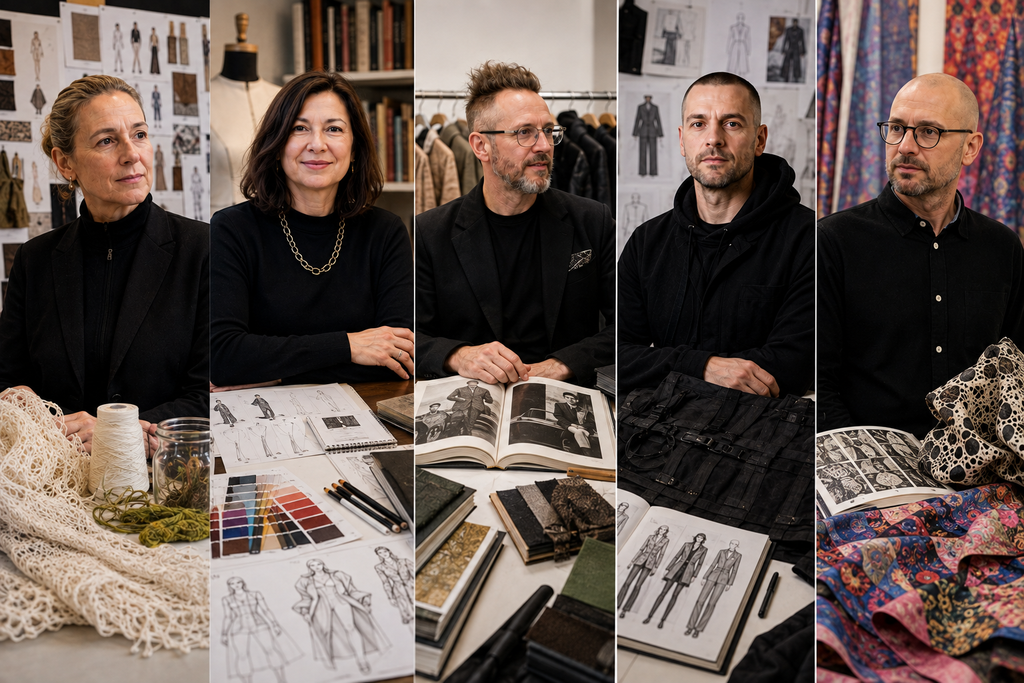
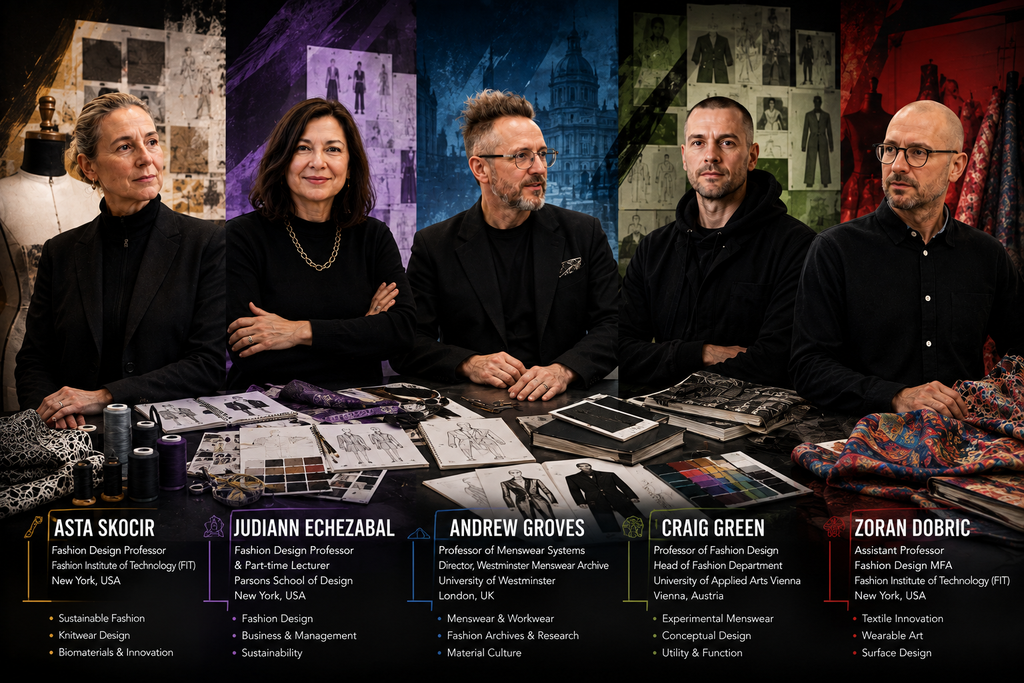
In this guide, we look at five notable fashion design professors and educators: Asta Skocir, Judiann Echezabal, Andrew Groves, Craig Green, and Zoran Dobric. Their backgrounds demonstrate how broad the field of fashion education has become.
Note: There is no single official worldwide ranking of the “best” fashion professors. This list is an editorial selection based on teaching roles, professional experience, research, design achievements, and contributions to fashion education.
What Makes a Great Fashion Design Professor?
Before looking at the five professors, it is useful to understand what makes a fashion educator stand out.
1. Strong Industry Experience
A professor with professional fashion experience can connect classroom lessons with real-world design challenges. Students can learn about deadlines, production, materials, clients, collections, presentations, and the commercial side of fashion.
2. Technical Knowledge
Fashion students need more than creativity. They need to understand patternmaking, garment construction, textiles, draping, illustration, digital tools, and production.
3. Creative Thinking
The best professors encourage students to question traditional ideas and experiment with silhouettes, materials, techniques, and concepts.
4. Research and Innovation
Modern fashion education increasingly involves sustainability, new materials, technology, cultural research, and alternative production methods.
5. Mentorship
Perhaps the most important quality is the ability to guide students individually. A strong professor can help a student identify their strengths and develop a distinctive creative identity.
Top 5 Best Fashion Design Professors
1. Asta Skocir – Fashion Design and Sustainable Innovation
Asta Skocir is a Fashion Design professor at the Fashion Institute of Technology (FIT) in New York. Her career combines fashion design, industry experience, teaching, and research into sustainable materials.
According to FIT, Skocir has worked as a design director and knitwear designer for leading fashion companies. She also co-founded KEEL.LABS, a biomaterials research group focused on bio-based textile alternatives for apparel. (Fashion Institute of Technology)
Why Asta Skocir Stands Out
One of the most interesting aspects of Skocir’s work is the connection between fashion and sustainability. Fashion students today need to understand that the future of clothing is not only about appearance. Materials, waste, environmental impact, and responsible production are becoming increasingly important.
Her work with biomaterials demonstrates how fashion education can move beyond traditional fabrics and explore new possibilities.
For students interested in:
Sustainable fashion
Knitwear design
Textile innovation
Biomaterials
Fashion technology
Environmentally responsible design
Skocir’s background provides an excellent example of how fashion design can connect with scientific and material innovation.
What Students Can Learn
Students can learn the importance of combining creativity with research. A designer does not always need to begin with a traditional fabric. Exploring new materials can lead to completely different design possibilities.
Her career also demonstrates why fashion students should understand both creative design and the technical properties of materials.
2. Judiann Echezabal – Fashion Design, Education and Sustainability
Judiann Echezabal is a Fashion Design Professor and part-time lecturer at Parsons School of Design. She has more than three decades of experience as a fashion designer and more than a decade of experience teaching at the college level. (The New School)
Her teaching experience includes Parsons, Pratt Institute, Columbia University, and Long Island University.
Professional and Academic Experience
Echezabal holds a BFA in Fashion Design with a minor in manufacturing and an MBA in business management. This combination is particularly useful because fashion students need both creative and business knowledge.
She has also worked on curriculum development and created educational programs designed to connect fashion design and marketing.
Her research interests include sustainability, demonstrating her interest in the changing needs of the fashion industry. (The New School)
Why She Is a Strong Fashion Educator
Fashion students often focus heavily on designing clothes while overlooking business and communication. Echezabal’s background demonstrates how design education can include management, manufacturing, marketing, and sustainability.
This broader perspective can help students understand that becoming a fashion professional involves much more than sketching garments.
Lessons for Fashion Students
Students can take several important lessons from her career:
Learn both creativity and business.
Understand how clothing is manufactured.
Develop communication skills.
Think about sustainability.
Build educational and professional networks.
Create designs with a clear purpose.
For students who want to start their own fashion brand, a professor with both fashion and business experience can be particularly valuable.
3. Andrew Groves – Menswear Systems and Fashion Research
Professor Andrew Groves is Professor of Menswear Systems at the University of Westminster in the United Kingdom and Director of the Westminster Menswear Archive. (University of Westminster)
His work provides a different perspective from traditional fashion education. Instead of looking at menswear simply as clothing, Groves examines it as a system involving materials, production, institutions, identity, behavior, and culture.
Westminster Menswear Archive
Groves founded the Westminster Menswear Archive in 2016. The archive contains more than 3,000 garments and supports academic research, exhibitions, postgraduate teaching, and industry collaboration. (University of Westminster)
This makes his teaching particularly interesting for students who want to understand the history and systems behind fashion.
Why Andrew Groves Stands Out
Fashion students can sometimes focus heavily on current trends. Studying historical garments can help them understand why certain designs became influential and how clothing reflects society.
Groves’ approach encourages students to investigate garments as evidence. They can examine construction, materials, provenance, and wear and then use that information in contemporary design and research. (University of Westminster)
Areas of Expertise
His work includes:
Menswear
Workwear
Uniforms
Sportswear
Technical clothing
Subcultural dress
Fashion archives
Material culture
Fashion research
He has also mentored designers who have gone on to establish influential labels, while former students have worked at major fashion houses including Louis Vuitton, Balenciaga, Burberry, and Maison Margiela. (University of Westminster)
What Students Can Learn
The biggest lesson from Groves’ approach is that fashion is connected to history and society.
A successful designer should ask questions such as:
4. Craig Green – Experimental Menswear and Creative Design
Craig Green is a British fashion designer who became Professor of Fashion Design and head of the Fashion Department at the University of Applied Arts Vienna in 2023. The university announced his appointment in August 2023, with his professorship beginning on October 1 of that year. (Die Angewandte)
Green is known internationally for his distinctive approach to menswear and experimental fashion.
From Designer to Professor
Green established his namesake label after completing his studies at Central Saint Martins. His professional career has made him one of the notable contemporary voices in menswear.
His move into education is significant because students can learn from someone who has developed a recognizable design language within the international fashion industry.
Why Craig Green Is Important for Fashion Students
Green’s work shows that fashion does not have to be limited to conventional ideas of beauty or commercial clothing.
His designs frequently explore:
Sculpture
Utility
Identity
Protection
Movement
Function
Experimental silhouettes
Conceptual menswear
This approach can encourage students to think about clothing as an artistic and cultural form rather than simply a product.
Creative Thinking
One of the most important lessons students can learn from Green is the value of developing a personal visual language.
Instead of copying popular trends, emerging designers should experiment and discover what makes their work recognizable.
For students interested in conceptual fashion, menswear, experimental silhouettes, and artistic design, Green’s career offers an inspiring example.
5. Zoran Dobric – Textile Innovation and Fashion Design
Zoran Dobric is an Assistant Professor in the Fashion Design MFA program at the Fashion Institute of Technology (FIT). FIT’s current faculty information lists him as an Assistant Professor in Fashion Design MFA. (Fashion Institute of Technology)
Dobric is a fashion designer with more than two decades of international teaching experience. His professional work has been presented in London, Paris, New York, Toronto, Kuwait, and other locations. (Fashion Institute of Technology)
International Design Experience
Dobric’s education includes studies at Instituto Marangoni in Milan and the London College of Fashion. He earned an MA from the London College of Fashion, University of the Arts London. (Fashion Institute of Technology)
His design work has received awards, including the Shaftesbury Award for Emerging Designers and the International Textiles and Apparel Association Best International Wearable Art Award. (Fashion Institute of Technology)
Focus on Textiles
Textiles are an important part of Dobric’s creative practice. His work combines digital printing and laser cutting with techniques such as screen printing, embroidery, shibori pleating, batik, and hand painting. (Zdobric)
This makes his approach particularly useful for students interested in textile experimentation.
Mentoring the Next Generation
Dobric’s teaching experience is also demonstrated through his involvement in student design competitions. In 2026, FIT reported that he mentored students participating in the Roc Nation x FIT Student Design Competition. (FIT Newsroom)
This illustrates the practical role a professor can play in helping students turn ideas into finished fashion projects.
Comparing the Top 5 Fashion Design Professors
Professor
Main Strength
Best For
Asta Skocir
Sustainable materials and fashion innovation
Sustainable fashion students
Judiann Echezabal
Fashion design, education and business
Future designers and entrepreneurs
Andrew Groves
Menswear research and archives
Menswear and fashion research
Craig Green
Experimental and conceptual fashion
Creative and avant-garde designers
Zoran Dobric
Textiles and wearable art
Textile and experimental fashion students
How to Choose the Best Fashion Design Professor for You
The best professor for one student may not be the best professor for another. Your choice should depend on your career goals.
If You Love Sustainable Fashion
Look for professors whose work focuses on sustainable materials, responsible production, recycling, biomaterials, and environmental innovation.
Asta Skocir is a strong example because her work connects fashion design with bio-based textile research. (Fashion Institute of Technology)
If You Want to Start a Fashion Business
Choose an educator who understands fashion, manufacturing, marketing, and business.
Judiann Echezabal’s combination of fashion design and business education provides an example of this broader approach. (The New School)
If You Are Interested in Menswear
Andrew Groves and Craig Green offer two very different perspectives.
Groves focuses heavily on menswear systems, history, archives, and research, while Green represents a more experimental and conceptual design approach. (University of Westminster)
If You Love Textiles
Zoran Dobric is particularly interesting for students who want to explore surface design, textile manipulation, wearable art, and experimental techniques. (Fashion Institute of Technology)
Why Fashion Professors Matter in 2026
The fashion industry is changing quickly. Designers now need to understand digital design, sustainability, artificial intelligence, new materials, social media, branding, cultural research, and traditional garment-making skills.
Because of these changes, fashion professors have become more than classroom teachers. They can act as mentors, researchers, critics, designers, and industry connections.
Students can also learn an important lesson from the careers of these five educators: there is no single route to success in fashion.
Some designers become researchers. Others build brands. Some focus on textiles, while others specialize in menswear, sustainability, technology, or education.
The most successful fashion students are usually those who combine creative curiosity with practical skills.
Skills Every Fashion Design Student Should Develop
Regardless of which professor or school you choose, several skills can help you build a successful career.
Fashion Illustration
Learn to communicate ideas clearly through sketches, technical drawings, and digital illustrations.
Pattern Making
Understanding patterns helps transform creative concepts into garments that can actually be produced.
Garment Construction
Sewing, draping, fitting, and construction remain important foundations of fashion design.
Textile Knowledge
Learn about natural fibers, synthetic materials, innovative textiles, fabric behavior, sustainability, and surface treatments.
Research
Study fashion history, art, architecture, culture, technology, and society to develop stronger concepts.
Digital Design
Become comfortable with modern fashion design software and digital workflows.
Portfolio Development
Your portfolio should communicate your creative identity, design process, research, experimentation, and finished work.
Communication
Designers need to explain their ideas to professors, clients, manufacturers, buyers, creative directors, and audiences.
Conclusion
Finding the top best 5 fashion design professors can be useful for students who want inspiration and guidance while planning their fashion education. Asta Skocir, Judiann Echezabal, Andrew Groves, Craig Green, and Zoran Dobric demonstrate five different approaches to fashion teaching and professional practice.
Skocir represents the growing relationship between fashion and sustainable material innovation. Echezabal combines design education with business and sustainability. Groves brings menswear research, archives, and cultural analysis into fashion education. Green demonstrates the importance of experimentation and personal creative identity, while Dobric highlights textiles, wearable art, and international fashion education.
Ultimately, the best fashion professor for you depends on your goals. Before selecting a school or mentor, research their teaching philosophy, professional experience, research interests, student work, and areas of specialization.
Fashion is a constantly changing industry, but one principle remains important: learn the fundamentals, experiment with new ideas, and develop your own design identity.
FAQs About the Top Best 5 Fashion Design Professors
1. Who are the top 5 best fashion design professors?
This editorial list includes Asta Skocir, Judiann Echezabal, Andrew Groves, Craig Green, and Zoran Dobric. They were selected because of their combination of fashion teaching, professional experience, research, design practice, and contribution to fashion education.
2. Who is the best fashion design professor for sustainable fashion?
Asta Skocir is an excellent example for students interested in sustainable fashion because her work includes bio-based textile research and sustainable fashion innovation. (Fashion Institute of Technology)
3. Who is a good professor for menswear design?
Andrew Groves is particularly relevant to menswear students. He is Professor of Menswear Systems at the University of Westminster and Director of the Westminster Menswear Archive. (University of Westminster)
4. Who is Craig Green?
Craig Green is a British fashion designer and Professor of Fashion Design at the University of Applied Arts Vienna. He became head of the university’s Fashion Department in 2023. (Die Angewandte)
5. What does Zoran Dobric teach?
Zoran Dobric is an Assistant Professor in FIT’s Fashion Design MFA program. His background includes fashion design, textile innovation, wearable art, and more than two decades of international teaching experience. (Fashion Institute of Technology)
6. Why should I learn from a fashion design professor?
A good professor can help you improve technical skills, develop creative concepts, understand fashion history, build a professional portfolio, receive constructive feedback, and develop your own design identity.
7. What qualifications are important for a fashion design professor?
Important qualities include professional fashion experience, academic knowledge, technical design skills, research experience, teaching ability, industry connections, and a strong understanding of contemporary fashion.
8. Is fashion design a good career?
Fashion design can be a rewarding career for people who enjoy creativity, clothing, textiles, art, research, and problem-solving. However, success usually requires strong technical skills, persistence, a good portfolio, industry knowledge, and continuous learning.
9. What should I include in a fashion design portfolio?
A strong portfolio can include research, mood boards, sketches, textile experiments, technical drawings, patterns, garment development, photographs of finished pieces, and explanations of your creative process.
10. Can a fashion professor help me become a professional designer?
Yes. Professors can provide feedback, mentorship, industry knowledge, portfolio guidance, research opportunities, and connections to competitions or professional opportunities. However, students should also develop their own skills and professional networks.