The 1950s were one of the most influential decades in men’s fashion. After the simplicity and restrictions of the 1940s, menswear entered a period of confidence, structure, and individuality. Men’s clothing became more polished, while youth culture introduced rebellious styles that would influence fashion for decades.
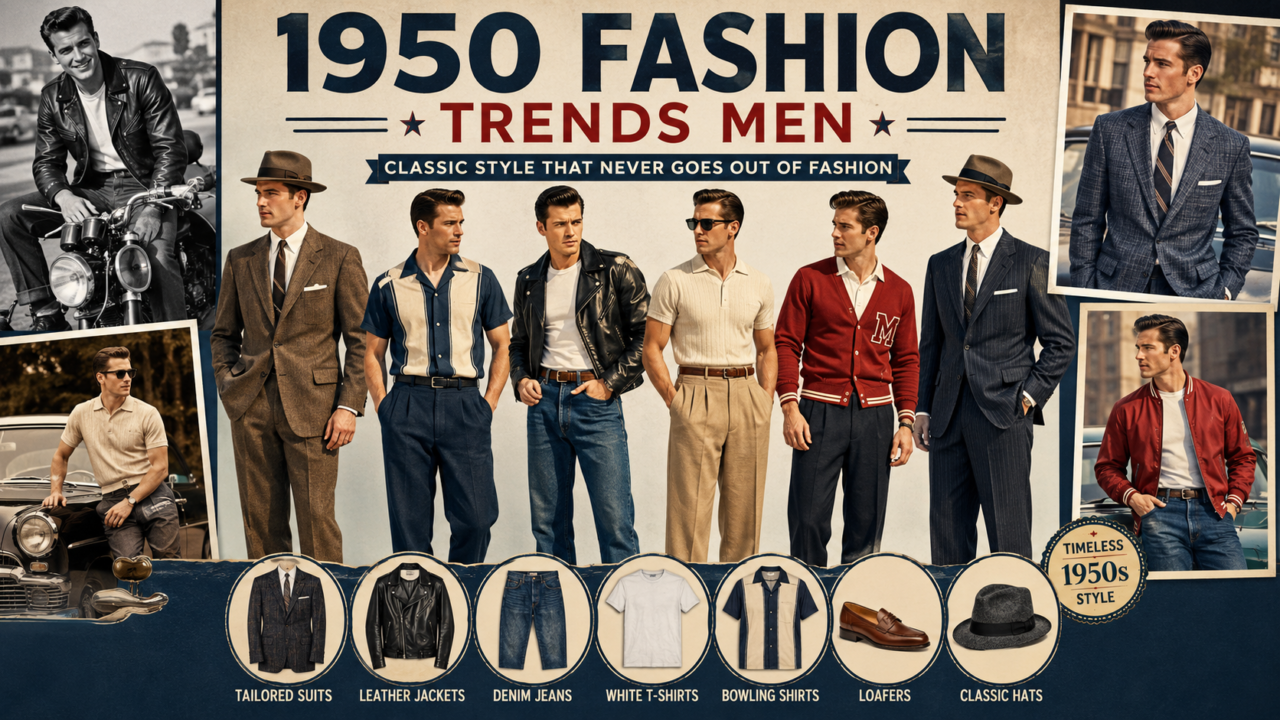
Today, 1950 fashion trends men continue to inspire designers, celebrities, vintage enthusiasts, and everyday wardrobes. Tailored trousers, fitted shirts, leather jackets, denim jeans, bowling shirts, loafers, and classic suits remain recognizable elements of 1950s style.
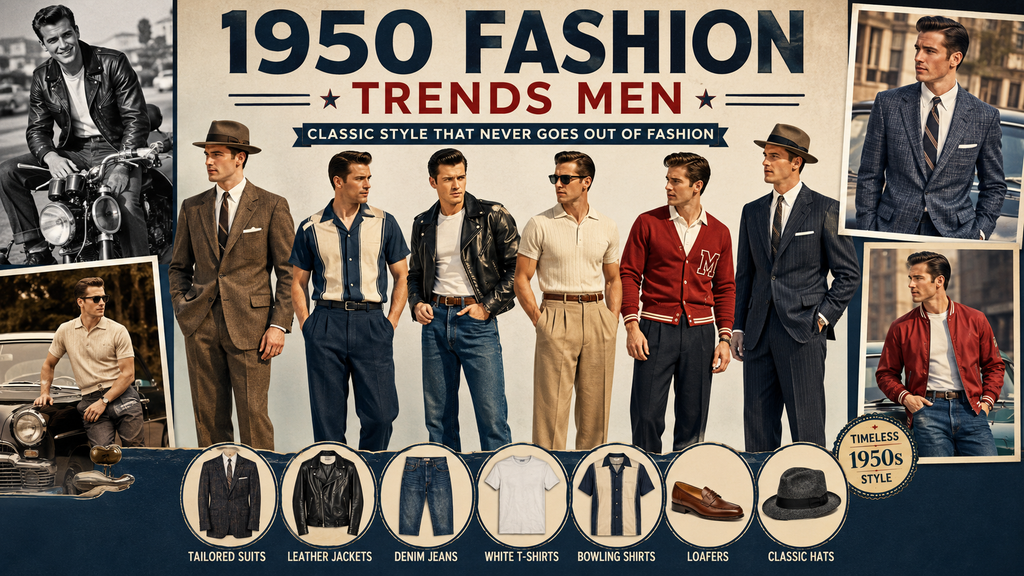
The decade offered more than one look. Businessmen often wore sharp suits and polished shoes, while younger men experimented with denim, T-shirts, leather jackets, and casual sportswear. Hollywood stars also played a major role in popularizing certain styles.
Whether you are looking for vintage outfit inspiration or simply want to understand why 1950s menswear remains popular, this guide explores the key trends that defined the era.
What Defined 1950s Men’s Fashion?
Men’s fashion during the 1950s was characterized by clean silhouettes, strong tailoring, quality fabrics, and carefully coordinated accessories.
For many men, dressing well was an important part of daily life. Suits were common in professional settings, and even casual clothing was often neat and structured.
At the same time, young men were beginning to challenge traditional fashion rules. The rise of rock and roll, Hollywood celebrities, motorcycles, and American youth culture created new ideas about masculinity and personal style.
Some of the most recognizable characteristics included:
- Structured suits
- High-waisted trousers
- White and patterned shirts
- Leather jackets
- Denim jeans
- Plain T-shirts
- Polo shirts
- Loafers and leather shoes
- Letterman and varsity jackets
- Classic hats
- Slicked-back hairstyles
- Narrow ties
- Pocket squares and belts
These trends created a balance between formal elegance and rebellious youth fashion.
1. Classic 1950s Men’s Suits
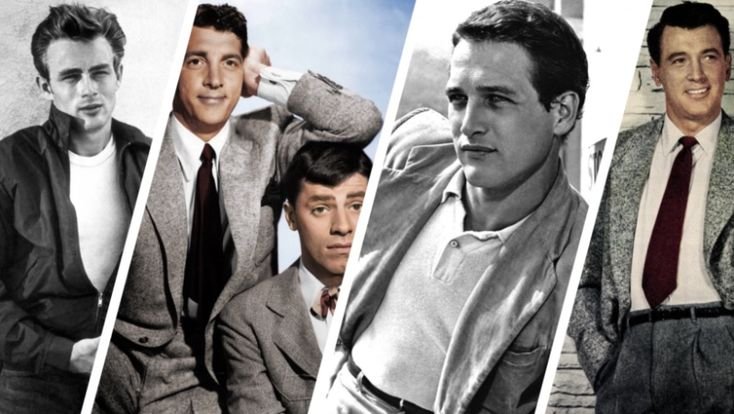
The traditional suit was one of the most important parts of men’s fashion in the 1950s. Men commonly wore suits for business, social events, weddings, and other formal occasions.
1950s suits generally featured structured shoulders, tailored jackets, high-waisted trousers, and coordinated accessories. Colors such as gray, navy, brown, and charcoal were popular choices.
The typical formal outfit could include a two-piece suit, dress shirt, tie, leather shoes, and a hat.
One important feature of the era was the attention to fit. Clothing was expected to look polished rather than oversized or excessively casual.
How to Wear the 1950s Suit Today
Modern men can recreate the look without wearing a completely vintage outfit. Try a well-fitted navy or charcoal suit with:
- A white dress shirt
- A narrow tie
- Leather Oxford shoes
- A simple pocket square
- A classic leather belt
This creates a timeless appearance while keeping the outfit suitable for modern occasions.
2. Leather Jackets and the Rebel Look
Perhaps no single item represents the rebellious side of 1950s men’s fashion better than the leather jacket.
Leather jackets became closely associated with motorcycle culture, rock and roll, and young Hollywood stars. The black leather jacket, in particular, became a symbol of independence and confidence.
A classic 1950s-inspired outfit might combine a leather jacket with a plain white T-shirt, cuffed denim jeans, and leather boots.
This combination remains popular because it is simple and masculine without requiring many accessories.
Why Leather Jackets Remain Popular
The appeal of the leather jacket is its versatility. It can be worn with jeans for a casual outfit or combined with trousers for a more refined interpretation.
For a modern vintage look, choose a simple black or dark-brown leather jacket with minimal decoration.
3. Denim Jeans Become a Fashion Statement
Denim jeans were already used as practical workwear before the 1950s, but during this decade they became increasingly connected with youth culture.
Young men wore denim as a symbol of casual independence. The combination of jeans, a T-shirt, and a leather jacket became one of the decade’s most recognizable looks.
Cuffed jeans were particularly associated with the vintage aesthetic. Straight or slightly tapered cuts generally work best when recreating the look today.
Modern 1950s Denim Outfit
A simple outfit can include:
Straight-leg jeans + white T-shirt + leather jacket + boots
You can also replace the leather jacket with a casual shirt or varsity jacket for a softer interpretation.
4. White T-Shirts and Simple Casualwear
The plain white T-shirt became an important element of casual men’s fashion during the 1950s.
Unlike today’s world of graphic T-shirts and oversized designs, the classic vintage version was usually simple, clean, and fitted.
The white T-shirt worked particularly well with denim jeans and leather jackets.
This minimalist combination is one reason 1950s fashion remains easy to recreate. You do not need an entire vintage wardrobe. A few basic pieces can create the right visual direction.
5. Bowling Shirts and Patterned Shirts
Casual shirts became more expressive during the 1950s. Bowling shirts, camp-collar shirts, checked shirts, and colorful patterns helped introduce personality into men’s wardrobes.
Bowling shirts were especially associated with recreational and social culture. They often featured contrasting collars, decorative details, and embroidered names or designs.
For a modern interpretation, try a short-sleeve camp-collar shirt with tailored trousers or straight-leg jeans.
This style works particularly well during spring and summer.
6. High-Waisted Trousers
High-waisted trousers were an important feature of mid-century menswear.
Compared with many modern low- or mid-rise trousers, 1950s trousers generally sat higher on the waist and created a longer visual line through the legs.
Pleats were also common, providing additional room and creating a more relaxed silhouette.
To recreate this style today, choose high-rise trousers with a straight or slightly tapered leg. Pair them with a tucked-in shirt and leather shoes.
7. Polo Shirts and Sport-Inspired Fashion
The 1950s also saw growing interest in sportswear and leisure clothing. Polo shirts offered men an alternative to formal dress shirts while still maintaining a neat appearance.
Polo shirts could be paired with trousers, chinos, or casual shorts. They were especially useful for weekends, outdoor activities, and informal social occasions.
Today, a fitted polo shirt with pleated trousers and loafers can create an elegant 1950s-inspired outfit without looking like a costume.
8. Loafers and Classic Leather Shoes
Shoes were an important finishing touch in 1950s men’s fashion.
Popular styles included leather dress shoes, loafers, brogues, and other polished footwear. Shoes were generally expected to look clean and well maintained.
For formal outfits, dark leather dress shoes worked well with suits. For casual looks, loafers could be paired with trousers or more relaxed clothing.
Modern men can easily incorporate these styles into everyday wardrobes because classic leather footwear never completely goes out of fashion.
9. Hats Were an Important Accessory
Hats were much more common in the 1950s than they are today.
Depending on the occasion, men might wear fedoras, trilby-style hats, flat caps, or other traditional headwear.
A hat could complete a formal suit and provide a distinctive finishing detail.
However, wearing a vintage hat today can make an outfit appear more theatrical if the rest of the clothing is also heavily retro. For a subtle approach, use one vintage-inspired element rather than recreating the entire look.
10. 1950s Men’s Hairstyles
Fashion in the 1950s was not limited to clothing. Hairstyles were an essential part of a man’s overall appearance.
Popular hairstyles often emphasized volume, shine, and carefully controlled shapes. Pompadours, side parts, slicked-back styles, and other structured hairstyles became strongly associated with the decade.
Hair products were commonly used to create a polished appearance.
Modern 1950s Hairstyle
For a contemporary version, ask your barber for a classic side part or a modern pompadour. Use a moderate amount of styling product rather than creating an extremely glossy vintage finish.
A neat haircut combined with a simple outfit can provide a subtle 1950s influence.
11. Rock and Roll Changed Men’s Fashion
One of the biggest cultural influences on 1950s men’s fashion was the rise of rock and roll.
Young musicians and performers created new style icons. Instead of copying the formal appearance of older generations, teenagers and young adults increasingly embraced casual and rebellious clothing.
Leather jackets, denim jeans, T-shirts, boots, and styled hair became associated with youth culture.
This was an important turning point because fashion became a way for younger generations to express identity.
12. Hollywood’s Influence on Men’s Style
Hollywood stars had a major impact on men’s fashion during the 1950s.
Actors became style icons, and audiences often wanted to recreate the clothing, hairstyles, and attitudes they saw on screen.
The decade produced several memorable masculine fashion images: the sophisticated gentleman in a tailored suit, the rebellious man in a leather jacket, and the relaxed young man wearing denim.
These different images helped make 1950s men’s fashion diverse rather than limited to one specific style.
13. 1950s Accessories for Men
Accessories helped complete the polished appearance of the decade.
Some of the most recognizable accessories included:
- Narrow ties
- Pocket squares
- Leather belts
- Wristwatches
- Sunglasses
- Hats
- Cufflinks
- Tie clips
- Leather gloves
The key was coordination. Accessories were usually selected to complement the clothing rather than overwhelm it.
A modern outfit can capture the same feeling with a classic watch, leather belt, simple sunglasses, and a narrow tie.
14. Greaser Fashion
The “greaser” style became one of the most recognizable youth fashion movements of the decade.
The look typically included a leather jacket, white T-shirt, blue jeans, boots, and carefully styled hair.
The style was influenced by motorcycle culture, rock and roll, and youth rebellion.
Today, greaser fashion remains popular in vintage communities, themed events, music culture, and fashion photography.
You can recreate the style with modern clothing while keeping the key elements simple.
15. Ivy League and Preppy Fashion
Not every young man in the 1950s dressed like a rebel. Another influential style was the clean-cut Ivy League look.
This style emphasized polished but relaxed clothing, including:
- Button-down shirts
- Chinos
- Knit sweaters
- Polo shirts
- Loafers
- Sport coats
- Pleated trousers
Ivy-inspired fashion remains influential today and is often associated with classic American menswear.
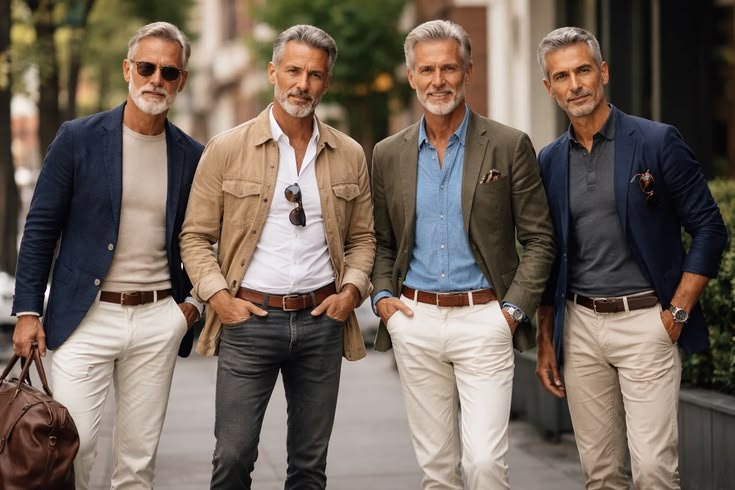
How to Create a 1950s-Inspired Outfit Today
You do not need to buy a complete vintage wardrobe to embrace 1950s fashion.
Instead, choose a few key pieces and combine them with contemporary basics.
Casual Outfit
Try:
White T-shirt + straight-leg jeans + leather jacket + boots
This is one of the easiest ways to capture the rebellious side of the decade.
Smart-Casual Outfit
Try:
Polo shirt + high-waisted trousers + loafers + leather belt
This creates a cleaner and more sophisticated mid-century appearance.
Formal Outfit
Try:
Navy suit + white shirt + narrow tie + pocket square + leather Oxford shoes
This works well for weddings, formal events, or vintage-inspired photography.
Why Are 1950s Fashion Trends Still Popular?
The continued popularity of 1950s men’s fashion comes from its timeless foundations.
Many of the decade’s best pieces are simple, durable, and easy to combine. A white T-shirt, leather jacket, straight-leg jeans, loafers, and tailored trousers can all fit naturally into a modern wardrobe.
The decade also created strong visual identities. The sophisticated businessman, rebellious biker, rock-and-roll star, and clean-cut college student all represented different sides of men’s style.
Modern fashion often revisits these ideas because they remain recognizable and adaptable.
1950 Fashion Trends Men: Key Pieces to Remember
If you want to build a 1950s-inspired men’s wardrobe, start with these essentials:
- Tailored suit – Choose navy, gray, or brown.
- White T-shirt – Keep it simple and fitted.
- Straight-leg denim – A classic foundation for casual outfits.
- Leather jacket – Ideal for a rebellious vintage look.
- Polo shirt – Great for smart-casual outfits.
- High-waisted trousers – Creates an authentic mid-century silhouette.
- Leather loafers – Works with both casual and formal clothing.
- Classic hairstyle – Try a side part or pompadour.
- Simple accessories – Add a watch, belt, sunglasses, or tie.
- Quality fabrics – Look for materials and construction that feel substantial.
Conclusion
The 1950 fashion trends men embraced during the 1950s created some of the most recognizable looks in modern menswear. From tailored suits and high-waisted trousers to leather jackets, denim jeans, white T-shirts, loafers, and classic hairstyles, the decade offered styles that remain relevant today.
What makes 1950s fashion especially interesting is its variety. Men could choose between sophisticated formalwear, clean Ivy League clothing, relaxed sportswear, or rebellious rock-and-roll styles.
The best way to use these trends today is not necessarily to copy the decade from head to toe. Instead, select a few signature pieces and combine them with modern clothing. A leather jacket with straight-leg jeans or high-waisted trousers with a polo shirt can create a stylish vintage influence without looking outdated.
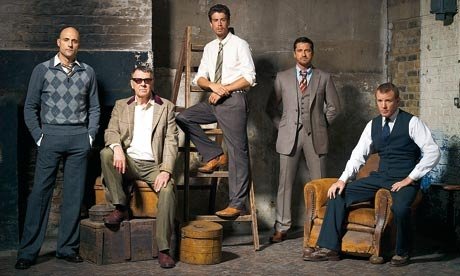
Ultimately, 1950s men’s fashion demonstrates that good style does not always depend on following the newest trend. Well-fitted clothing, quality materials, classic accessories, and confidence can remain fashionable for generations.
Frequently Asked Questions (FAQs)
1. What were the biggest 1950 fashion trends for men?
Some of the biggest trends included tailored suits, high-waisted trousers, denim jeans, leather jackets, white T-shirts, polo shirts, loafers, classic hats, and structured hairstyles.
2. What did men commonly wear in the 1950s?
Men commonly wore suits for formal and professional occasions. For casual situations, they might wear trousers, button-down shirts, polo shirts, jeans, T-shirts, leather jackets, or sportswear.
3. Were jeans popular in the 1950s?
Yes. Jeans became increasingly popular among young men during the decade, particularly as youth culture, rock and roll, and Hollywood influenced fashion.
4. What shoes did men wear in the 1950s?
Common choices included leather dress shoes, loafers, brogues, boots, and other polished leather footwear.
5. What was the most popular 1950s men’s hairstyle?
Side parts, slicked-back styles, pompadours, and other structured hairstyles were strongly associated with men’s grooming during the decade.
6. How can I dress like a 1950s man today?
Start with a few classic pieces such as straight-leg jeans, a white T-shirt, leather jacket, polo shirt, high-waisted trousers, loafers, or a tailored suit. Combining vintage-inspired pieces with modern clothing creates a more natural look.
7. What is greaser fashion?
Greaser fashion was a rebellious youth style associated with leather jackets, white T-shirts, denim jeans, boots, and carefully styled hair. It was strongly influenced by rock and roll and motorcycle culture.
8. Is 1950s men’s fashion still fashionable today?
Yes. Many 1950s-inspired pieces remain popular because they are simple, recognizable, and versatile. Modern designers and menswear enthusiasts frequently reinterpret mid-century styles.
9. What colors were popular in 1950s men’s clothing?
Navy, gray, brown, black, white, beige, and muted tones were common in men’s clothing, while casual shirts could feature stronger colors and patterns.
10. Can I wear 1950s fashion without looking old-fashioned?
Absolutely. The easiest approach is to combine one or two vintage-inspired elements with modern clothing. For example, wear a leather jacket and straight-leg jeans with a contemporary T-shirt and modern boots.