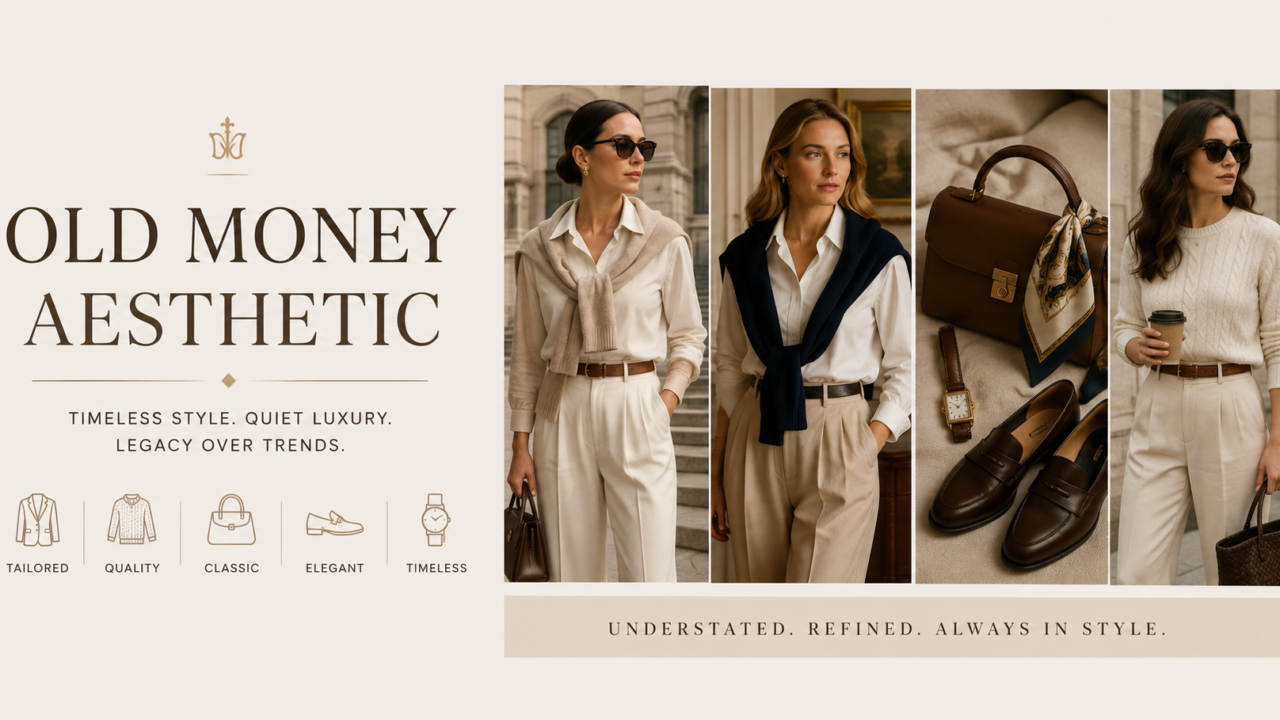
The old money aesthetic has become one of the most recognizable style movements in contemporary fashion but its appeal is not really about looking wealthy. The strongest interpretation is about dressing with restraint: classic tailoring quality-looking fabrics subtle colors polished shoes and pieces that do not depend on passing trends.
For someone building a sophisticated wardrobe this aesthetic offers a practical advantage. Many of its essential pieces can be worn repeatedly and combined in different ways making them useful beyond a single season. A navy blazer crisp button-down loafers wool trousers or simple knit sweater can move from casual settings to more polished occasions with relatively little effort.
The dominant search intent for old money aesthetic is informational with a commercial component. People typically want to understand what the style means identify the clothing associated with it learn how to create the look and discover affordable ways to build a wardrobe that feels refined.
What Is the Old Money Aesthetic?
The old money aesthetic is a style approach inspired by traditional luxury heritage clothing classic tailoring collegiate dressing country-club influences and understated elegance. Its visual language favors clothes that look established rather than attention-seeking.
The style is commonly associated with:
- Tailored blazers
- Oxford shirts
- Polo shirts
- Knit sweaters
- Pleated or straight-leg trousers
- Chinos
- Loafers
- Leather belts
- Wool coats
- Trench coats
- Minimal jewelry
- Structured bags
- Classic watches
- Neutral and muted colors
The modern version seen on social media is partly an interpretation of these traditional influences. It should not be confused with a literal representation of wealth family background or social class.
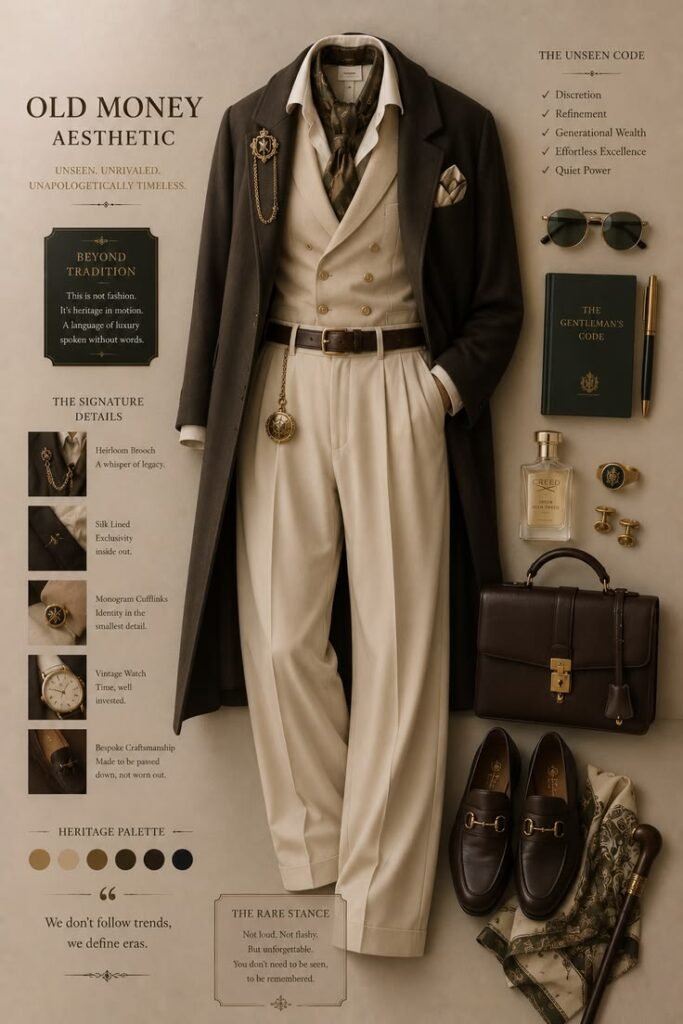
The Main Idea Behind the Style
The easiest way to understand the aesthetic is to think about restraint and consistency.
A traditional-looking outfit does not need ten noticeable details. A well-cut navy blazer cream knit tailored trousers and leather loafers can communicate more sophistication than an outfit overloaded with logos accessories or competing trends.
The quality of the styling comes from proportion fabric color coordination and condition.
The History and Influences Behind Old Money Style
Although the phrase “old money aesthetic” is relatively modern in popular fashion culture many of its visual elements have much older roots.
British and European Heritage Clothing
British tailoring country clothing knitwear riding-inspired pieces wool outerwear and traditional shirting have influenced the aesthetic considerably.
Tweed jackets cable-knit sweaters loafers structured coats and tailored trousers all contribute to the heritage character associated with the style.
American Ivy Style
American collegiate and Ivy-inspired clothing also plays a major role. Button-down shirts chinos penny loafers varsity-inspired knitwear navy blazers and relaxed tailoring helped establish a vocabulary of polished but wearable clothing.
The important point is that the aesthetic is not tied to one country. Contemporary interpretations borrow from British American Italian French and broader European approaches to classic dressing.
Modern Social Media Interpretation
Platforms such as Pinterest Instagram and TikTok have transformed these traditional influences into a highly visual trend. Current interpretations often combine vintage-inspired tailoring with modern proportions and minimalist styling.
This has made the aesthetic accessible to people who may have no connection to the social environments historically associated with its clothing.
The Essential Clothing Pieces
A convincing wardrobe starts with versatile garments rather than novelty pieces.
The Navy Blazer
Few items are as useful as a navy blazer. It works with gray trousers beige chinos dark denim white shirts knit polos and even simple T-shirts.
For a traditional appearance select a relatively structured blazer with restrained detailing. For modern casual wear a softer construction can look more natural.
Fit should be the first consideration. The shoulder line should sit correctly the jacket should button without excessive pulling and the sleeves should leave enough room for comfortable movement.
Crisp Button-Down Shirts
White and light-blue shirts are foundational pieces. Oxford cloth works particularly well for casual and smart-casual outfits because it has more texture than a very formal dress shirt.
A button-down shirt can be worn tucked into trousers beneath a sweater under a blazer or casually with dark denim.
Knit Sweaters
Crewneck V-neck quarter-zip cardigan and cable-knit sweaters all fit naturally within the aesthetic.
Cream navy gray brown forest green and burgundy are particularly versatile. A fine merino sweater works for a cleaner appearance while heavier cable knits add traditional character.
Polo Shirts
The polo is one of the easiest ways to make the style feel less formal.
A knitted polo with tailored trousers can look sophisticated without resembling officewear. A cotton polo with chinos and loafers creates a classic warm-weather combination.
Tailored Trousers
Trousers establish much of the silhouette. Straight-leg and relaxed-tailored cuts tend to look timeless while extremely tight trousers can make the outfit feel dated or overly styled.
Gray navy beige taupe and brown provide a strong foundation.
Pleats can add traditional character particularly when balanced with a clean-fitting shirt or knitwear.
Colors That Work Best
Color is central to the old money aesthetic because the style generally avoids visual noise.
Classic Neutral Colors
The most useful shades include:
- Navy
- Cream
- White
- Beige
- Camel
- Taupe
- Gray
- Brown
- Black
- Olive
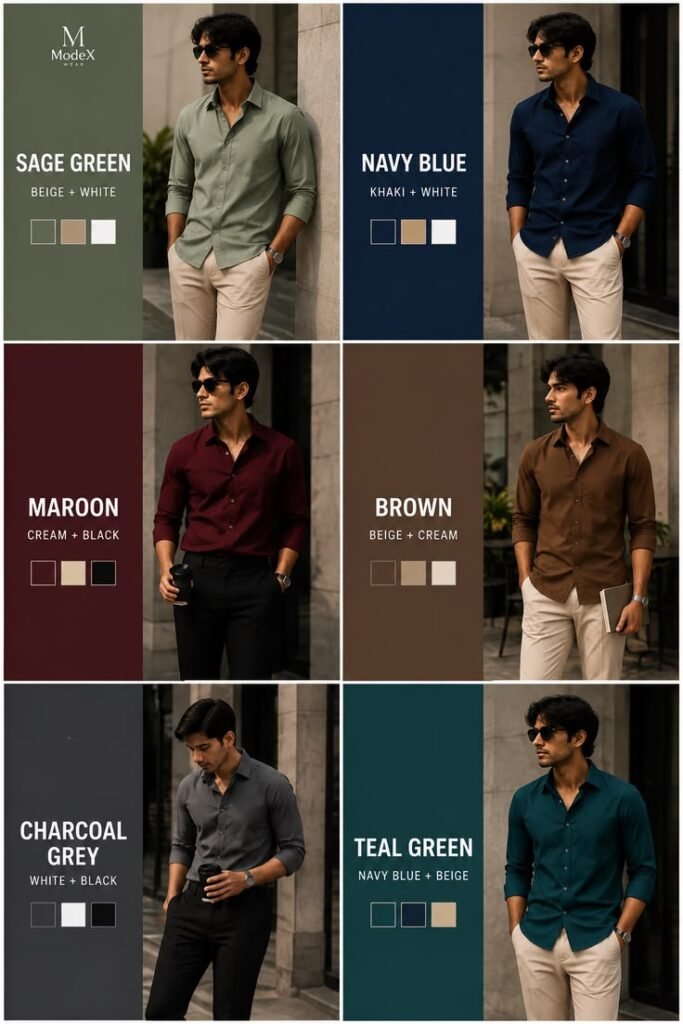
These colors make it easier to create coordinated outfits without relying on prominent patterns.
Rich Accent Colors
The wardrobe can still have personality. Burgundy forest green deep blue chocolate brown muted red and subtle mustard can add depth.
A useful styling principle is to keep the majority of an outfit neutral and introduce one stronger shade.
For example a cream sweater gray trousers brown loafers and burgundy scarf create contrast without becoming visually loud.
Fabrics and Materials
Fabric choice can make simple clothing appear significantly more sophisticated.
Wool and Wool Blends
Wool works particularly well for trousers blazers coats and winter accessories. It provides structure and texture while remaining versatile.
Cotton
Cotton is essential for shirts polos chinos and casual trousers. Oxford cotton is especially useful because its texture gives basic shirts more visual character.
Linen
Linen is ideal for warm climates and summer dressing. Its natural texture fits the relaxed side of the aesthetic although wrinkles are part of the material’s character and should not be confused with poor garment care.
Leather and Suede
Leather loafers belts boots and structured bags provide visual polish. Suede can create a softer more relaxed interpretation particularly during transitional seasons.
Shoes That Define the Aesthetic
Footwear often determines whether an outfit looks genuinely polished.
Loafers
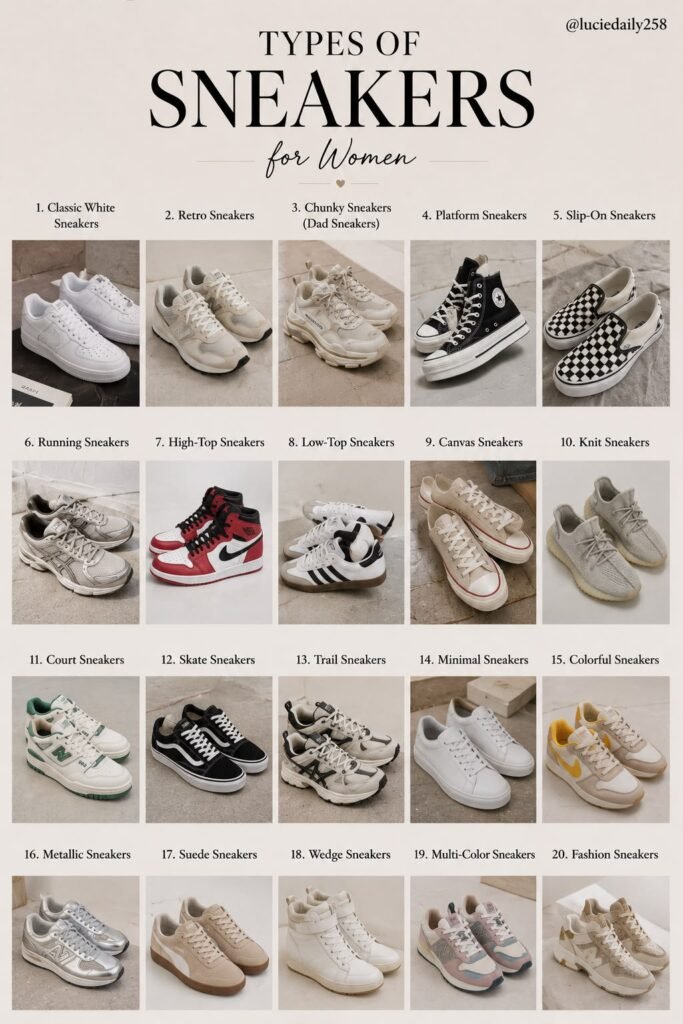
Penny loafers horsebit-inspired loafers and other classic slip-on styles are among the strongest choices.
Brown leather works particularly well with beige cream navy and gray clothing. Black provides a sharper appearance.
Boat Shoes
Boat shoes have traditional preppy associations and can work well in casual summer outfits. They should be styled naturally rather than treated as a costume element.
Leather Boots
Chelsea boots simple ankle boots and classic riding-inspired silhouettes can work during colder months.
Choose clean designs with limited decorative hardware to preserve the understated character of the outfit.
Minimal Sneakers
The old money aesthetic does not require formal footwear at all times. A clean simple sneaker can work with chinos dark denim knitwear and relaxed tailoring.
The condition of the footwear matters. Clean shoes make even relatively affordable outfits appear more considered.
Accessories Should Stay Understated
Accessories are useful when they complete the outfit rather than dominate it.
Watches
A classic watch with a restrained dial can complement tailored clothing knitwear and casual outfits. The objective is balance rather than obvious status signaling.
Leather Belts
A simple leather belt is practical and visually effective. Coordinating the belt with the general tone of the shoes creates a more cohesive appearance.
Sunglasses
Classic frames tend to fit better than highly futuristic or oversized designs. Tortoiseshell dark brown black and muted metal frames can work across many outfits.
Bags
Structured totes leather shoulder bags briefcases and understated crossbody bags can fit the aesthetic depending on the occasion.
The most important factors are shape condition and proportion.
How to Build an Old Money Aesthetic Wardrobe on a Budget
The aesthetic is surprisingly accessible when shopping strategically.
Start With Versatile Basics
Instead of buying an entire wardrobe at once build around pieces that can be worn repeatedly.
A practical starting point could include:
- Navy blazer
- White Oxford shirt
- Light-blue shirt
- Cream sweater
- Gray trousers
- Beige chinos
- Dark straight-leg jeans
- Brown loafers
- Leather belt
- Wool or structured coat
These items can create numerous combinations without requiring a large wardrobe.
Buy Secondhand
Secondhand stores and resale platforms can be particularly useful for this style because classic garments often remain wearable for many years.
Look for natural-fiber sweaters quality blazers wool coats leather shoes and well-made trousers. Examine the garment carefully for fabric damage stretched collars worn cuffs and alterations before purchasing.
Prioritize Fit
A modestly priced garment that fits correctly can look significantly better than a premium item with poor proportions.
If possible tailoring trousers sleeves or jacket proportions can make a substantial difference.
Do Not Confuse Price With Quality
A high price does not automatically mean an item will look refined. The visual impression depends on construction fabric fit styling and condition.
This is especially useful for people building the aesthetic on a limited budget.
Old Money Aesthetic Outfit Ideas
The best outfits are usually simple enough to wear in real life.
Everyday Casual
Cream crewneck sweater + dark straight-leg jeans + brown loafers + leather belt
This combination creates a relaxed interpretation without looking overly formal.
Smart Casual
Navy blazer + white Oxford shirt + beige trousers + brown loafers
This is one of the most dependable formulas because the colors naturally complement one another.
Summer
Light-blue linen shirt + cream trousers + brown loafers + classic sunglasses
Lighter fabrics and colors keep the outfit comfortable while preserving the polished character.
Fall
Cable-knit sweater + Oxford shirt + tailored trousers + suede loafers + structured coat
Layering adds texture and makes the traditional influences more visible.
Winter
Wool overcoat + turtleneck + pleated trousers + leather boots
A long structured coat immediately strengthens the silhouette and works particularly well with understated winter colors.
How Men Can Wear the Old Money Aesthetic
For men’s fashion the aesthetic often centers on relaxed tailoring traditional shirting knitwear and classic footwear.
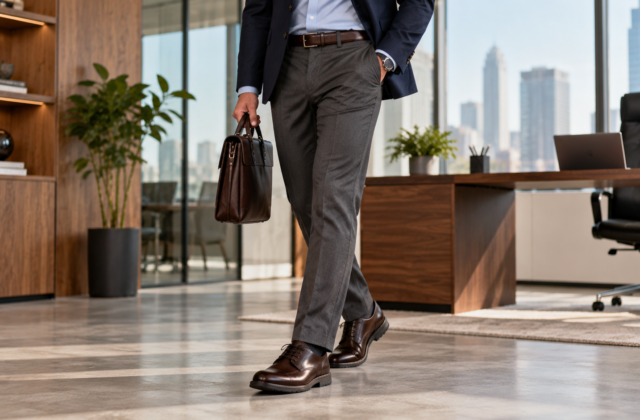
A navy blazer with gray trousers is a reliable foundation. Chinos Oxford shirts knit polos loafers and simple leather accessories can then provide variation.
Modern proportions can keep the look current. Trousers do not need to be extremely slim and jackets do not need to resemble formal business suits. A slightly relaxed silhouette often looks more contemporary while retaining the classic foundation.
How Women Can Wear the Old Money Aesthetic
Women’s interpretations can range from traditionally preppy to modern minimalist.
Useful pieces include tailored trousers midi skirts button-down shirts knit cardigans structured blazers loafers ballet flats trench coats silk-inspired scarves and simple dresses.
A cream cardigan with tailored trousers and loafers can create an understated daytime look. For a more structured outfit combine a fitted shirt midi skirt blazer and simple leather accessories.
The same principles apply: quality-looking fabrics balanced proportions restrained colors and thoughtful styling.
Old Money Aesthetic for Different Climates
A wardrobe should make sense for the environment where it is worn.
Warm Climates
People living in places with hot summers can emphasize linen shirts lightweight cotton breathable trousers loafers relaxed tailoring and unlined jackets.
Trying to recreate heavy European winter styling in a hot climate can look uncomfortable and impractical. The aesthetic should adapt to local weather.
Cold Climates
Cold-weather wardrobes offer more opportunities for layering. Wool coats scarves knitwear turtlenecks leather boots and textured trousers can create depth without relying on bright colors.
Transitional Weather
Spring and fall are ideal for lightweight jackets knit polos Oxford shirts loafers suede shoes and layered tailoring.
Common Mistakes to Avoid
The aesthetic becomes less convincing when it is treated like a costume.
Wearing Too Many Traditional Pieces at Once
A blazer cable-knit sweater loafers pleated trousers scarf cap and riding-style jacket in one outfit can feel overly deliberate.
Choose a few defining elements and let the rehttps://stylebydesign.site/
Overusing Logos
Large branding generally conflicts with the understated character of the style. Minimal or invisible branding is usually easier to integrate.
Choosing Poorly Fitting Clothes
Oversized clothing can work but it needs intentional proportions. Randomly oversized pieces can make the outfit look unfinished.
Ignoring Grooming and Maintenance
Wrinkled shirts dirty shoes damaged knitwear and worn leather accessories can undermine an otherwise sophisticated outfit.
Clothing maintenance is not a minor detail. It is part of the visual language of refined dressing.
Copying Social Media Outfits Exactly
Pinterest and TikTok can provide useful inspiration but an outfit should make sense for your body climate culture workplace and lifestyle.
The most successful interpretation is one that looks natural on the https://joannarahier.com/
Frequently Asked Questions
What exactly is the old money aesthetic?
The old money aesthetic is a fashion style inspired by classic tailoring heritage clothing preppy influences understated luxury and timeless wardrobe pieces. It typically uses neutral colors quality-looking fabrics classic footwear and minimal branding.
Is the old money aesthetic expensive?
It can be expensive but it does not have to be. Secondhand shopping affordable basics careful color coordination and good tailoring can create the visual effect without requiring designer labels.
What colors are best for the old money aesthetic?
Navy cream white beige camel gray brown olive and black are strong foundation colors. Burgundy and forest green are useful accent shades.
What shoes are best for the old money aesthetic?
Loafers are among the most versatile choices. Derbies clean leather sneakers suede shoes classic boots and boat shoes can also work depending on the outfit and occasion.
Can jeans be part of the old money aesthetic?
Yes. Dark clean-finished jeans in a straight or classic silhouette can work extremely well with Oxford shirts knit sweaters blazers loafers and leather accessories.
How do I make the old money aesthetic look modern?
Use classic foundations with contemporary proportions. Try relaxed-tailored trousers softer blazers minimalist sneakers refined knitwear and fewer traditional accessories. The goal is to borrow the aesthetic’s principles without turning the outfit into a historical costume.
Conclusion
The old money aesthetic works because its foundation is built on clothing that remains useful beyond a single trend cycle. Blazers button-down shirts knitwear tailored trousers loafers wool coats and understated accessories can be mixed and adapted across seasons occasions climates and personal styles.
The strongest approach is not to imitate an imagined lifestyle. Instead focus on what makes the clothing visually successful: fit proportion fabric color restraint and condition.
Start with a small collection of versatile pieces choose a coherent color palette and introduce traditional influences gradually. You can then make the aesthetic your own rather than simply reproducing an outfit seen online.
Ultimately refined style is less about proving what something cost and more about showing that every part of the outfit was chosen with purpose.