Finding something to wear is easy when you have a special occasion with a strict dress code. The harder part is getting dressed for ordinary days: work, coffee, dinner, travel, errands, weekends, or a casual meeting when you want to look put together without looking overdressed.
That is where useful outfit ideas make a difference.
Good styling is not necessarily about owning expensive clothes or following every trend. It is often about combining familiar pieces in better proportions, choosing the right color balance, mixing textures, and adding one or two details that give the outfit personality.
Current 2026 fashion coverage reflects this approach. Designers and fashion editors have been showing how everyday staples can be transformed through layering, relaxed tailoring, unexpected accessories, color, and changes in proportion.
Below are practical outfit ideas for different occasions, seasons, aesthetics, and wardrobes, along with the styling principles that make them work.
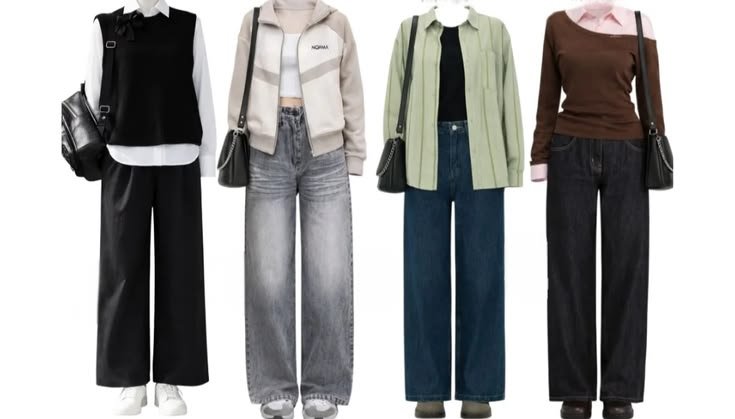
How to Build a Good Outfit
Before looking at individual outfit combinations, it helps to understand why some outfits look balanced while others feel unfinished.
A strong outfit usually has a clear relationship between silhouette, proportion, color, texture, and occasion.
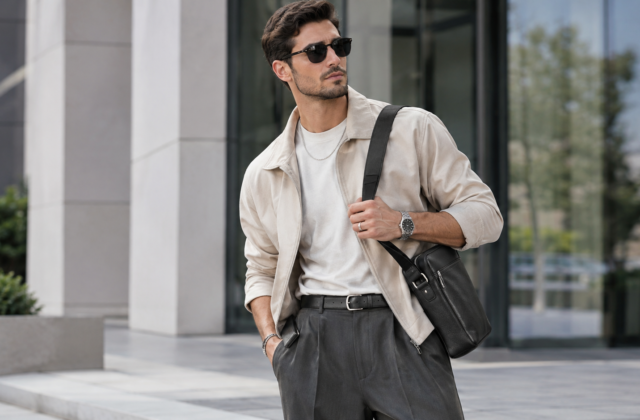
For example, a loose pair of wide-leg trousers can work beautifully with a fitted or cropped top because the contrast creates visual balance. An oversized shirt can also work with straight-leg jeans when the shirt is partially tucked or structured with a belt.
You do not need every piece to make a statement.
In fact, an outfit can become more interesting when one element is the focus and the rest supports it.
A simple formula is:
One focal piece + two supporting pieces + appropriate shoes + one or two accessories.
The focal piece might be a colorful skirt, leather jacket, patterned shirt, statement shoes, or unusual handbag.
The supporting pieces should make the focal item easier to wear rather than compete with it.
Everyday Outfit Ideas
Everyday dressing benefits from pieces that can move between different situations.
White Shirt + Straight-Leg Jeans + Loafers
A crisp white shirt and straight-leg jeans are one of the easiest combinations to adapt.
For a polished look:
- Choose a shirt with enough structure to hold its shape.
- Wear mid- or high-rise jeans.
- Add loafers or clean leather sneakers.
- Use a belt that relates to your shoes or bag.
- Add a watch, small earrings, or a simple necklace.
For a more relaxed appearance, leave the shirt partly untucked and roll the sleeves.
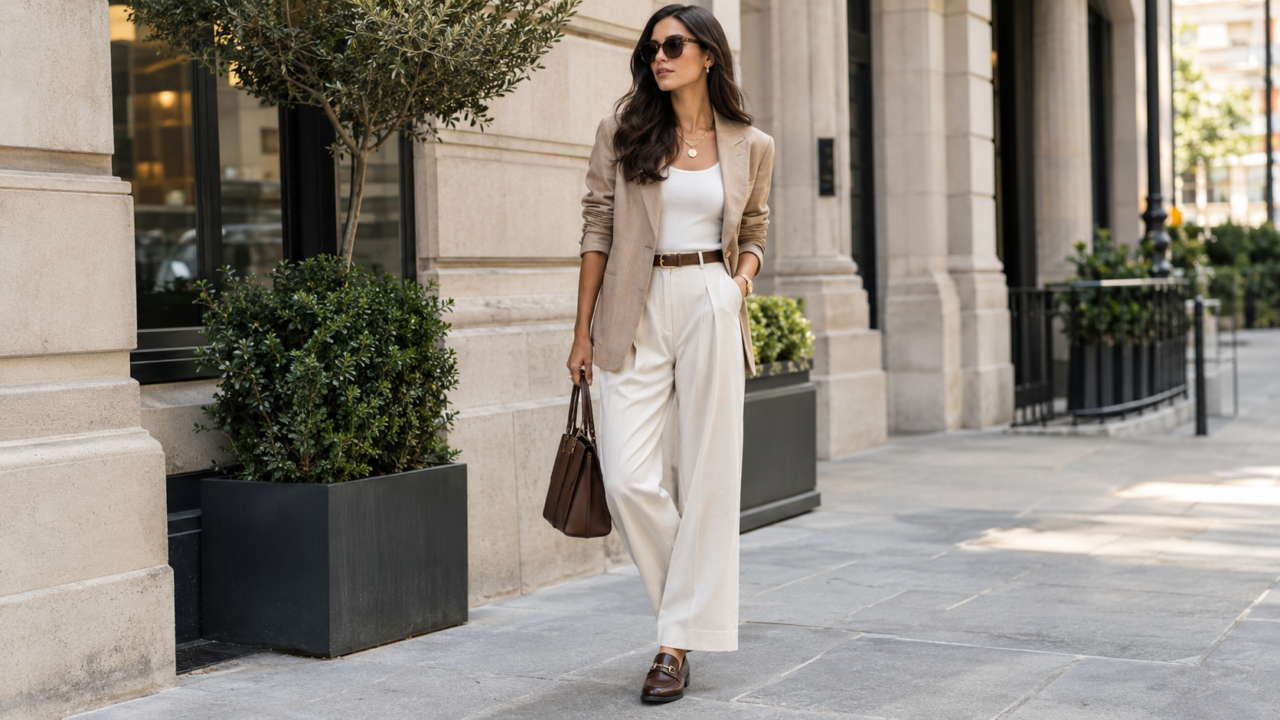
Knit Top + Wide-Leg Trousers
Wide-leg trousers create volume through the lower half of the outfit, so a relatively neat knit top can create balance.
Try:
Fitted knit + wide-leg trousers + pointed flats + structured handbag.
This combination works particularly well for people who want comfort without relying on leggings or oversized sweatshirts.
T-Shirt + Blazer + Jeans
A plain T-shirt does not have to look basic.
Pair it with:
- straight or relaxed jeans
- tailored blazer
- loafers, ballet flats, or minimalist sneakers
- medium-sized shoulder bag
The blazer provides structure while the T-shirt keeps the outfit relaxed.
This is also a useful way to turn a weekend wardrobe into something suitable for casual office environments.
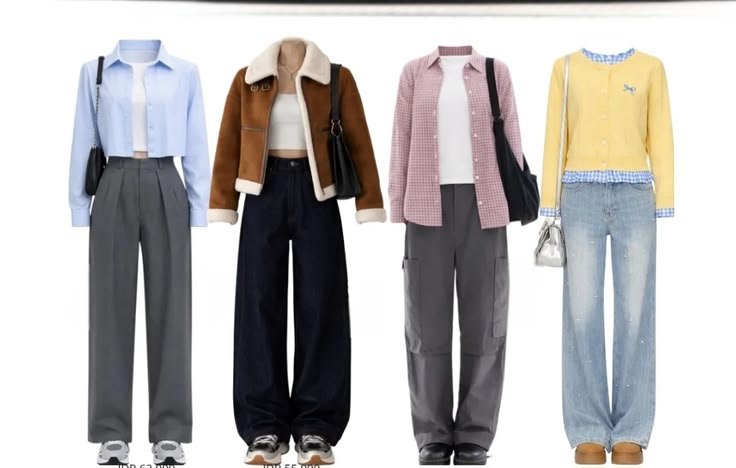
Monochrome Outfit
Wearing different shades of the same color creates an easy sense of coordination.
For example:
- cream top
- beige trousers
- camel jacket
- brown shoes
The colors do not need to match exactly. Similar tones can actually make the outfit more dimensional.
Texture becomes particularly important in monochrome dressing. Combining cotton, suede, denim, wool, leather, or knitwear prevents the outfit from looking flat.
Casual Outfit Ideas
Casual clothing does not have to mean careless clothing.
The difference often comes down to fit and proportion.
Oversized Shirt + Tank Top + Relaxed Jeans
Wear a fitted tank underneath an oversized button-down and pair the combination with relaxed jeans.
Finish with sneakers and a crossbody bag.
The layering creates depth while allowing the outfit to remain comfortable.
Graphic T-Shirt + Tailored Trousers
This is a useful way to mix casual and polished clothing.
Choose:
Graphic T-shirt + tailored trousers + sneakers + simple jewelry.
The contrast between the informal top and structured trousers creates visual interest.
A fashion-editor approach to styling often relies on this kind of contrast rather than matching every item perfectly.
Cargo Pants + Feminine Top
Cargo trousers can become more refined when paired with a delicate or fitted top.
Try:
Utility trousers + fitted blouse + small shoulder bag + ballet flats.
The contrast between utilitarian fabric and a more feminine silhouette keeps the outfit from looking overly rugged.
Current street-style coverage has also highlighted combinations of utility-inspired trousers with crisp shirts and polished accessories.
Denim-on-Denim
Denim does not have to be the same shade from head to toe.
A darker denim shirt with lighter jeans can create separation.
For a more modern look, add:
- leather belt
- simple handbag
- loafers
- ankle boots
- understated jewelry
The key is to make the difference in denim tones intentional.
Work and Office Outfit Ideas
Office dressing depends heavily on the workplace. A creative studio, corporate office, university, and hybrid workplace can have very different expectations.
Still, a few formulas are widely adaptable.
Blazer + Trousers + Fine-Knit Top
This is a dependable office combination.
Choose a blazer that fits well across the shoulders and trousers with enough room to move comfortably.
A fine-knit top can soften the structure of the tailoring.
Neutral colors such as navy, charcoal, cream, brown, and black are easy to coordinate, but adding one controlled color can make the outfit more personal.
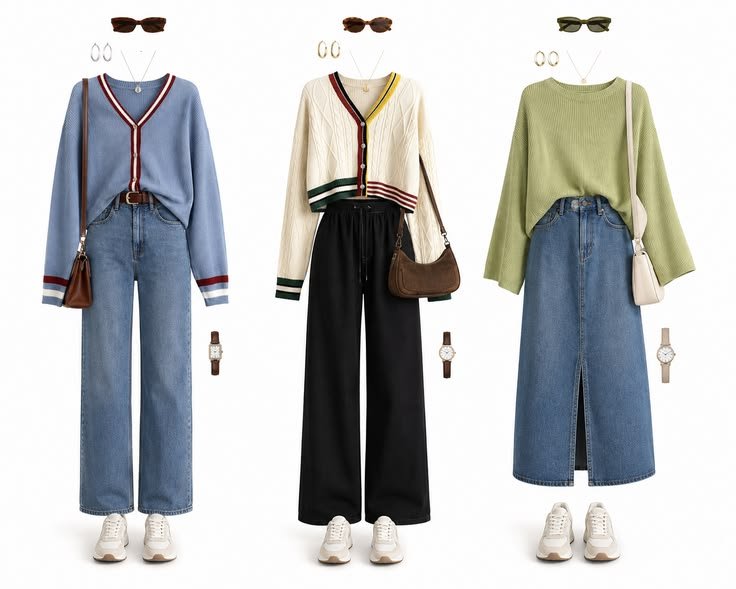
Button-Down Shirt + Midi Skirt
A crisp shirt with a midi skirt creates a polished silhouette without relying on a traditional suit.
You can change the mood with footwear:
- loafers for a practical office look
- pumps for a more formal setting
- sleek boots for cooler weather
- minimalist flats for comfort
Relaxed Suit + Simple Top
Traditional tailoring does not have to be extremely fitted.
Relaxed tailoring has become an important part of contemporary styling, with designers and fashion editors exploring looser trousers, softened jackets, and more wearable proportions.
Try:
Relaxed blazer + wide-leg trousers + fitted tank or knit top.
The contrast between structure and ease keeps the suit modern.
Dress + Structured Jacket
A simple midi dress can become an office outfit when combined with a tailored jacket and appropriate footwear.
This is especially useful when you want an outfit that requires little coordination.
Date Night and Evening Outfit Ideas
Date-night dressing does not automatically require a short dress or high heels.
The best outfit depends on the location and the mood you want to create.
Satin or Fluid Skirt + Knit Top
A fluid skirt paired with a fitted knit creates contrast between texture and silhouette.
Add:
- small handbag
- delicate jewelry
- pointed flats or heels
This can feel dressed-up without becoming overly formal.
Black Dress + Statement Accessories
A simple black dress gives accessories more room to work.
Instead of adding several statement pieces, choose one:
- sculptural earrings
- colorful handbag
- distinctive shoes
- statement belt
Keeping the rest restrained makes the focal accessory more noticeable.
Tailored Trousers + Evening Top
For people who prefer trousers, combine wide-leg or straight tailored trousers with an evening blouse.
A top with interesting texture, draping, sheen, or an unusual neckline can replace the visual impact of a dress.
Leather Jacket + Slip-Style Dress
The contrast between a delicate dress and a structured jacket creates an easy evening look.
Keep the accessories relatively simple so the two contrasting textures remain the focus.
Weekend and Travel Outfit Ideas
Travel clothing needs to satisfy three things:
comfort, movement, and appearance.
A beautiful outfit becomes impractical if the shoes hurt or the fabric wrinkles immediately.
Relaxed Trousers + Button-Down + Sneakers
This is one of the most useful travel combinations.
Choose trousers with stretch or a relaxed cut, then add a breathable shirt and comfortable sneakers.
A lightweight jacket can complete the look.
Matching Knit Set
A knit top and matching trousers or skirt provide coordination without requiring much styling.
Change the appearance with accessories.
The same set can look casual with sneakers and a tote or more polished with loafers and a structured bag.
Jeans + Sweater + Long Coat
For cooler travel days, use:
straight jeans + lightweight sweater + long coat + ankle boots.
Keep the colors within a related palette to make packing easier.
Travel Capsule Outfit
If luggage space is limited, build several outfits from the same foundation.
For example:
- one pair of dark trousers
- one pair of jeans
- white shirt
- neutral T-shirt
- knit sweater
- blazer
- comfortable sneakers
- loafers
- one scarf
These pieces can produce many combinations without creating a large suitcase.
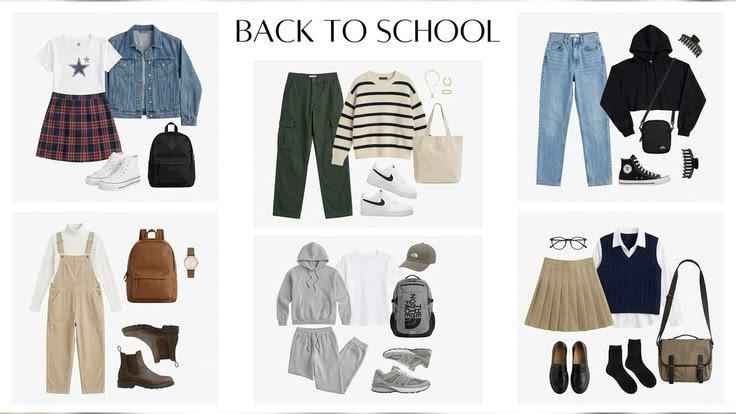
Seasonal Outfit Ideas
Season affects more than temperature. Fabric weight, color, footwear, layering, and silhouette also change.
Spring and Summer
Warm-weather outfits benefit from breathable fabrics and lighter visual proportions.
Linen Trousers + Tank Top
Linen or linen-blend trousers with a simple tank create an uncomplicated summer look.
Add a woven bag and flat sandals for an easy daytime outfit.
Cotton Dress + Flat Sandals
A cotton dress works for everyday summer dressing because it requires minimal styling.
Use accessories to change the mood:
- straw or woven bag for daytime
- leather bag for the city
- jewelry for evening
Bermuda Shorts + Button-Down
Bermuda shorts can be styled with a structured shirt for a polished summer outfit.
A belt can help define the waist while loafers or sandals finish the look.
Summer 2026 fashion coverage has included relaxed proportions, cargo trousers, button-downs, scarf styling, sporty pieces, fringe, and playful sets.
Fall and Winter
Cold-weather styling gives you more opportunities to work with layering and texture.
Turtleneck + Midi Skirt + Boots
A fitted turtleneck balances the movement of a midi skirt.
Add tall or ankle boots depending on the skirt length and weather.
Sweater + Tailored Trousers + Coat
A quality sweater, tailored trousers, and long coat create a clean winter silhouette.
Use texture to prevent the neutral outfit from becoming boring.
Think:
wool + knit + leather + brushed cotton.
Blazer + Sweater + Jeans
A blazer layered over a sweater creates warmth and structure.
This combination can be adapted for work, weekends, or casual dinners simply by changing the shoes and accessories.
Long Coat + Wide-Leg Trousers
A long coat can work particularly well with wide-leg trousers because both silhouettes share a relaxed vertical line.
The important detail is proportion.
If both pieces are oversized, make sure the outfit still has some visual structure through footwear, a belt, a defined shoulder, or a tucked layer.
Current fall 2026 coverage has emphasized modern tailoring, layered wardrobe staples, richer textures, changing proportions, and styling familiar pieces in unexpected combinations.
Outfit Ideas Based on Color and Proportion
Color is one of the easiest ways to change an outfit without changing the entire wardrobe.
Neutral Base + One Strong Color
Start with black, white, cream, gray, navy, beige, or brown.
Then introduce one stronger color.
For example:
cream trousers + white shirt + red shoes.
Or:
black jeans + gray knit + cobalt handbag.
The strong color becomes the focal point.
Tonal Dressing
Tonal dressing means combining different shades within a related color family.
Try:
- ivory
- cream
- beige
- camel
Or:
- light gray
- charcoal
- black
The result is coordinated without requiring identical colors.
Three-Color Rule
A useful styling guideline is to limit an outfit to approximately three major colors.
This is not a strict fashion law.
Accessories, patterns, denim, metallics, and small details can introduce additional tones.
The idea is simply to prevent too many competing colors from appearing at the same visual level.
Balancing Proportions
Proportion is often more important than trend.
If your top is oversized, consider a cleaner bottom.
If your trousers are extremely wide, a closer-fitting top may create balance.
If both pieces are loose, use another element—such as a belt, cropped jacket, tucked shirt, or structured bag—to provide definition.
Current street style demonstrates that oversized and relaxed pieces can work successfully when their proportions are deliberately balanced.
How to Make Basic Clothes Look More Stylish
You do not necessarily need new clothes to create better outfits.
Start with the pieces already in your wardrobe.
Change the Tuck
A full tuck, half tuck, or untucked shirt can produce three different silhouettes from the same garment.
Roll the Sleeves
Rolling shirt or jacket sleeves can expose the wrist and make a structured outfit feel more relaxed.
Add a Belt
A belt can change the visual proportion of an oversized shirt, blazer, coat, or dress.
It also provides a simple way to connect shoes and accessories.
Change Your Shoes
Shoes can completely change the character of an outfit.
The same jeans and shirt may look:
- casual with sneakers
- classic with loafers
- feminine with ballet flats
- edgy with boots
- evening-ready with heels
Add One Unexpected Element
A scarf, brooch, colorful bag, unusual earrings, statement belt, or patterned shoe can make a familiar outfit feel new.
Current styling coverage has emphasized precisely this principle: familiar wardrobe pieces can gain a different character through unexpected accessories and combinations.
Common Outfit Styling Mistakes
Buying a Trend Before Understanding Your Wardrobe
A trend may look excellent on a runway or street-style photograph but fail to work with the clothes you already own.
Before buying it, ask:
Can I create at least three outfits with this piece?
If not, it may not be the most useful addition.
Ignoring Fit
An expensive garment can look ordinary if the fit is wrong.
Pay attention to:
- shoulder placement
- trouser length
- sleeve length
- waistband fit
- jacket closure
- hemline
Small alterations can sometimes make a bigger difference than buying something new.
Using Too Many Statement Pieces
A leopard-print skirt, oversized jewelry, dramatic shoes, bright handbag, and embellished jacket may each be interesting individually.
Together, they can compete.
Choose one primary focal point and let the rest support it.
Matching Everything Too Closely
Shoes, handbag, belt, jewelry, and clothing do not need to be identical colors.
Coordination is more sophisticated than exact matching.
Ignoring the Occasion
An outfit can be stylish and still be inappropriate for the setting.
Always consider:
- location
- weather
- expected dress level
- walking requirements
- cultural context
- time of day
How to Find Outfit Ideas That Suit Your Personal Style
Instead of saving hundreds of unrelated fashion photographs, look for patterns in the outfits you repeatedly like.
Ask yourself:
Do I prefer fitted or relaxed silhouettes?
Do I wear mostly neutrals or colors?
Do I prefer sneakers, boots, flats, or heels?
Do I like classic, minimalist, romantic, sporty, streetwear, vintage, or eclectic clothing?
Which outfits make me feel comfortable enough to wear repeatedly?
Your answers create a personal styling direction.
For example, someone who repeatedly chooses straight jeans, loafers, button-down shirts, blazers, and neutral colors may naturally prefer polished minimalism.
Someone who chooses cargo trousers, oversized jackets, sneakers, graphic shirts, and utility details may lean toward contemporary streetwear.
Neither approach is inherently better.
The goal is consistency between the clothes, the person’s lifestyle, and the way they want to present themselves.
Building More Outfits Without Buying More Clothes
One of the most useful styling exercises is to choose one garment and create five completely different combinations.
Take a white button-down shirt.
Look 1: White shirt + jeans + sneakers.
Look 2: White shirt + tailored trousers + loafers.
Look 3: White shirt + midi skirt + ballet flats.
Look 4: White shirt worn open over a tank + cargo trousers.
Look 5: White shirt under a sweater + straight-leg jeans + boots.
The garment has not changed.
Only the surrounding pieces and styling have changed.
This is one reason current fashion is increasingly interesting through the lens of styling rather than simple shopping. Vogue’s 2026 coverage has specifically highlighted how wardrobe essentials can be reinterpreted through proportions, layering, color, and combinations.
Another useful method is the three-piece outfit formula.
Instead of wearing:
top + bottom
try:
top + bottom + third piece.
The third piece could be:
- blazer
- cardigan
- jacket
- vest
- scarf
- overshirt
- belt
- statement accessory
That extra element often makes the outfit look more intentional.
Current 2026 Outfit Direction
Fashion in 2026 is not centered around one universal silhouette.
Recent runway and street-style reporting shows several different directions existing at the same time.
One is relaxed tailoring, where structured clothing is made easier to wear through softer proportions and comfortable silhouettes.
Another is expressive styling, including stronger color combinations and unexpected accessories.
A third is the continued use of layering and wardrobe remixing, where familiar pieces are combined in less predictable ways.
Fall 2026 reporting has also highlighted contrast: clean silhouettes paired with richer textures, classic wardrobe staples combined with unusual proportions, and traditional pieces interpreted through more expressive styling.
Recent New York Fashion Week street style has similarly shown combinations such as structured jackets with summer pieces, tailored trousers with casual tops, Western-inspired accessories with city clothing, and contrasting colors and prints.
The useful takeaway is not that everyone should copy these looks.
It is that current fashion provides styling ideas rather than a single uniform dress code.
Take the element you like and adapt it to your own wardrobe.
Frequently Asked Questions
What are good outfit ideas for everyday wear?
Simple combinations such as jeans with a button-down shirt, wide-leg trousers with a fitted knit, or a T-shirt with a blazer are versatile starting points. Change the shoes and accessories to adapt the same outfit for different situations.
How can I make a simple outfit look stylish?
Focus on fit, proportion, and one interesting detail. A belt, scarf, structured bag, distinctive shoes, jewelry, or layered jacket can give a basic outfit more visual interest.
What should I wear when I have nothing to wear?
Start with a reliable wardrobe combination such as jeans and a good shirt or trousers and a knit top. Then add one third piece—a blazer, jacket, cardigan, or accessory—to create a more complete look.
How many colors should an outfit have?
There is no strict rule, but using a neutral base with one or two additional colors can make coordination easier. Tonal outfits using several shades of one color are another simple approach.
How do I create outfit ideas from clothes I already own?
Choose one garment and style it in at least five different ways. Change the shoes, outer layer, accessories, proportions, and supporting pieces rather than buying something new for every outfit.
What are some easy outfit ideas for work?
A blazer with tailored trousers and a knit top, a button-down with a midi skirt, or a simple dress with a structured jacket can work in many professional environments. Always adjust the outfit to your workplace’s dress expectations.
How can I dress stylishly without following every trend?
Build around silhouettes and colors you already enjoy. Use trends as optional styling details rather than replacing your entire wardrobe whenever a new trend appears.
What makes an outfit look expensive?
There is no single formula, but good fit, clean lines, coordinated colors, appropriate proportions, quality-looking textures, and restrained accessories often create a polished appearance. Tailoring and garment care can matter as much as the brand name.
Conclusion
The most useful outfit ideas are not necessarily the most complicated ones.
A strong wardrobe gives you options because individual pieces can be combined in several ways. A white shirt can become casual, professional, minimalist, feminine, or layered depending on what surrounds it. Jeans can look relaxed with sneakers or polished with loafers and tailoring. A simple dress can change character through shoes, outerwear, jewelry, and a bag.
That is the real value of styling: learning how to see possibilities in clothes you already have.
Current fashion offers plenty of inspiration—from relaxed tailoring and layered essentials to expressive colors, utility pieces, and unexpected accessories—but inspiration works best when adapted rather than copied.
Start with your lifestyle, understand your proportions, choose colors you enjoy wearing, and use trends selectively. The result is a wardrobe that produces more outfits while requiring less guesswork.