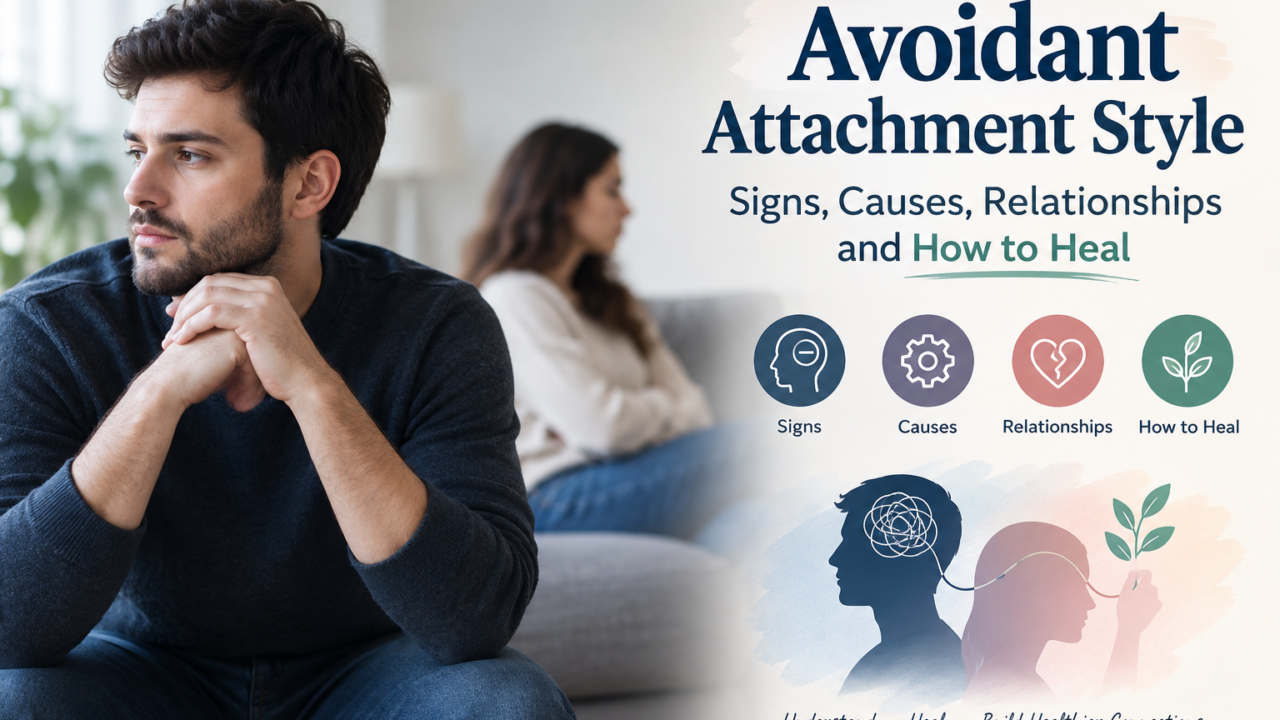
An avoidant attachment style can make emotional closeness feel uncomfortable even when someone genuinely wants a relationship. A person may value independence prefer handling problems alone struggle to express vulnerable feelings or pull away when a relationship starts becoming more serious.
These behaviors can be confusing for both the person experiencing them and the people close to them. Someone may wonder why they suddenly need distance after a meaningful conversation or why asking for emotional support feels so difficult.
Avoidant attachment is not simply a personality trait and it does not mean a person is incapable of love. It is better understood as an attachment pattern that can influence how someone experiences intimacy trust emotional communication and dependence.
Understanding the pattern can help people recognize unhealthy relationship cycles without using attachment labels as diagnoses. This guide explains what avoidant attachment style means common signs possible causes how it affects romantic relationships and practical ways to develop healthier emotional connections.
What Is Avoidant Attachment Style?
Avoidant attachment style is an insecure attachment pattern generally associated with discomfort around emotional intimacy and a strong preference for independence.
People with avoidant tendencies may find it difficult to depend on others or allow others to depend on them emotionally. They can minimize their own needs avoid vulnerable conversations or create distance when another person becomes emotionally close.
Independence itself is not a problem. Healthy relationships allow people to maintain friendships hobbies personal boundaries and individual identities. The concern is when independence becomes a consistent strategy for avoiding emotional connection.
For example someone might enjoy spending time with a partner but become uncomfortable when the relationship requires deeper vulnerability. Instead of explaining what they feel they may become quiet emotionally distant or focused on finding reasons to be alone.
Avoidant attachment also exists on a spectrum. A person can show some avoidant behaviors without fitting neatly into a particular attachment category.

What Causes Avoidant Attachment Style?
Attachment patterns are influenced by experiences rather than one single event. Early relationships with caregivers can play an important role but later relationships and life experiences can also shape how someone approaches intimacy.
Childhood Experiences
Attachment theory suggests that early relationships can influence expectations about whether other people are available trustworthy and responsive to emotional needs.
If a child’s emotional needs are repeatedly dismissed or discouraged the child may learn to become highly self-reliant. Over time emotional independence can become a protective strategy.
This does not mean every person with avoidant tendencies had the same childhood or that parents are automatically responsible. Human development is more complicated than a single cause-and-effect explanation.
Learning to Suppress Emotional Needs
Some people learn that showing vulnerability does not lead to comfort or support. They may consequently become skilled at hiding sadness fear disappointment or loneliness.
That strategy can be useful in certain situations but it can become difficult in adulthood when healthy relationships require people to communicate their emotional needs.
Later Relationship Experiences
Adult relationships can also influence attachment patterns. Repeated rejection betrayal emotionally unavailable relationships or difficult breakups may affect someone’s willingness to trust another person.
Attachment can therefore be influenced by both early experiences and later interpersonal experiences.
Common Signs of Avoidant Attachment Style
There is no single behavior that proves someone has an avoidant attachment style. The following signs are better understood as possible patterns.
A Strong Preference for Independence
Someone with avoidant tendencies may feel safest when they can solve problems independently.
They may rarely ask for help dislike feeling dependent on another person or become uncomfortable when a partner wants to provide emotional support.
The desire for independence becomes more significant when receiving support feels threatening rather than simply unnecessary.
Discomfort With Emotional Intimacy
Emotional intimacy requires vulnerability. For someone with avoidant tendencies discussing personal fears insecurities or emotional needs may feel uncomfortable.
They may prefer conversations about practical matters while avoiding discussions about feelings.
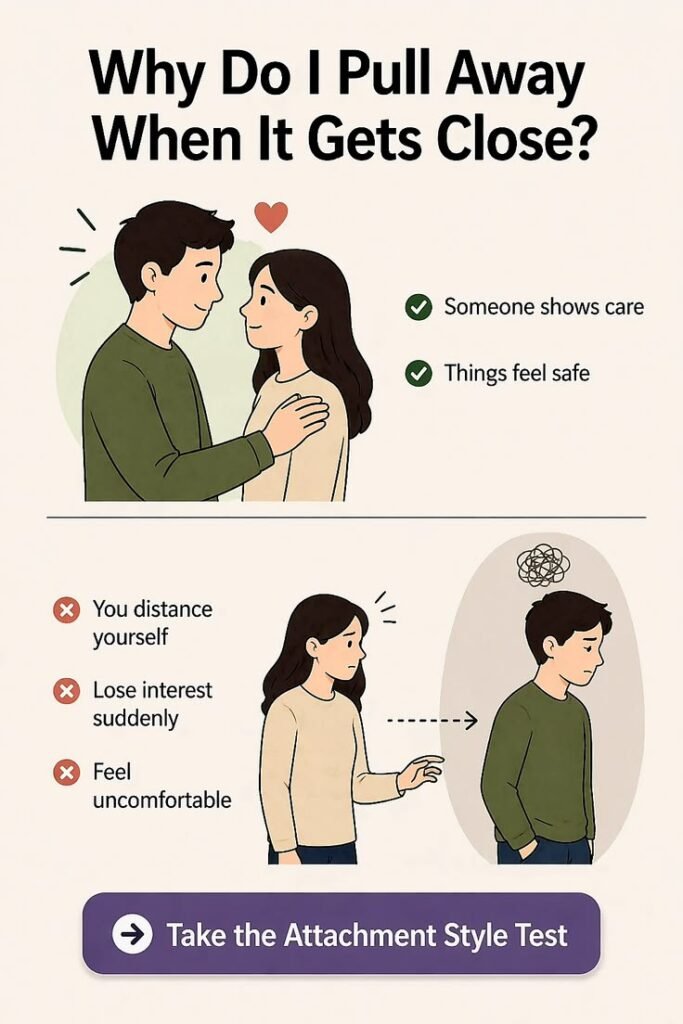
Pulling Away When Someone Gets Close
A person may initially enjoy a relationship but begin creating distance as emotional intimacy increases.
This can appear as reduced communication increased focus on personal activities avoidance of serious conversations or suddenly wanting more space.
The withdrawal may not necessarily mean the person’s feelings disappeared. Sometimes closeness itself can trigger discomfort.
Difficulty Expressing Feelings
Someone may know internally that they are upset disappointed or afraid but struggle to explain those emotions.
Instead of saying “That conversation hurt me” they might become quiet or simply say they need time alone.
Difficulty Trusting Others
Avoidant tendencies can make emotional dependence feel risky. A person may assume that relying on someone will eventually lead to disappointment.
As a result they may prefer to remain emotionally self-sufficient.
Feeling Uncomfortable With Commitment
Commitment can sometimes create concerns about losing freedom or independence.
This does not mean every person who hesitates about commitment has avoidant attachment. People can have many legitimate reasons for being uncertain about a relationship.
The pattern becomes more relevant when commitment repeatedly triggers emotional withdrawal despite genuine interest in the relationship.
How Avoidant Attachment Style Affects Relationships
Romantic relationships can make attachment patterns particularly visible because they involve emotional closeness trust communication and mutual dependence.
Someone with avoidant tendencies may enjoy companionship but struggle when their partner asks for greater emotional openness.
They might need considerable personal space after an emotional conversation or feel overwhelmed when a partner wants frequent reassurance.
Over time these patterns can create misunderstandings.
One partner may interpret emotional distance as rejection while the avoidant partner may interpret requests for closeness as pressure.
The Anxious-Avoidant Cycle
A common relationship dynamic occurs when one partner has strong anxious attachment tendencies and the other has strong avoidant tendencies.
The anxious partner may seek reassurance because they sense distance. The avoidant partner may experience that pursuit as overwhelming and withdraw further.
That withdrawal can make the anxious partner even more concerned leading them to seek more reassurance.
The cycle can become:
- One partner wants more closeness.
- The other partner feels pressured.
- The avoidant partner creates distance.
- The anxious partner becomes more worried.
- More reassurance is requested.
- The avoidant partner withdraws again.
The pattern can be emotionally exhausting for both people.
Breaking the cycle requires more than telling one person to “stop being needy” or the other to “open up.” Both partners need to understand the pattern and communicate more effectively.
Avoidant vs. Fearful-Avoidant Attachment
Avoidant attachment and fearful-avoidant attachment are related but not identical.
Dismissive-Avoidant Pattern
A dismissive-avoidant pattern is generally characterized by strong self-reliance and discomfort with emotional dependence.
A person may minimize the importance of relationships or feel that depending on others is unnecessary.
Their internal approach may resemble:
“I can handle this myself.”
Fearful-Avoidant Pattern
Fearful-avoidant attachment involves a more complicated conflict between wanting intimacy and fearing it.
A person may strongly desire closeness but become afraid when intimacy actually develops.
This can create a push-and-pull pattern in which someone moves toward a relationship and then retreats when vulnerability or commitment feels overwhelming.
Understanding this difference is useful because attachment patterns are not interchangeable labels.
Can Avoidant Attachment Style Change?
Yes. Attachment patterns are not necessarily permanent.
Changing an avoidant attachment pattern usually involves becoming more aware of emotional reactions and gradually developing healthier ways to respond to intimacy.
The goal is not to eliminate independence. A healthy person can enjoy solitude and still maintain emotionally connected relationships.
Recognize Your Triggers
Start by identifying moments when you suddenly want to withdraw.
Ask yourself:
- What happened immediately before I wanted distance?
- Was someone asking me to discuss my feelings?
- Did I feel pressured?
- Did I feel criticized or misunderstood?
- Did commitment suddenly make me uncomfortable?
- Was I afraid of disappointing someone?
Understanding the trigger can make an automatic reaction easier to manage.
Learn to Name Your Emotions
Emotional awareness is an important part of communication.
Instead of simply saying “I’m stressed” try identifying the specific emotion. You might be disappointed embarrassed overwhelmed lonely angry anxious or afraid.
The more precisely you can identify an emotion the easier it becomes to communicate what you need.
Communicate Before You Withdraw
Taking time alone can be healthy. Disappearing without explanation can damage trust.
Instead of abruptly cutting off communication explain what is happening.
For example:
“I feel overwhelmed right now. I need some time to process this but I want to continue the conversation later.”
This preserves personal space without turning distance into emotionalhttps://stylebydesign.site/
Practice Small Acts of Vulnerability
You do not have to become completely emotionally open overnight.
Start small.
Share a concern with someone you trust. Admit when something hurt you. Ask for help with something minor. Tell your partner what you need instead of assuming they should figure it out.
Repeated experiences of safe communication can make vulnerability easier.
Consider Therapy
If avoidant patterns repeatedly damage relationships or cause significant distress professional support can be useful.
A qualified mental health professional can help someone explore relationship patterns emotional triggers past experiences and communication habits.
Therapy is not about forcing someone to become dependent on other people. It can help a person develop greater flexibility so that independence and intimacy can coexist.
How to Deal With an Avoidant Partner
Being close to someone with avoidant tendencies can be challenging especially if their withdrawal makes you feel rejected.
The goal should not be to chase them until they become emotionally available.
Give Reasonable Space
If your partner genuinely needs time to process emotions allowing some space can prevent unnecessary escalation.
However space should not mean indefinite silence.
Healthy boundaries can include agreeing to return to an important conversation after both people have had time to calm down.
Communicate Your Needs Clearly
Avoid expecting your partner to automatically understand what you need.
Explain your expectations calmly and specifically.
Instead of saying “You never care about me” explain the behavior that affects you and what would help.
Clear communication gives the other person an opportunity to respond rather than forcing them to interpret an emotional accusation.
Maintain Your Own Boundaries
Understanding avoidant attachment does not mean tolerating poor treatment.
You can respect someone’s need for space while still expecting honesty basic communication and mutual respect.
Compassion should not require you to ignore your own emotional needs.
Look at Consistent Behavior
One request for space does not automatically indicate avoidant attachment.
Pay attention to the larger pattern.
Does your partner eventually communicate? Are they willing to discuss problems? Do they make an effort to repair conflict? Can they acknowledge your feelings?
These behaviors are often more meaningful than isolated moments of emotional distance.
Avoidant Attachment Does Not Mean Someone Does Not Care
One of the biggest misconceptions about avoidant attachment is that emotional distance automatically means a person has no feelings.
Someone can care deeply about another person and still struggle with emotional vulnerability.
The difficulty may involve expressing feelings trusting another person accepting support or tolerating the intensity of closeness.
At the same time understanding a person’s attachment pattern does not excuse harmful behavior. A psychological explanation is not a free pass for disrespect manipulation repeated abandonment or emotional neglect.
Healthy relationships require both understanding and boundaries.
When Should You Seek Professional Help?
Consider talking with a qualified mental health professional when relationship patterns repeatedly create serious distress.
Professional support may be particularly useful if you:
- Repeatedly end relationships when intimacy increases.
- Feel unable to express emotional needs.
- Frequently shut down during conflict.
- Want close relationships but feel uncomfortable with vulnerability.
- Experience repeated relationship cycles that you cannot change.
- Feel that past experiences strongly affect current relationships.
A professional can help determine whether attachment patterns are relevant and whether other emotional or relationship issues may also be involved.
FAQs About Avoidant Attachment Style
What is avoidant attachment style?
Avoidant attachment style is an insecure attachment pattern associated with discomfort around emotional closeness strong self-reliance difficulty expressing vulnerability and reluctance to depend emotionally on other people.
Do people with avoidant attachment fall in love?
Yes. Avoidant attachment does not mean someone is incapable of love. A person may experience strong feelings while still finding emotional intimacy dependence and vulnerability https://www.medicalnewstoday.com/
What triggers avoidant attachment?
Potential triggers include intense emotional conversations increased intimacy pressure to disclose feelings conflict perceived loss of independence and situations that make a person feel emotionally dependent. Triggers differ from one person to another.
Can avoidant attachment style be healed?
Attachment patterns can become healthier and more flexible. Self-awareness better communication gradual vulnerability supportive relationships and professional therapy can all help someone develop more secure relationship behaviors.
Can an avoidant person have a healthy relationship?
Yes. Someone with avoidant tendencies can have a healthy relationship. The key is learning to communicate needs tolerate appropriate vulnerability respect a partner’s needs and maintain independence without using it to permanently avoid intimacy.
Is avoidant attachment the same as avoidant personality disorder?
No. Avoidant attachment is an attachment pattern while avoidant personality disorder is a distinct mental-health diagnosis. They should not be treated as the same condition.
Conclusion
An avoidant attachment style can influence how someone experiences intimacy independence trust vulnerability and romantic relationships. The pattern often becomes visible when emotional closeness increases and a person responds by creating distance or relying heavily on themselves.
Recognizing these behaviors can be the first step toward changing them. Independence does not need to disappear and emotional closeness does not need to mean losing personal freedom.
A healthier approach is to create room for both: maintaining individual boundaries while becoming more comfortable with honest communication and appropriate vulnerability.
If avoidant patterns are repeatedly affecting relationships understanding the underlying triggers and developing new communication habits can make a meaningful difference. And when the pattern feels difficult to change alone professional support can provide a more personalized path forward.