Choosing baby boy clothes is easier when style and practicality work together. Babies need outfits that feel soft against the skin allow comfortable movement handle frequent washing and make everyday changes as simple as possible. At the same time parents often want clothing that looks polished for family photographs birthdays holidays weddings and everyday outings.
The best baby wardrobe is not necessarily the biggest one. A thoughtful selection of bodysuits rompers tops bottoms sleepwear seasonal layers and special-occasion pieces can cover most situations without filling every drawer.
This guide explains how to choose baby boy clothes by age fabric season occasion fit and personal style. It also covers outfit ideas that work for newborns and growing babies along with practical shopping advice for parents in the USA and around the world.
What Makes Good Baby Boy Clothes?
Good baby clothing balances comfort safety practicality and appearance. A beautiful outfit that is difficult to put on or uncomfortable during a diaper change will probably spend more time in the closet than on the baby.
Soft cotton is a popular choice for everyday clothing because it can feel comfortable against delicate skin and is generally easy to wash. Other fabrics can work well too depending on the climate and garment. The key is to consider how the fabric feels how breathable it is and how the garment will be used.
Look closely at construction as well. Smooth seams practical closures flexible waistbands and appropriately sized neck openings can make dressing considerably easier.
For newborns and young babies convenience matters. Snap closures around the diaper area can save time during frequent changes while one-piece outfits reduce the number of separate garments parents need to coordinate.
Baby Boy Clothes Every Wardrobe Should Have
A useful baby wardrobe starts with versatile basics rather than highly specific outfits.
Bodysuits and Onesies
Bodysuits are among the most useful everyday pieces because they can be worn alone in warm weather or underneath other clothing when temperatures fall.
Short-sleeve versions are practical for warmer months while long-sleeve styles provide another layer during cooler weather. Neutral shades such as white cream beige gray navy and soft blue are particularly easy to combine with other pieces.
Rompers and One-Piece Outfits
Rompers combine a top and bottom into one garment making them a convenient option for playtime casual outings and warm-weather dressing.
Look for designs with practical openings that make diaper changes straightforward. A romper should allow enough room for movement without becoming excessively loose.
Tops and Bottoms
As babies become more mobile separate tops and bottoms become increasingly useful. T-shirts lightweight sweaters pull-on pants joggers leggings and soft shorts can be mixed into several outfits.
This approach also makes laundry easier because one stained item does not necessarily mean the entire outfit needs to be replaced.
Sleepwear
Sleepwear should prioritize comfort and appropriate fit over complicated styling. Depending on the climate and season parents may choose lightweight sleepers footed pajamas or breathable two-piece sets.
Avoid choosing sleepwear solely because it looks cute. The garment should be appropriate for its intended sleeping environment and follow the manufacturer’s care and safety guidance.
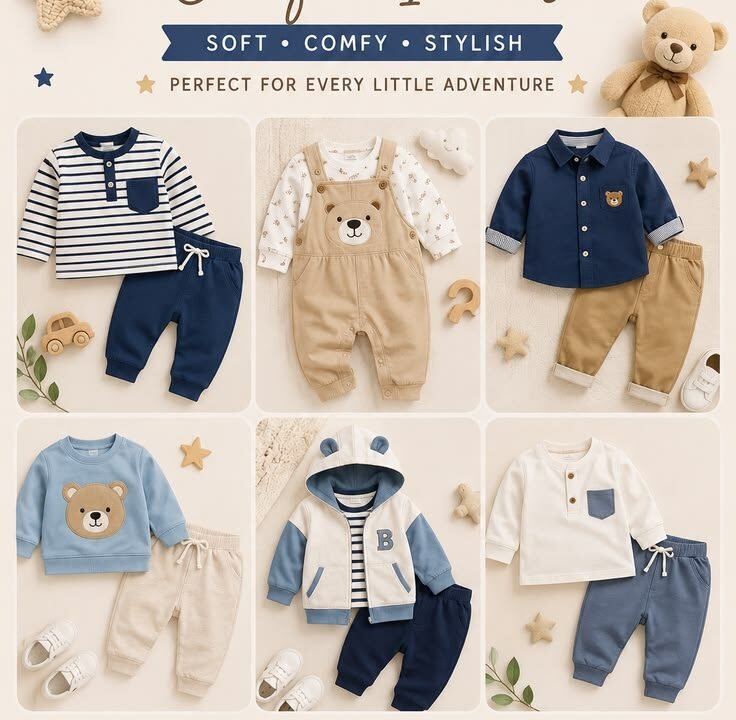
15 Stylish Baby Boy Outfit Ideas
Baby clothing does not need complicated styling to look fashionable. Simple combinations often photograph better and are easier for parents to manage.
1. Classic White Bodysuit and Blue Pants
A white bodysuit paired with soft blue pants is a timeless combination. Add a lightweight cardigan for cooler weather.
The neutral base also makes it easy to introduce accessories without making the outfit look busy.
2. Striped Top With Neutral Trousers
A fine-striped top can add visual interest without overwhelming a small frame. Pair it with beige khaki gray or navy trousers.
This is especially useful for casual family outings when parents want something slightly more polished than a basic bodysuit.
3. Soft Denim-Inspired Look
Denim can create a classic baby outfit but comfort should remain the priority. Choose soft flexible denim or denim-look fabrics rather than stiff materials.
A simple tee soft denim-style bottoms and sneakers or soft shoes can create a casual weekend look.
4. Matching Two-Piece Set
Coordinated sets remove much of the guesswork from getting dressed. A matching top and bottom can look put together while remaining practical for everyday wear.
Sets are particularly useful when shopping for gifts because the outfit already has a cohesive color and design.
5. Neutral Minimalist Outfit
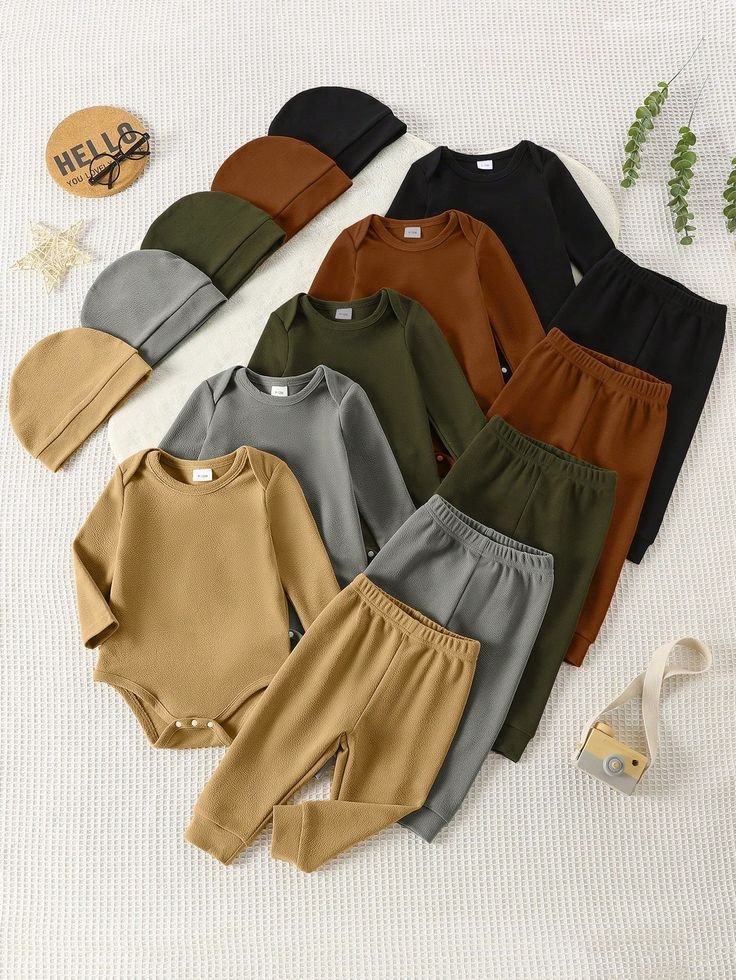
Cream oatmeal beige stone gray and soft brown create a modern minimalist aesthetic.
Pair a neutral top with matching or contrasting trousers and keep accessories simple. This style works particularly well for family photographs because the colors tend to remain visually calm.
6. Summer T-Shirt and Shorts
For warm weather a breathable T-shirt with lightweight shorts can be a simple everyday combination.
Choose fabrics appropriate for the climate and avoid unnecessary layers when temperatures are high. A sun-safe outdoor routine is more important than adding fashionable accessories.
7. Lightweight Romper
A printed or solid-color romper can become an entire warm-weather outfit with minimal effort.
Animal illustrations stripes small geometric patterns and subtle colors are easy choices for parents who want playful style without excessive decoration.
8. Cardigan and Pants for Cooler Days
A lightweight cardigan over a bodysuit or shirt creates a flexible layering system.
The advantage of layers is that parents can remove one piece if the environment becomes warmer rather than changing the entire outfit.
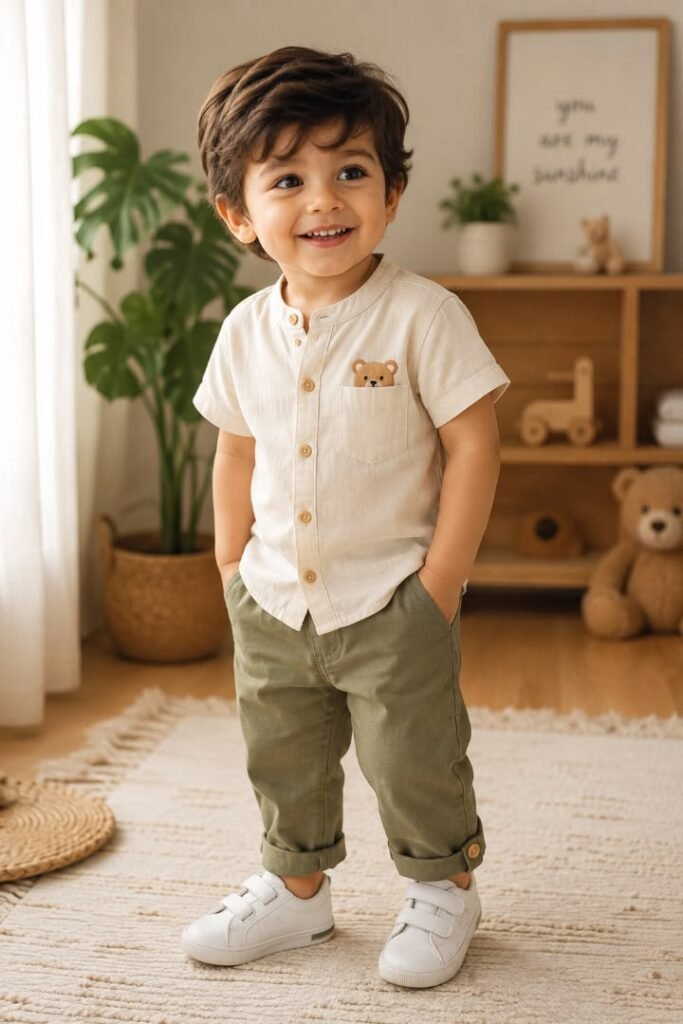
9. Smart Shirt and Trousers
For birthdays family gatherings or photographs a soft button-front shirt with comfortable trousers can look more formal.
For babies avoid treating formal clothing like miniature adult clothing. A soft collar flexible waistband and easy-access closures are generally more practical than rigid construction.
10. Baby Boy Kurta Set
Traditional clothing can be a beautiful option for cultural celebrations religious occasions weddings Eid and family events.
A lightweight kurta with comfortable trousers or shalwar can provide a polished traditional appearance while remaining appropriate for a baby’s movement and comfort.
11. Suspender-Inspired Outfit
Suspender-style details can create a dressed-up appearance without requiring a complete formal suit.
Pair them with a soft shirt and comfortable trousers for birthdays portraits or special family occasions.
12. Cozy Winter Layering
In colder weather combine a comfortable base layer with a sweater or cardigan and an appropriate outer layer.
Instead of relying on one very heavy garment several suitable layers can make temperature management easier when moving between indoor and outdoor environments.
13. Monochrome Outfit
A single-color palette can look surprisingly sophisticated on baby clothing.
Try different shades of the same color such as cream with beige or navy with lighter blue. Small differences in texture can keep the outfit interesting.
14. Playful Graphic Tee and Joggers
For active babies and toddlers a graphic T-shirt with soft joggers is a practical casual combination.
Choose prints that reflect the child’s personality without sacrificing comfort. Joggers with flexible waistbands are particularly useful when a child is crawling standing or beginning to https://hipkids.pk/
15. Special-Occasion Layered Look
For weddings holidays birthdays or family portraits start with a comfortable base and build the outfit with one or two polished layers.
For example a soft shirt tailored-looking trousers and a lightweight vest can create a formal appearance without excessive bulk.
How to Choose Baby Boy Clothes by Age
Babies change quickly so clothing that works during one stage may become impractical a few months later.
Newborns
Newborn wardrobes should emphasize easy changing and softness. Bodysuits sleepers rompers soft hats where appropriate and lightweight layers can form the foundation.
Avoid buying excessive quantities in the smallest size because babies can move through early sizes quickly.
3 to 6 Months
At this stage parents can begin incorporating more variety into everyday outfits. Bodysuits remain useful while rompers coordinated sets pants and tops provide more styling options.
Movement becomes an increasingly important consideration.
6 to 12 Months
Babies approaching crawling pulling themselves up or becoming more mobile need clothing that does not unnecessarily restrict movement.
Soft pants comfortable tops rompers and flexible sets can work well. Clothing should stay practical enough for frequent washing and active play.
Toddlers
Once a baby becomes a toddler separates become particularly useful. T-shirts sweatshirts joggers jeans with comfortable construction shorts dresses traditional outfits and seasonal layers can all become part of the wardrobe.
At this stage durability and ease of dressing become increasingly important.
How to Choose the Right Fabric
Fabric choice can make a major difference in how practical an outfit feels.
Cotton for Everyday Wear
Cotton is a common choice for baby clothing because it is comfortable versatile and easy to care for. Lightweight cotton can work particularly well in warm climates.
For hot summers breathable fabrics and loose comfortable fits can be preferable to heavy layers.
Fleece and Knits for Cooler Weather
Fleece knitted garments and other warmer materials can be useful during colder months. However parents should consider the temperature and the amount of time the baby will spend indoors.
A thick sweater may be unnecessary inside a heated home.
Check the Fabric and Care Label
Do not judge a garment only by its appearance. Check the composition and washing instructions before buying.
A garment that requires complicated care may become inconvenient when parents are already handling frequent laundry.
How Baby Boy Clothes Change With the Seasons
Seasonal dressing is less about following trends and more about adapting fabrics and layers to the environment.
Spring
Spring wardrobes can combine lightweight layers with breathable basics. Long-sleeve bodysuits lightweight trousers cotton tops and cardigans can provide flexibility as temperatures change throughout the day.
Summer
Summer outfits should generally emphasize lightweight breathable clothing.
T-shirts shorts cotton rompers and lightweight bodysuits can work well. Keep outdoor dressing practical and consider the baby’s environment rather than adding unnecessary layers for appearance.
Fall
Fall is ideal for layering. Long-sleeve tops lightweight sweaters joggers trousers and jackets can be mixed according to the temperature.
Earth tones muted greens navy brown cream and rust can also create an attractive seasonal palette.
Winter
Winter wardrobes require thoughtful layering and weather-appropriate outerwear.
Start with comfortable base layers and add warmer garments as needed. When traveling in a car seat follow the car-seat manufacturer’s guidance regarding bulky clothing and harness fit rather than prioritizing the appearance of the outfit.
How to Build a Stylish Baby Boy Wardrobe Without Overbuying
A baby’s wardrobe can become crowded surprisingly quickly. The better strategy is to buy versatile pieces that work together.
Choose a consistent color palette. For example navy cream gray beige and light blue can create numerous combinations.
Prioritize pieces that can be worn in more than one situation. A plain cardigan may work with jeans trousers shorts or a traditional outfit. A neutral bodysuit can be used as a base underneath several different looks.
It is also worth considering laundry frequency. Parents who wash clothing frequently may need fewer total outfits than parents who prefer doing laundry less often.
Growth should influence purchasing decisions as well. Buying a large quantity of clothes far ahead of the baby’s current size can result in items being outgrown before they are worn.
How to Choose the Right Size
Baby clothing sizes are not perfectly standardized between brands so age labels should be treated as a starting point rather than an exact measurement.
Check the brand’s size chart whenever possible. Pay attention to weight and height measurements if they are provided.
For everyday clothing a comfortable fit should allow normal movement without creating excessive bulk. Clothing that is too tight can be uncomfortable while extremely oversized clothing can interfere with movement and practical activities.
For online shopping read the product measurements and return policy before ordering several pieces in the same size.
Baby Boy Clothes for Special Occasions
Special occasions create an opportunity to introduce more formal styling but baby comfort should remain the foundation.
For weddings family celebrations birthdays and cultural events consider soft shirts tailored-looking trousers waistcoats cardigans coordinated sets or traditional clothing.
In Pakistan and other regions where traditional dress is commonly worn for celebrations baby kurtas waistcoat sets shalwar kameez and other cultural outfits can create a distinctive look.
For American celebrations classic combinations such as a collared shirt chinos-style trousers knit cardigan or simple coordinated set can provide a polished https://stylebydesign.site/
The best special-occasion outfit is one that looks appropriate while still allowing the baby to move sit crawl or be carried comfortably.
Baby Boy Clothes Shopping: What Should Parents Check?
Shopping becomes much easier when every garment is evaluated for more than appearance.
Before buying consider:
- Is the fabric appropriate for the climate?
- Does the garment feel comfortable and practical?
- Is it easy to put on and remove?
- Are diaper changes reasonably convenient?
- Is the size appropriate?
- Can it withstand regular washing?
- Does it coordinate with clothing the baby already owns?
- Is it appropriate for the intended occasion?
- Does the garment follow applicable safety and care guidance?
These questions can prevent impulse purchases that look appealing online but prove impractical in daily use.
Current Style Direction for Baby Boy Clothing
Baby fashion has increasingly moved beyond the traditional idea that every boy’s outfit needs to be blue. Modern collections commonly include neutral palettes earthy tones playful prints coordinated sets minimalist designs and unisex-inspired styling.
Retail collections also show a broad mix of bodysuits rompers tops pants overalls pajamas hoodies jumpsuits shoes and outfit sets.
For parents this wider choice is useful because it makes it easier to build a wardrobe around personality practicality culture and climate rather than following one narrow definition of boys’ fashion.
Frequently Asked Questions About Baby Boy Clothes
What clothes does a baby boy need?
A practical starting wardrobe includes bodysuits rompers sleepers tops comfortable bottoms seasonal layers socks and a few outfits for special occasions. The exact quantity depends on laundry frequency climate and how often the baby changes clothes.
What fabric is best for baby boy clothes?
Soft breathable fabrics such as cotton are popular for everyday baby clothing. The best choice depends on climate garment purpose the baby’s comfort and the manufacturer’s care instructions.
How many outfits should I buy for a newborn boy?
There is no universal number because babies differ in how frequently they need changes and families have different laundry routines. A small collection of versatile basics is generally more practical than buying a large quantity of newborn-size clothing.
Should baby boy clothes be loose or tight?
Baby clothing should provide comfortable movement without being excessively tight or unnecessarily oversized. Always follow the manufacturer’s sizing guidance and consider the intended use of the garment.
What should a baby boy wear in summer?
Lightweight breathable clothing such as cotton bodysuits rompers T-shirts and comfortable shorts can work well in warm conditions. Dressing should reflect the actual temperature and environment rather than relying on a fixed outfit formula.
What should a baby boy wear to a wedding?
For a wedding consider a comfortable collared shirt and trousers coordinated set lightweight waistcoat cardigan or culturally appropriate traditional clothing. The outfit should look polished without restricting movement or creating unnecessary discomfort.
Conclusion
The best baby boy clothes combine comfort practicality fit and personal style. Parents do not need a huge wardrobe or dozens of trend-driven outfits. A carefully selected collection of versatile basics can handle everyday activities changing seasons family gatherings photographs and special celebrations.
Start with comfortable foundations such as bodysuits rompers sleepers and easy-to-wear separates. Build outward with seasonal layers and a few distinctive outfits for occasions that matter. Choose fabrics and fits according to the baby’s environment pay attention to sizing and remember that clothing needs change rapidly during the first year.
Style can be playful traditional minimalist colorful or classic. The most successful baby wardrobe is simply one that looks good and works well for real life.