A black outfit formal look is more complicated than simply wearing black from head to toe. Black can look sophisticated, understated, dramatic, professional, casual, or even unfinished depending on the garment’s cut, fabric, fit, footwear, and accessories.
For a formal occasion, the strongest black outfits usually have one thing in common: the clothing looks intentional. A sharply tailored black suit communicates something different from black jeans and a black shirt. A satin black evening dress creates a different impression from a cotton jersey dress. The color stays the same, but the construction changes the message.
Black also has a long relationship with formal fashion. The Metropolitan Museum of Art notes that black had already been used for formal and semi-formal occasions before Coco Chanel’s famous 1926 little black dress helped establish black as a versatile choice for afternoon, cocktail, and evening dressing.
This guide explains how to create a polished black formal outfit for women and men, how to choose fabrics and silhouettes, which accessories work best, and how to understand the difference between ordinary formalwear and true black-tie dressing.
What Makes a Black Outfit Look Formal?
The simplest definition is this:
A formal black outfit is a black clothing combination whose silhouette, fabric, construction, and accessories are appropriate for the level of formality required by the occasion.
The word “formal” matters.
A black T-shirt, black cargo pants, and sneakers can create an attractive monochromatic outfit, but they are not automatically formal. Formality comes from the complete visual language of the clothing.
Several elements have the greatest influence.
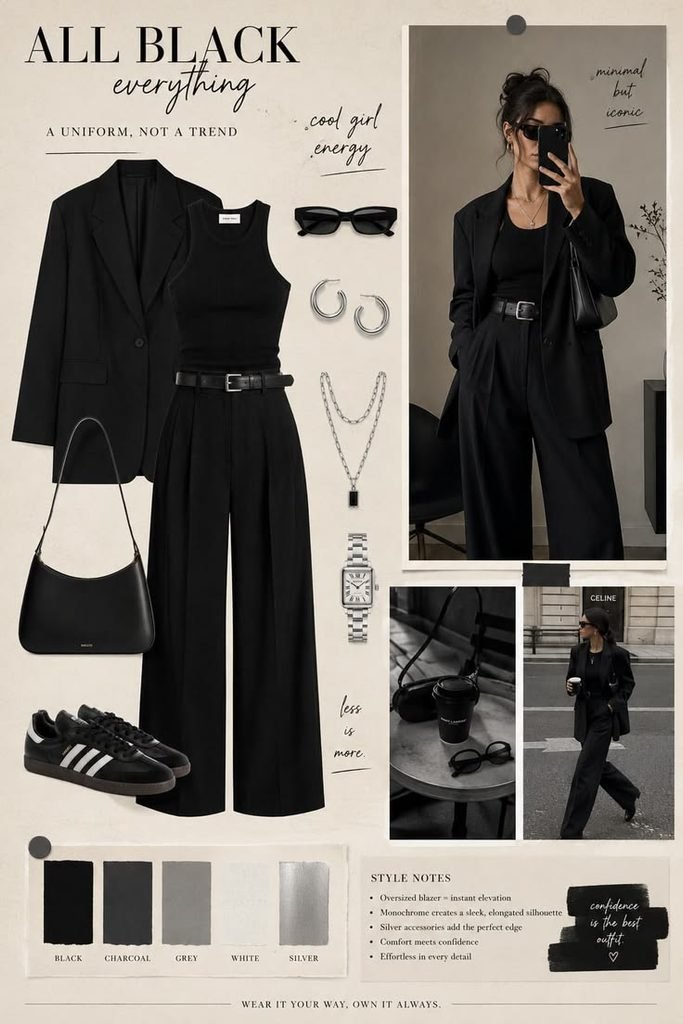
Fit
Fit is often more important than the price or brand of the garment.
A black blazer with clean shoulder lines and properly adjusted sleeves can look polished even when the design is relatively simple. An expensive jacket with collapsing shoulders, excessive sleeve length, or poorly proportioned trousers can look much less refined.
For formalwear, check:
- Shoulder placement
- Sleeve length
- Trouser break
- Waist fit
- Jacket length
- Dress length
- Overall balance
The goal isn’t necessarily a tight fit. Contemporary formalwear can be tailored, relaxed, or fluid. What matters is that the proportions appear deliberate.
Fabric
Fabric gives black its visual character.
A matte wool suit absorbs light and looks restrained. Satin reflects light and creates a more evening-oriented effect. Velvet adds depth and softness. Crepe gives dresses a smooth, controlled drape.
This is especially important with an all-black outfit because color contrast is limited. Texture has to provide some of the visual interest.
Construction
Details such as lapels, seams, pleats, darts, cuffs, waist shaping, collars, and closures influence the perceived quality of an outfit.
Formal dressing benefits from clean construction because there are fewer casual details to distract from the garment itself.
Accessories
Accessories can move an outfit in either direction.
A black dress with refined jewelry and pointed pumps can look formal. The same dress with chunky sneakers and a canvas tote becomes much more casual.
The accessories should therefore support the occasion rather than simply match the clothing.
Black Outfit Formal Ideas for Women
Women have a particularly wide range of options for formal black dressing. A dress is an obvious choice, but it is far from the only one.
Black tailoring, jumpsuits, skirts, trousers, separates, and evening pieces can all work depending on the event.
Black Dresses
A well-cut black dress remains one of the most straightforward formal choices.
The silhouette should reflect the event.
A fitted midi dress can work for a professional dinner or polished reception. A floor-length gown belongs to a more formal evening setting. A structured sheath can suit business occasions, while a fluid satin or crepe dress can work beautifully for an evening event.
The key is not to assume that every black dress has the same level of formality.
1. Black Midi Dress With Heels
A black midi dress is a practical option for weddings, receptions, dinners, and other events where full eveningwear is unnecessary.
Choose a fabric with enough structure or drape to maintain a polished appearance.
Pointed pumps or refined sandals can lengthen the visual line of the outfit.
Add a small clutch and restrained jewelry rather than filling the look with accessories.
2. Black Wrap Dress
A black wrap dress introduces visual movement around the waist and neckline.
This can be useful when a completely straight silhouette feels too severe.
Choose a refined fabric such as crepe, satin, or another material appropriate to the event.
For a business-related event, keep the neckline controlled. For an evening occasion, a slightly more expressive version may work depending on the dress code.
3. Black Column Dress
A column silhouette creates a long, uninterrupted visual line.
This is particularly effective when the goal is a minimalist formal appearance.
Because the silhouette is simple, fabric becomes important. A textured or subtly lustrous material can prevent the outfit from looking flat.
4. Black Floor-Length Gown
A floor-length black gown belongs to the more formal end of eveningwear.
This is appropriate when the invitation calls for formal evening dress or black tie, although the exact requirements should always be checked.
Emily Post identifies a formal floor-length evening gown as one appropriate option for women at black-tie events, alongside dressy cocktail dresses and particularly dressy little black dresses.
5. Black Jumpsuit
A tailored black jumpsuit can provide a modern alternative to a traditional dress.
Look for:
- Defined shoulders
- Clean waist shaping
- Fluid or tailored trousers
- Refined fabric
- Minimal decoration
A wide-leg black jumpsuit with a structured bodice can look especially elegant when paired with pointed shoes and a compact evening bag.
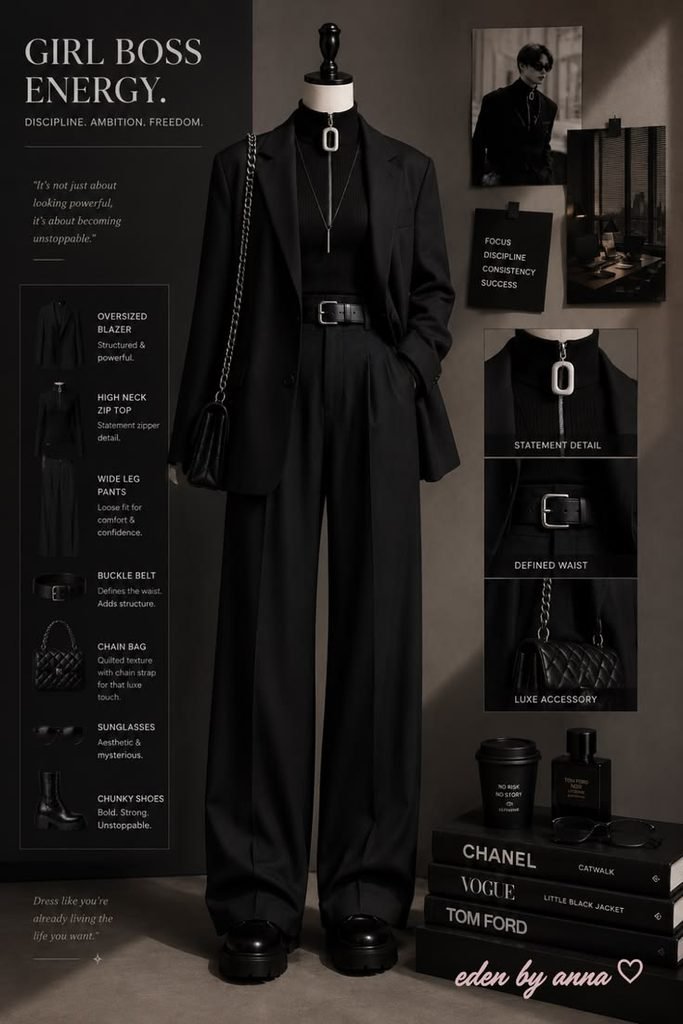
Black Tailoring and Separates
Formal dressing doesn’t require a dress.
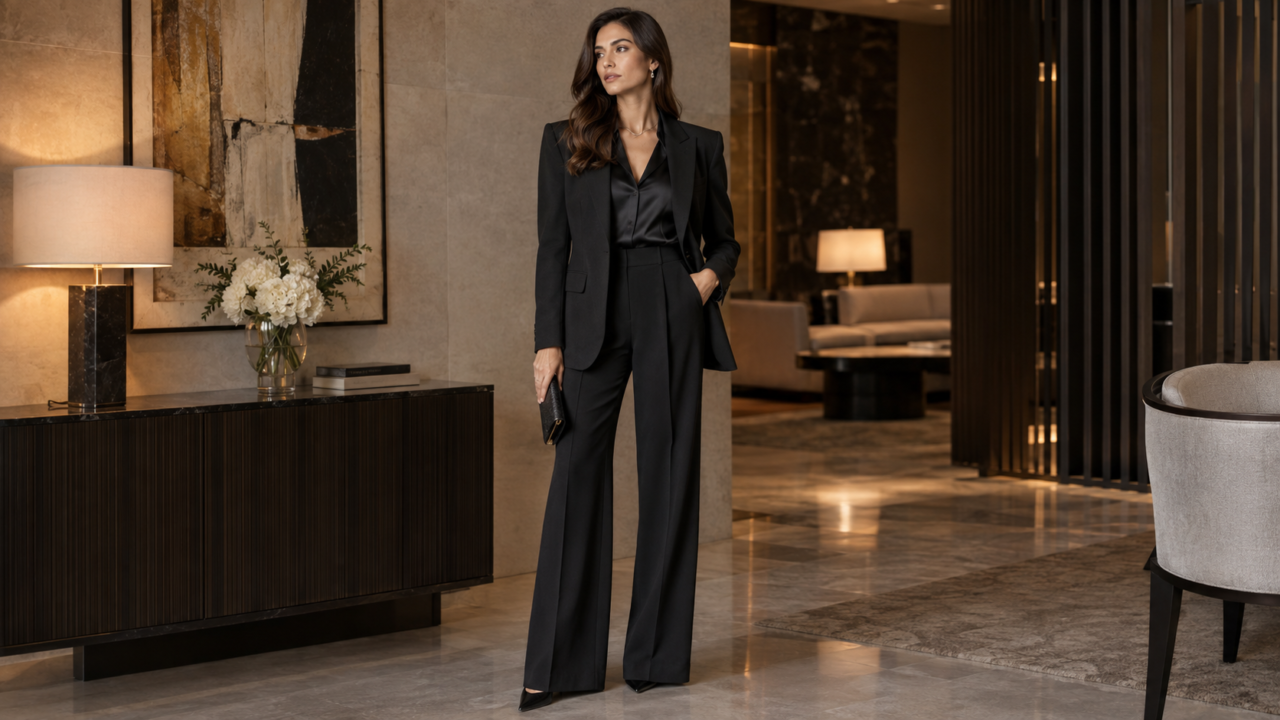
A black trouser suit can be equally polished when the tailoring is strong.
6. Black Blazer With Tailored Trousers
This is one of the most versatile combinations.
A black blazer and matching trousers create a continuous visual line. Underneath, you can use a white shirt, black blouse, silk camisole, or refined knit depending on the occasion.
For a conservative professional event, a crisp shirt is the safer choice.
For an evening event, a silk or satin layer can introduce subtle contrast.
7. Black Blazer and Black Midi Skirt
A fitted or structured black blazer combined with a midi skirt can create a sophisticated feminine silhouette.
The important detail is proportion.
If the blazer is structured and relatively fitted, the skirt can provide movement. If the skirt is narrow and streamlined, a slightly relaxed jacket can prevent the outfit from looking too rigid.
8. Black Wide-Leg Trousers
Wide-leg trousers can look extremely elegant when the fabric has good drape.
Pair them with:
- A fitted blouse
- Structured blazer
- Fine knit top
- Silk shirt
- Minimal evening top
The width of the trousers should be balanced by the upper silhouette.
This is a useful example of why formal dressing is about proportion rather than simply choosing expensive clothing.
Black Outfit Formal Ideas for Men
Men’s formal black dressing often revolves around tailoring, but there are several levels of formality within black menswear.
A black suit, black dinner jacket, and tuxedo are not interchangeable.
Black Suit and White Shirt
9. Classic Black Suit With White Shirt
A black suit with a crisp white shirt remains one of the clearest formal combinations.
The contrast creates definition around the face and prevents the outfit from becoming visually flat.
For a traditional appearance, add:
- Black leather dress shoes
- Black belt
- Conservative tie
- Simple watch
- Optional pocket square
The exact combination should match the occasion.
A business event may call for a conventional suit and tie, while an evening celebration could allow more flexibility.
10. Black Suit With Black Shirt
A black suit with a black shirt creates a monochromatic effect.
This works particularly well for evening events where a slightly more contemporary appearance is appropriate.
The danger is that everything can merge into one dark block.
Texture helps.
A matte suit with a subtly lustrous shirt, for example, creates more visual separation than two garments with exactly the same surface.
11. Black Double-Breasted Suit
A double-breasted jacket adds structure and visual authority to a formal outfit.
The overlapping front creates additional geometry, while the wider jacket shape can produce a stronger silhouette.
Because the jacket already makes a statement, accessories can remain relatively simple.
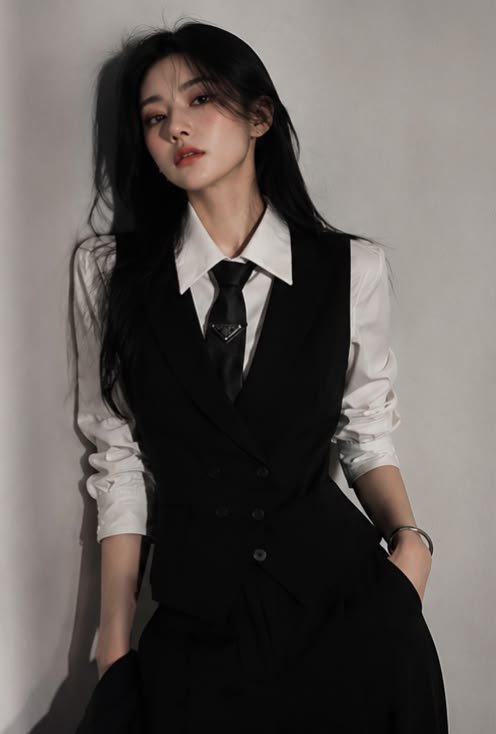
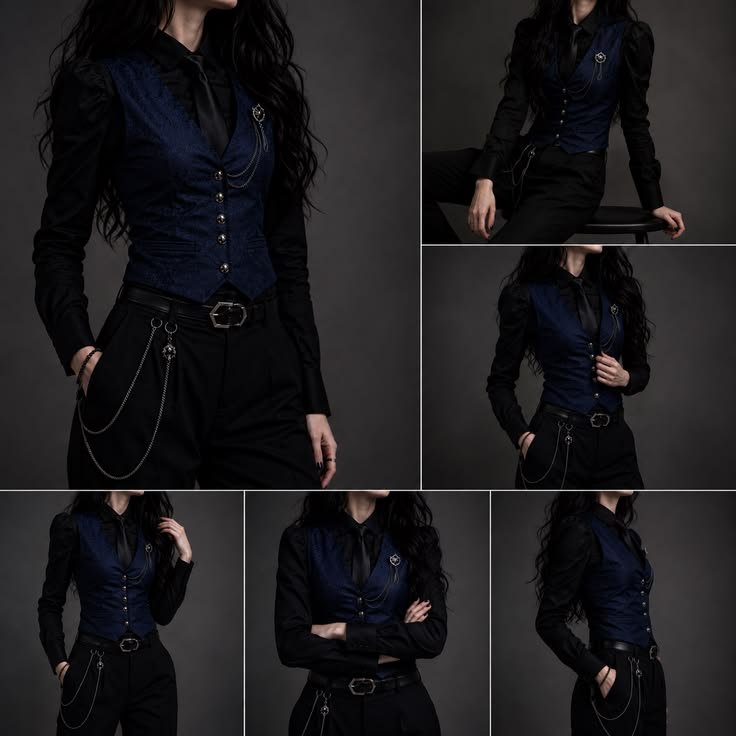
12. Black Three-Piece Suit
A black three-piece suit adds a waistcoat to the traditional jacket and trousers.
This gives the outfit greater depth and formality.
It can work particularly well for weddings, formal ceremonies, and occasions where traditional tailoring is appropriate.
Pay attention to the waistcoat length. It should sit naturally over the waistband rather than exposing the shirt between the vest and trousers.
Black Tuxedo and Black-Tie Dressing
13. Traditional Black Tuxedo
A tuxedo should not be confused with an ordinary black business suit.
Black-tie dressing has its own conventions.
Emily Post describes traditional men’s black-tie attire as a black tuxedo jacket and matching trousers, a formal white shirt, black bow tie, and appropriate formal footwear.
Debrett’s similarly describes black tie as a formal evening dress code built around a dinner jacket, matching trousers, formal shirt, and bow tie.
This distinction is important because the phrase “formal black outfit” is broader than “black tie.”
If an invitation specifically says black tie, follow the stated dress code rather than assuming any black suit will be sufficient.
14. Black Tuxedo With Shawl Collar
A shawl collar gives a tuxedo a smoother, rounded line around the neck.
It works particularly well for evening events because the satin or silk contrast of the collar creates subtle visual definition against the jacket.
15. Peak-Lapel Black Tuxedo
Peak lapels create a sharper, more architectural appearance.
They draw the eye upward and outward, giving the jacket a strong formal silhouette.
Keep the rest of the outfit controlled so the lapels remain part of the overall design rather than competing with other details.
Choosing the Right Fabric, Fit and Silhouette
Black clothing can expose mistakes that might be less noticeable in brighter colors.
The solution is to think beyond color.
Wool
Wool is a classic choice for formal tailoring.
It has structure, drapes well, and works across many types of suits.
For men’s formalwear, wool is particularly useful for suits and tuxedos. For women, wool and wool blends can work beautifully in tailored trousers, blazers, skirts, and structured dresses.
Satin
Satin catches light.
This makes it naturally suited to evening dressing, but too much shine can make an outfit look more theatrical than intended.
Use satin strategically.
A satin blouse beneath a matte black blazer can be more sophisticated than an outfit where every component is glossy.
Velvet
Velvet creates depth through its surface.
A black velvet blazer can transform an otherwise simple evening outfit.
Because velvet already has a strong visual texture, accessories can be kept relatively restrained.
Crepe
Crepe has a controlled drape and relatively subdued surface.
It is particularly useful for black dresses because it can create a polished silhouette without excessive shine.
Lace
Black lace can be elegant, but it changes the visual message of an outfit considerably.
A small lace panel may add softness. An entire lace garment can create a much more romantic or evening-focused appearance.
Use the fabric according to the event.
Shoes and Accessories That Complete a Formal Black Outfit
Shoes and accessories often determine whether the outfit feels complete.
Formal Shoes for Women
Depending on the occasion, consider:
- Black pointed pumps
- Slingback heels
- Minimal heeled sandals
- Refined flats
- Closed-toe evening shoes
The shoe does not necessarily need to be black.
Metallic silver, gold, deep burgundy, or another controlled accent can work when the dress code permits.
Formal Shoes for Men
Classic options include:
- Oxford shoes
- Derby shoes
- Formal loafers
- Patent leather evening shoes for appropriate black-tie settings
The more formal the occasion, the more important it becomes to match the shoe style to the dress code.
Jewelry
Black provides an excellent background for jewelry.
Gold creates warmth.
Silver creates a cooler, sharper contrast.
Pearls can soften the look.
Diamonds or crystal-like details can introduce evening sparkle.
The mistake is not wearing too little jewelry. It is adding so many competing pieces that the clothing loses its visual clarity.
Bags
For formal events, a compact bag usually works better than a large everyday tote.
Consider:
- Small clutch
- Structured evening bag
- Minimal shoulder bag
- Small top-handle bag
For business settings, a structured work bag may be more appropriate.
Black Outfits for Different Formal Occasions
There is no universal formal black outfit.
The event determines the appropriate level of dressing.
Black Outfit for a Wedding
For women, options can include a black midi dress, tailored jumpsuit, elegant separates, or evening dress depending on the invitation.
For men, a black or dark suit may work for many formal weddings, while a black tuxedo is appropriate when black tie is requested.
Always check the wedding invitation first.
The phrase “formal” and the phrase “black tie” are not necessarily identical.
Black Outfit for a Business Event
Business formal dressing should usually be more restrained than eveningwear.
Women can consider:
- Black tailored suit
- Black trousers and blazer
- Black sheath dress
- Black skirt suit
Men can choose:
- Black or dark suit
- White or restrained dress shirt
- Conservative tie
- Leather dress shoes
Avoid excessive shine, dramatic evening accessories, or highly revealing silhouettes.
Black Outfit for a Formal Dinner
A dinner event gives you more room to use texture.
Women might choose a black satin midi dress, tailored jumpsuit, or elegant black separates.
Men can choose a refined black suit or tuxedo depending on the dress code.
Lighting also matters. Fabrics that appear understated in daylight can look much more reflective under restaurant or event lighting.
Black Outfit for a Formal Party
This is where you can introduce more personality.
Texture, jewelry, interesting footwear, sculptural bags, or an unusual silhouette can make an all-black outfit more expressive.
The basic principle remains the same: one or two strong details are generally more effective than adding everything at once.
Black-Tie Event
Black tie requires greater attention to established formalwear conventions.
For men, a tuxedo-based outfit is the traditional foundation.
For women, formal evening gowns, dressy cocktail dresses, and particularly elevated little black dresses can fit the dress code.
Common Black Formal Outfit Mistakes
Black is forgiving in some ways but surprisingly demanding in others.
Wearing Casual Fabric to a Formal Event
A black cotton T-shirt does not become formal simply because it is black.
Fabric communicates context.
If the invitation requires formalwear, choose materials and construction that support the dress code.
Ignoring Fit
A beautiful outfit can lose its effect if trousers pool excessively around the shoes or a blazer pulls across the buttons.
Tailoring is often the most useful improvement you can make.
Making Everything the Same Texture
An all-black outfit can become visually flat when every piece has the same surface.
Instead, combine textures.
For example:
Matte wool + silk shirt + polished leather shoes
or
Crepe dress + metallic jewelry + smooth leather bag
Small differences create depth.
Over-Accessorizing
Because black is simple, there can be a temptation to add numerous accessories.
Usually one focal point is enough.
If the dress has dramatic sleeves, you may not need a statement necklace.
If the shoes are distinctive, keep the bag and jewelry quieter.
Treating Black Tie as “Wear Black”
This is one of the biggest misunderstandings.
Black tie refers to a specific formal dress code, not simply the color of the clothing. Emily Post distinguishes black-tie attire from ordinary business attire and provides specific expectations for both men and women.
How to Make an All-Black Outfit Look Interesting
An all-black outfit doesn’t have to look boring.
The trick is to create variation without breaking the monochromatic concept.
Mix Textures
Try:
- Wool
- Silk
- Satin
- Leather
- Velvet
- Crepe
- Knitwear
Texture is especially valuable because black absorbs and reflects light differently depending on the surface.
Play With Proportion
A cropped jacket over wide-leg trousers creates a different silhouette from a long blazer over slim trousers.
A fitted dress with an oversized coat creates another.
Proportion is one of the strongest tools available when color is deliberately limited.
Use Small Metallic Accents
Gold and silver can both work with black.
A metallic watch, earrings, clutch, belt buckle, or shoe detail may be enough to break up the darkness without introducing a new dominant color.
Introduce Tonal Black
Not every black garment has to be exactly the same black.
Different materials can produce subtle variations in depth.
A faded black wool jacket can look different from deep black satin even though both are technically black.
This tonal variation can make monochromatic dressing more sophisticated.
How to Build a Formal Black Outfit From Clothes You Already Own
You don’t necessarily need a completely new wardrobe.
Start by identifying the most formal pieces you already have.
For women:
Option 1:
Black midi dress + black pumps + small bag + simple jewelry
Option 2:
Black blazer + black trousers + silk blouse + pointed shoes
Option 3:
Black jumpsuit + structured bag + minimal heels
For men:
Option 1:
Black suit + white dress shirt + black leather shoes + conservative tie
Option 2:
Black suit + black shirt + black leather shoes for an appropriate evening setting
Option 3:
Black tuxedo + white formal shirt + black bow tie + formal evening shoes for black-tie events
The most important step is to inspect the fit.
If your trousers are too long, your jacket sleeves are too long, or your shirt collar doesn’t sit correctly, a small alteration may improve the outfit more than purchasing another garment.
Why Black Remains Important in Formal Fashion
Black’s role in formal clothing has a much longer history than the modern little black dress.
The Metropolitan Museum of Art documents black garments used for formal and semi-formal occasions before Chanel’s 1926 interpretation of the little black dress.
Black also carried different cultural meanings across different periods. In nineteenth-century Western fashion, black could be associated with mourning while simultaneously functioning as fashionable dress. The Met’s collection records show how the boundaries between mourning and fashionable black clothing could overlap.
The Fashion Institute of Technology’s Fashion History Timeline also documents black as a fashionable color in nineteenth-century dress, showing that black was not simply a mourning color.
The twentieth century expanded black’s possibilities further.
Chanel’s little black dress helped establish black as a practical, adaptable foundation for different accessories and occasions.
Today, black can support everything from conservative tailoring to experimental eveningwear. Its strength is not that it automatically makes an outfit elegant. Its strength is that it provides a controlled foundation for silhouette, fabric, proportion, texture, and construction to become visible.
25 Black Outfit Formal Ideas at a Glance
For quick inspiration, these combinations cover different levels of formality:
- Black midi dress + pointed pumps
- Black sheath dress + structured handbag
- Black satin dress + metallic jewelry
- Black column gown + minimal clutch
- Black jumpsuit + heeled sandals
- Black blazer + tailored trousers
- Black blazer + midi skirt
- Black trousers + silk blouse
- Black wide-leg trousers + fitted top
- Black suit + white shirt
- Black suit + black shirt
- Black double-breasted suit + dress shoes
- Black three-piece suit + white shirt
- Black tuxedo + formal white shirt
- Black tuxedo + bow tie + patent shoes
- Black velvet blazer + tailored trousers
- Black dress + pearl jewelry
- Black dress + silver accessories
- Black blazer + satin camisole + trousers
- Black jumpsuit + structured clutch
- Black midi skirt + fitted blazer
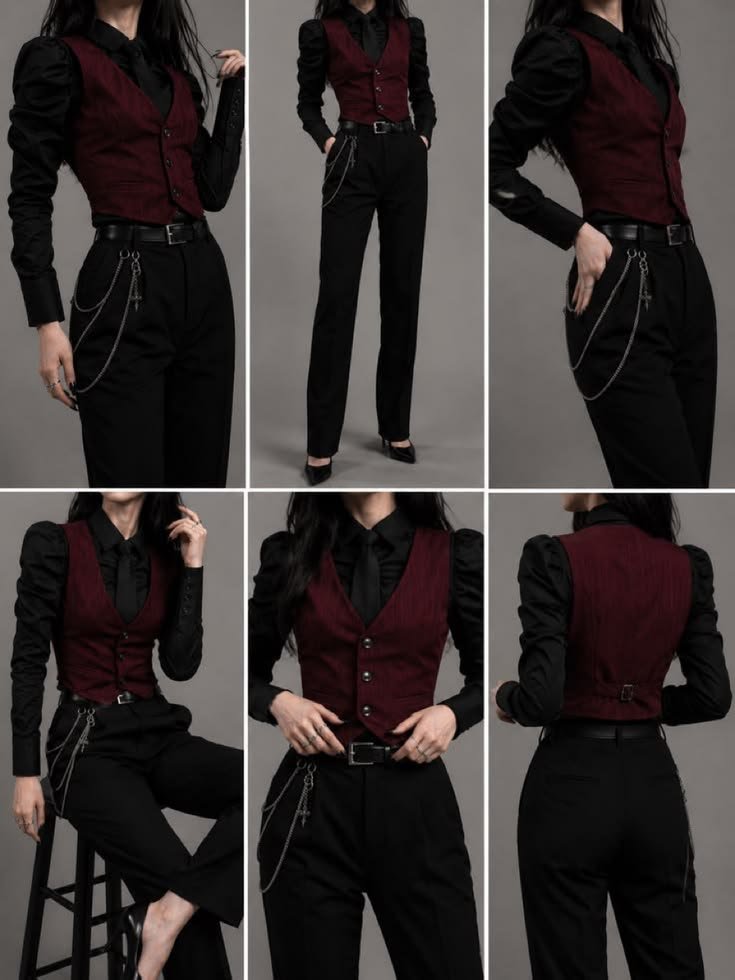
- Black trousers + tailored waistcoat
- Black formal dress + elegant flats
- Black suit + subtle patterned tie
- Black evening dress + minimal metallic accessories
These aren’t rigid formulas. The event, dress code, climate, venue, and personal style should determine the final combination.
Final Styling Checklist
Before leaving for a formal event, check the outfit as a complete system rather than looking at individual garments.
Fit
- Does the clothing sit correctly at the shoulders and waist?
- Are the trousers or dress the right length?
- Can you sit and move comfortably?
Fabric
- Does the material suit the event?
- Does it look appropriate under the expected lighting?
Silhouette
- Is the proportion intentional?
- Does the jacket, top, skirt, trousers, or dress work together?
Shoes
- Are they appropriate for the dress code?
- Are they clean and in good condition?
Accessories
- Do they support the outfit rather than compete with it?
- Is there one clear focal point?
Dress code
- Does the invitation say formal, cocktail, black tie, black-tie optional, or something else?
- Are you dressing for that specific requirement rather than simply choosing black?
The strongest black outfit formal look is rarely the one with the most decoration. It is usually the one where fit, fabric, silhouette, accessories, and occasion all agree.
Black gives you a remarkably controlled starting point. What makes the outfit successful is what you build around that color.
FAQ
Is a black outfit appropriate for a formal event?
Yes. Black is widely used in formal and eveningwear, but the garment itself must suit the dress code. A tailored suit, formal dress, or tuxedo is very different from casual black clothing.
What is the best black outfit for a formal wedding?
For women, a polished black midi dress, elegant jumpsuit, tailored separates, or suitable evening dress can work depending on the invitation. For men, a dark formal suit or tuxedo may be appropriate depending on the specified dress code.
Can an all-black outfit look formal?
Absolutely. An all-black outfit can look highly formal when the clothing has appropriate tailoring, refined fabrics, polished footwear, and controlled accessories.
Is a black suit the same as a tuxedo?
No. A conventional black suit and a tuxedo are different garments associated with different levels of formal dressing. Traditional black-tie attire uses a tuxedo with specific formal details such as a bow tie and formal shirt.
What shoes go with a black formal outfit?
Black leather dress shoes, pumps, pointed heels, refined sandals, formal loafers, or other polished footwear can work depending on the outfit and dress code.
How can I make a black formal outfit less boring?
Use texture and proportion. Combining matte and slightly reflective fabrics, changing the silhouette, or adding one controlled metallic or jewelry accent can create visual interest without abandoning the monochromatic look.
Can women wear a black dress to a black-tie event?
Yes. Emily Post lists a formal floor-length gown, dressy cocktail dress, or particularly dressy little black dress among women’s black-tie options.
What is the difference between formal and black tie?
Formal is a broader category. Black tie is a specific formal dress code with established expectations. Always read the invitation carefully rather than assuming that any black outfit satisfies a black-tie requirement.
Conclusion
A black outfit formal look works best when the color is supported by the right fit, fabric, silhouette, and accessories. Black alone does not make an outfit formal; the construction and styling determine how polished and appropriate it feels.
For a business event, a tailored black suit or structured dress can create a professional appearance. For an evening celebration, satin, velvet, elegant jewelry, or a refined silhouette can add depth. If the invitation specifies black tie, follow the dress code rather than treating any black outfit as sufficient.
The most effective approach is to keep the outfit intentional. Choose pieces that fit well, combine contrasting textures when needed, and use accessories to complement rather than overwhelm the look. With these principles, black can provide a sophisticated foundation for formal dressing across different occasions and personal styles.