Braid braid styles covers a much wider range of looks than the familiar three-strand braid. From polished French braids and graphic Dutch braids to airy crown braids, knotless braids, fishtails and intricate cornrows, braiding can change the character of an outfit as dramatically as jewelry or shoes.
The strongest braid looks are not necessarily the most complicated. A simple braid can look sophisticated when its placement, texture and finish work with the wearer’s haircut and clothing. A loose side braid creates a different impression from a sharply parted braided ponytail, while a crown braid can make a casual outfit feel romantic.
Braids are also having a particularly interesting moment in 2026. Vogue’s September 2026 hair forecast highlights crown braids among the year’s notable styles, with an emphasis on softer, airier shapes rather than extremely controlled finishes. The broader direction is toward polished hair that still retains movement and individuality.
This guide looks at the most useful braid styles to know, how they differ, which hair lengths and textures they suit, and how to incorporate them into a complete fashion look.
Why Braid Styles Remain Relevant in 2026
Braids have an advantage that many hairstyle trends do not: they can be interpreted at almost any level of formality.
A three-strand braid can be an everyday solution for keeping hair controlled. The same basic construction can become a sleek runway-inspired detail when incorporated into a low ponytail or sculptural updo.
That flexibility makes braids particularly useful for fashion styling.
There is also a noticeable movement toward hair that looks intentional without appearing excessively rigid. Vogue’s 2026 hair reporting describes a shift toward polished, healthy-looking hair with movement, natural texture and personalized details.
This explains why softer versions of familiar braid styles are especially relevant now.
Instead of making every strand perfectly tight, stylists may leave small sections around the face, loosen the braid slightly or use texture to create a more relaxed silhouette.
The result is less about displaying technical perfection and more about creating balance between hair, clothing and face.
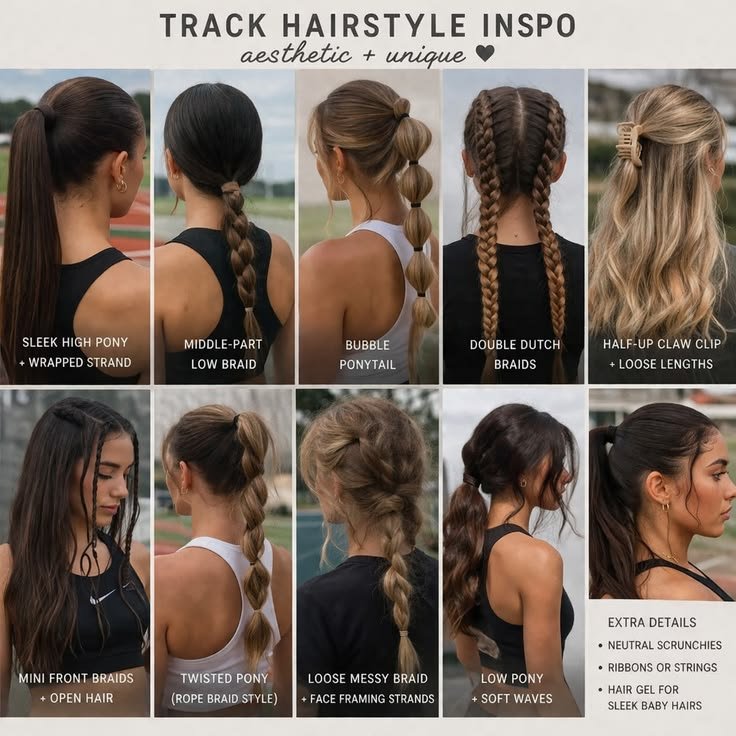
Classic Braid Styles That Still Work
Some braid techniques remain useful because their construction is simple, recognizable and adaptable.
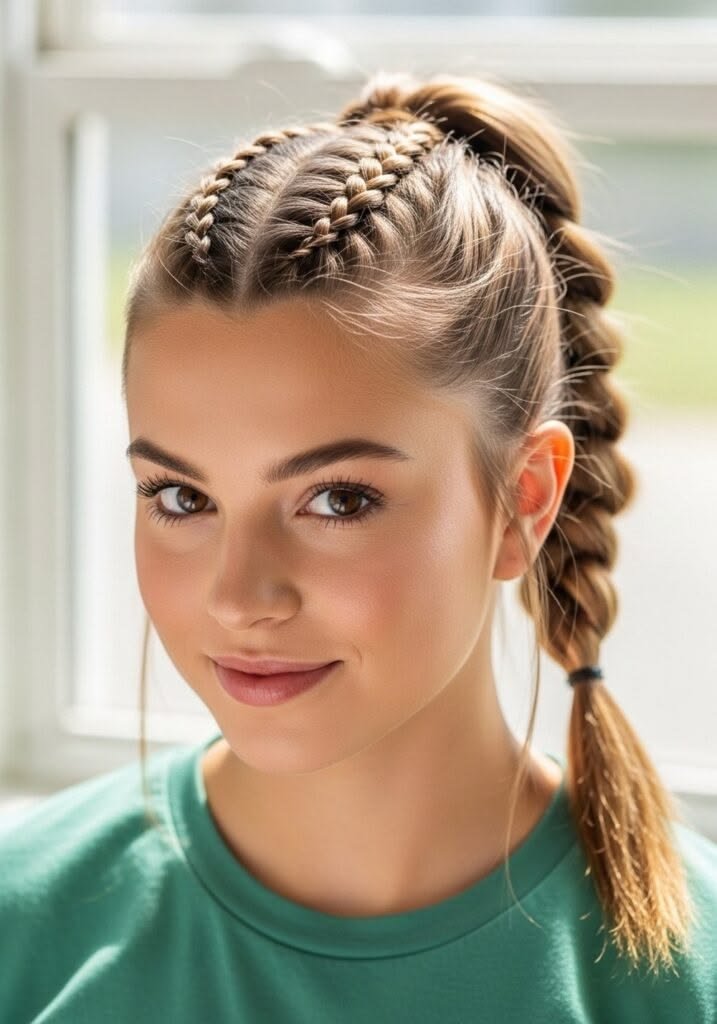
French Braids
The French braid remains one of the most versatile options.
Hair is gradually incorporated into a three-strand braid as it moves toward the nape. The result sits close to the head and can be worn as one central braid or as two symmetrical braids.
French braids work particularly well with casual clothing because their structure keeps the hairstyle neat without making it look overly formal.
Try them with:
- A white shirt and straight-leg jeans
- A simple knit dress
- A denim jacket
- A sporty outfit
- A relaxed summer look
For a more contemporary finish, avoid pulling every section extremely tight. A little softness around the hairline can make the hairstyle feel less school-like and more editorial.
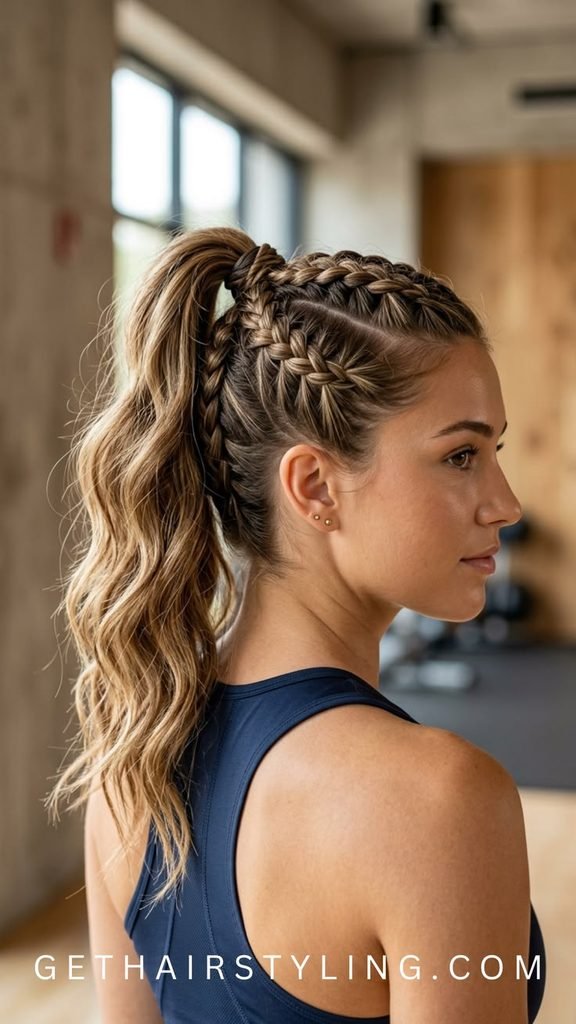
Dutch Braids
Dutch braids are constructed in a similar way to French braids, but the sections are crossed underneath rather than over.
This makes the braid appear more raised from the scalp.
That difference is important visually. Dutch braids have stronger dimension, which makes them useful when the hairstyle needs to become part of the outfit rather than simply keep the hair controlled.
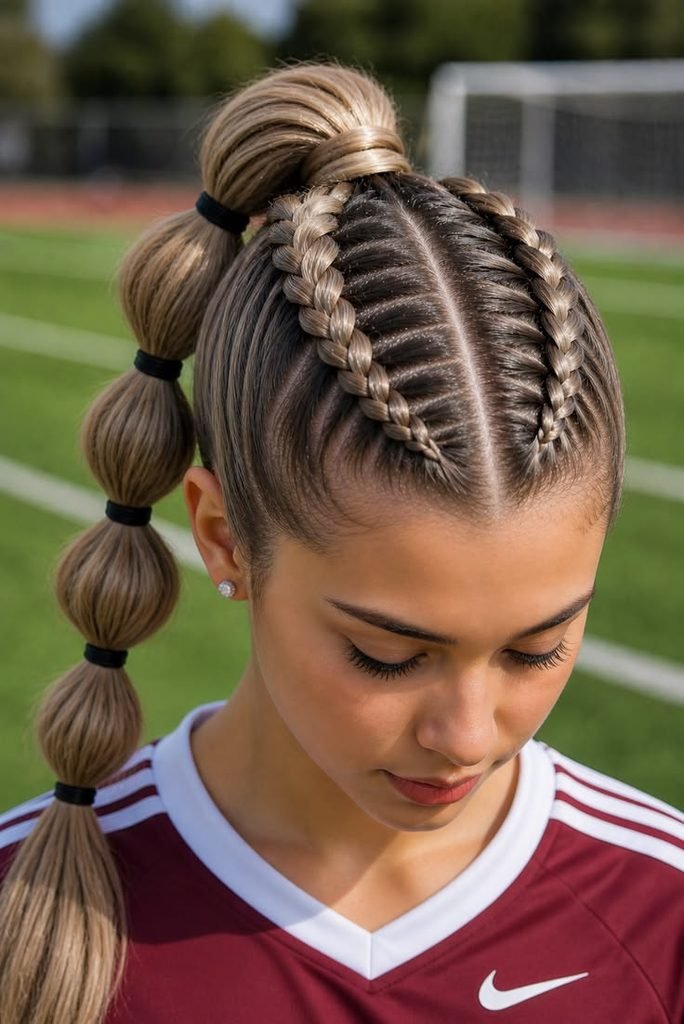
Two Dutch braids can create a sporty aesthetic, while a single Dutch braid can look striking with an oversized blazer or minimalist streetwear.
Fishtail Braids
Fishtail braids use smaller sections than traditional three-strand braids, creating a woven appearance.
They are particularly effective on medium-to-long hair because additional length allows the pattern to become more visible.
A fishtail braid does not have to look perfectly symmetrical. Slightly loosening the outer sections can create a softer texture.
Fishtails pair especially well with:
- Bohemian dresses
- Linen clothing
- Maxi skirts
- Festival outfits
- Romantic blouses
- Relaxed tailoring
The style also works for evening dressing when the braid is kept clean and controlled.
A 2026 example of braid styling came from Taylor Swift, who wore a fishtail braid with a ribbon during a June 2026 appearance.
Modern Braid Styles to Try
Classic techniques become more interesting when their proportions or placement change.
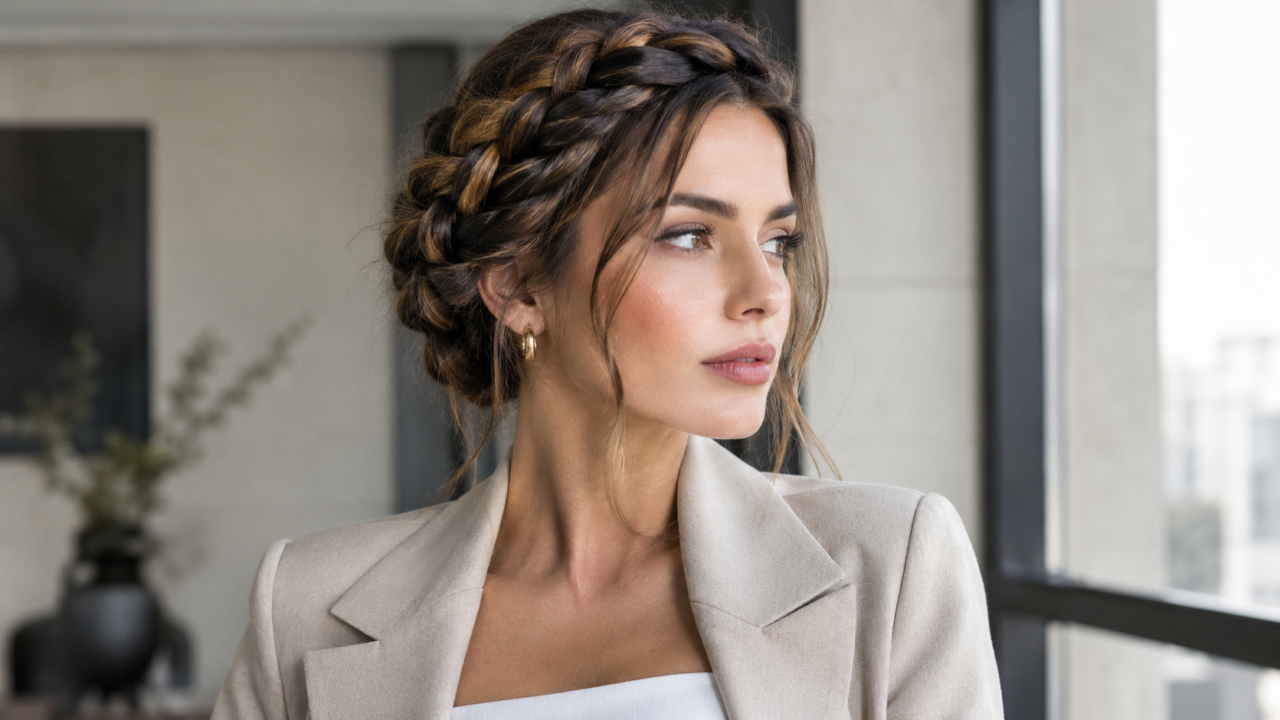
Airy Crown Braids
Crown braids are particularly relevant to the current fashion mood.
Vogue’s 2026 hair forecast specifically identifies airy crown braids, describing a softer approach with loose sections, face-framing pieces and visible movement.
The important detail is restraint.
An airy crown braid should not look as though every strand has been pulled into exactly the same position. Small variations in volume can make the hairstyle feel more natural.
This style works especially well with:
- Romantic dresses
- Soft tailoring
- Lightweight blouses
- Flowing skirts
- Minimal jewelry
It can also provide an interesting contrast with structured clothing.
For example, a crisp blazer paired with a soft crown braid creates tension between tailoring and softness.
Milkmaid Braids
Milkmaid braids wrap around the top or sides of the head and create a romantic updo.
They became closely associated with bohemian styling during the 2010s, but the look has been resurfacing through contemporary celebrity styling.
In May 2026, Olivia Wilde wore a light, flowing interpretation of milkmaid braids with face-framing pieces and a Grecian-inspired dress. Vogue characterized the look as part of a broader return of boho nostalgia.
The lesson is useful for styling generally: bringing back an older hairstyle does not require reproducing its original styling exactly.
A modern milkmaid braid can be:
- Looser
- Softer
- Less symmetrical
- Paired with contemporary makeup
- Combined with minimalist clothing
Sleek Braided Styles
The opposite approach is a sharply controlled braid.
Think clean parting, smooth roots and a tightly finished braid incorporated into a ponytail or bun.
Sleek braided styles work particularly well with modern tailoring because both the clothing and hair share a controlled visual language.
Charlotte Mensah also identified sculpted updos and sleek braided strands as part of the sharper direction in 2026 hair styling.
For an editorial-inspired outfit, try a sleek braid with:
- A black suit
- A fitted dress
- A long coat
- Minimal gold jewelry
- Pointed-toe shoes
The key is not to over-accessorize. When the hairstyle is graphic, the clothing can remain relatively clean.
Boho and Knotless Braids
Boho-inspired braiding continues to offer a more relaxed alternative to highly polished hairstyles.
Knotless braids are also widely used as a protective style, particularly for textured hair. Their construction differs from traditional box braids because the extension hair is gradually incorporated rather than beginning with a large knot at the base.
The visual effect can range from extremely neat to deliberately relaxed.
Vogue’s summer 2026 hairstyle coverage also pointed to floaty, boho knotless braids as one option for textured hair.
The important consideration is that braid size and installation technique should be selected according to the wearer’s hair condition and stylist’s expertise rather than copied from a photograph.
Braid Styles by Hair Length
Hair length influences not only which braid is possible but also how the finished style will look.
Short Hair
Short hair does not exclude braiding.
Instead, the braid becomes a detail rather than necessarily the entire hairstyle.
Useful options include:
- Small side braids
- Temple braids
- Mini Dutch braids
- Braided bangs
- Partial crown braids
- Two small front braids
A small braid placed near the face can change the appearance of a bob without requiring a complete restyle.
For short hair, texture matters more than length. A braid can be combined with waves or natural texture to make the hairstyle feel more dimensional.
Medium Hair
Medium-length hair offers considerable flexibility.
It can usually support:
- French braids
- Dutch braids
- Fishtails
- Half-up braids
- Side braids
- Braided ponytails
- Partial crowns
Half-up braided hairstyles are particularly useful for fashion styling because they leave some hair loose while adding structure around the face and crown.
This can work beautifully with dresses, blouses and tailored separates.
Long Hair
Long hair provides the greatest opportunity for experimenting with braid scale and shape.
You can use:
- Long fishtail braids
- Double Dutch braids
- Rope-inspired braids
- Braided ponytails
- Large three-strand braids
- Crown braids
- Braided buns
- Multi-braid combinations
But longer does not automatically mean better.
An extremely long braid can become the dominant visual element of an outfit. If the clothing already contains strong prints, embellishment or dramatic proportions, a simpler braid may create better balance.
Choosing Braids for Different Hair Textures
Hair texture affects grip, volume, longevity and the final appearance of a braid.
Straight hair often benefits from texture products when a loose braid needs to hold its shape. Very smooth hair can cause sections to slide apart more easily.
Wavy hair naturally provides additional dimension. A loose braid can emphasize that movement instead of hiding it.
Curly hair can create a particularly rich braid texture because the natural pattern contributes volume and visual depth.
Coily and tightly textured hair offers extensive possibilities for braiding and protective styling, but technique and tension are important. A style that feels excessively tight is not simply a fashion issue; it can place unnecessary stress on the scalp and hair.
The right approach is to consider:
- Natural texture
- Hair density
- Existing damage
- Scalp comfort
- Desired duration
- Maintenance requirements
- Installation technique
A photograph should be treated as styling inspiration, not as proof that the same braid will behave identically on another person’s hair.
Protective Braids and Natural Hair
Braided hairstyles have a particularly important place in Black hair culture and should not be discussed only as seasonal fashion accessories.
The Smithsonian’s National Museum of African American History and Culture notes that braids and other natural hairstyles have served both practical and social functions within Black communities. Historically, hairstyles could communicate information about identity, community and life circumstances.
The Smithsonian also documents the importance of hair care as a form of community, family connection and identity.
This history matters when discussing styles such as cornrows, box braids, Fulani-inspired braiding and other African and African-diaspora hairstyles.
Braids can be fashionable, but some braid traditions also carry cultural meaning.
That distinction is worth maintaining.
For protective styling, comfort should take priority over achieving a particularly tight or dramatic look. Installation by a knowledgeable stylist is especially important when extensions are involved.
Protective styling also does not mean a hairstyle can be ignored for weeks. Scalp care, cleansing and appropriate removal are part of maintaining the health of the hair underneath.
Matching Braids With Your Outfit and Occasion
The best braid is often the one that supports the clothing rather than competing with it.
For Everyday Outfits
Choose practical styles such as:
- French braids
- Simple side braids
- Half-up braids
- Loose three-strand braids
These work well with denim, T-shirts, knitwear and casual dresses.
For Work
A polished low braid or braided ponytail can look professional without appearing overly formal.
Pair it with:
- A blazer
- Tailored trousers
- A button-down shirt
- A midi dress
- Loafers or clean leather shoes
Keep the finish controlled and avoid excessive accessories if the workplace is conservative.
For Weddings and Formal Events
Crown braids, braided buns and intricate updos can work beautifully for formal occasions.
The hairstyle should coordinate with the neckline.
For example, an open neckline can provide space around the face, while a high neckline may work better with an updo that exposes the neck and shoulders.
Hair accessories should also relate to the dress rather than being added simply because the hairstyle feels incomplete.
For Festivals and Vacations
This is where more playful braid styling can make sense.
Consider:
- Multiple small braids
- Boho braids
- Colored extensions
- Ribbons
- Beads
- Half-up braids
- Relaxed fishtails
The key is to choose accessories that are secure and comfortable rather than allowing decorations to make the hairstyle unnecessarily heavy.
How to Make Braids Look More Polished
A polished braid is not necessarily a perfectly tight braid.
There are several details that make a bigger difference.
Start with the right preparation.
Hair that is excessively slippery can be difficult to braid. Hair with too much product buildup can become stiff and difficult to separate.
Create intentional sections.
Clean parting can make even a simple braid look professionally styled.
Control the tension.
Consistency is more attractive than extreme tightness.
Think about volume.
A braid can be gently expanded after construction if a fuller silhouette is desired.
Keep the ends deliberate.
A braid with a neat finish looks more intentional than one that simply stops at an elastic.
Consider face-framing pieces.
A few controlled pieces can soften a structured hairstyle.
Vogue’s current hair reporting similarly emphasizes movement and a less rigid interpretation of polished styling.
The Cultural History Behind Braided Hairstyles
Braiding has a history far older than contemporary fashion.
The Metropolitan Museum of Art, for example, holds an ancient Egyptian braid of hair and linen dating to approximately 1491–1458 BCE. The object demonstrates that hair braiding and hair additions existed in ancient Egyptian grooming practices thousands of years ago.
Braiding traditions developed across different societies, so it is inaccurate to treat all braids as originating from one culture.
African braiding traditions are especially significant. The Smithsonian notes that among historical Wolof, Mende and Yoruba communities, hairstyles could communicate social information including age, marital status, wealth, religion and social position.
In the United States, Black hairstyles have also been connected with identity, resistance and changing beauty standards.
The Smithsonian’s National Museum of African American History and Culture explains that braids, cornrows and other natural styles have been part of Black identity and cultural expression for generations, while Black hair has simultaneously been subjected to discrimination and Eurocentric beauty standards.
For fashion publications, this history is important because styling references should be discussed with context.
A culturally significant hairstyle should not be presented as though it suddenly appeared because it became popular on social media or a runway.
What Makes a Braid Style Look Modern?
Modernity in braiding is less about inventing a completely new technique and more about changing proportion, texture and styling context.
A familiar braid can look contemporary through:
Scale:
One oversized braid creates a different visual effect from several micro-braids.
Placement:
A side braid feels different from a central braid or one incorporated into an updo.
Finish:
Glossy and controlled hair creates a different mood from soft, textured hair.
Accessories:
Ribbons, discreet pins and carefully selected beads can change the character of a braid.
Contrast:
A romantic braid with sharp tailoring can feel more current than a braid paired with another obviously romantic piece.
Imperfection:
Slight looseness can create movement and prevent a hairstyle from looking overly constructed.
This is why the current emphasis on softer crown braids is interesting. Rather than abandoning traditional techniques, contemporary styling is changing their finish and proportion.
Common Braid-Styling Mistakes
One of the most common mistakes is choosing a braid because it looks good in a photograph without considering the wearer’s own hair.
A hairstyle’s success depends on texture, density, length and condition.
Another mistake is excessive tension. Tight does not automatically mean polished.
Overloading the hairstyle with accessories can also weaken the overall look. If a braid is already intricate, one understated accessory may be more effective than several competing pieces.
Another issue is ignoring the outfit.
A dramatic fishtail braid, heavily embellished dress and statement earrings may all be individually attractive, but together they can create too much visual activity around the face and upper body.
Finally, don’t confuse maintenance-free with protective. A braided hairstyle still requires appropriate care, and prolonged wear without proper maintenance can create problems for the hair and scalp.
25 Braid Styles Worth Trying
For readers who want a quick starting point, these are some of the most versatile categories to consider:
- French braid
- Dutch braid
- Fishtail braid
- Classic three-strand braid
- Side braid
- Double Dutch braids
- Crown braid
- Airy crown braid
- Milkmaid braid
- Half-up braid
- Braided ponytail
- Braided bun
- Rope-style braid
- Boho braid
- Knotless braids
- Box braids
- Cornrows
- Mini side braids
- Braided bangs
- Waterfall braid
- Halo braid
- Low braided ponytail
- Braided chignon
- Multi-braid hairstyle
- Ribbon-accented braid
The best choice depends less on the number of styles available and more on what you want the hairstyle to accomplish.
If the goal is convenience, choose a secure and uncomplicated braid.
If the goal is softness, loosen the construction and allow movement.
If the goal is visual drama, use scale and placement.
If the goal is protection, prioritize appropriate technique, comfort and hair health.
How to Choose the Right Braid for Your Personal Style
A useful way to choose a braid is to start with the overall mood of your wardrobe.
If your clothes are minimalist, a graphic braid can become the focal point.
If you wear romantic clothing, a loose crown or milkmaid braid may reinforce the aesthetic.
If your wardrobe is sporty, Dutch braids or a braided ponytail can complement the athletic proportions.
If you prefer tailored clothing, a sleek low braid creates a clean continuation of that structured style.
For bohemian wardrobes, relaxed fishtails, loose braids and textured crowns work naturally.
The important principle is coherence rather than matching.
Your hair does not need to duplicate your clothing. It should contribute to the same overall visual story.
Braid Styles and Fashion Photography
Braids are particularly useful in editorial photography because they create strong lines.
A long braid can visually extend the body.
A crown braid frames the head.
Two symmetrical braids emphasize the center of the face.
A side braid introduces asymmetry.
Small braids can create texture without becoming the main subject.
For fashion imagery, lighting also matters. Glossy hair reflects light differently from matte textured braids, while fine details such as beads or woven extensions can disappear under flat lighting.
That makes braid styling relevant not only for everyday dressing but also for fashion campaigns, editorial shoots and social content.
Are Braids Likely to Remain Popular?
Braids are more durable as a styling category than most individual hair trends because the underlying techniques are established and adaptable.
Specific versions will come and go.
For example, the current return of airy crown braids and renewed interest in softer movement reflect the broader 2026 preference for personalized, less rigid hair.
Other braid aesthetics may gain attention through celebrities, social media or seasonal fashion.
But the basic techniques—French, Dutch, fishtail, crown, cornrow and other established forms—are unlikely to disappear.
Their strength is adaptability.
A braid can be traditional without looking dated, modern without being technically complicated, and fashionable without depending entirely on a short-lived trend.
FAQ
What are the most popular braid styles?
Popular options include French braids, Dutch braids, fishtail braids, crown braids, box braids, cornrows, knotless braids, milkmaid braids and braided ponytails. The best choice depends on hair type, length, desired maintenance and occasion.
Which braid style is easiest for beginners?
A classic three-strand braid is usually the simplest place to start. Once the hand movements become comfortable, French and Dutch braids are natural next steps.
Are braid styles suitable for short hair?
Yes. Short hair can be styled with mini side braids, braided bangs, temple braids, partial crowns and other small braided details.
Which braids work well for long hair?
Long hair gives you more room for fishtail braids, large three-strand braids, braided ponytails, crown braids and braided updos.
Are braids protective hairstyles?
Some braid styles can be used as protective hairstyles, particularly when they reduce manipulation and are installed and maintained appropriately. However, braiding too tightly or neglecting the hair and scalp underneath can create problems.
Are crown braids trending in 2026?
Yes. Vogue’s September 2026 hair forecast specifically identifies airy crown braids as a notable direction, emphasizing softness, movement and an intentionally less-perfect finish.
Can braids be worn with formal clothing?
Absolutely. Sleek braided buns, crown braids, braided chignons and polished braided ponytails can work with formal dresses and tailoring. The hairstyle should complement the neckline, silhouette and overall level of detail.
How can I make a braid look more fashionable?
Focus on proportion, placement and finish rather than adding unnecessary decoration. A clean part, controlled volume, intentional texture and a hairstyle that works with the clothing can make a simple braid look sophisticated.