Comfortable work shoes should do more than feel soft when you first put them on. The right pair needs to support your feet through the actual demands of your working day—standing on hard floors, walking between tasks, climbing stairs, commuting, carrying equipment, or moving around a busy workplace.
That is why choosing work footwear based only on appearance or cushioning can be misleading. A soft midsole cannot compensate for a cramped toe box, an unstable heel, poor grip, or a shoe that does not match your workplace.
The best choice depends on fit, cushioning, support, outsole design, materials, job requirements, and dress code.
This guide explains what to look for, how different jobs change your footwear needs, and how to find a pair that feels comfortable without making your professional wardrobe look overly casual.
What Makes Work Shoes Comfortable?
Comfort is not one feature. It is the result of several elements working together.
A comfortable work shoe generally needs to hold the foot securely while allowing the toes enough room to move. It should provide enough cushioning for the surfaces you work on without becoming excessively soft or unstable.
The outsole also matters. Someone working in a dry office has very different requirements from a restaurant employee walking across wet or greasy floors.
The Canadian Centre for Occupational Health and Safety recommends work footwear with a secure heel, freedom for toe movement, appropriate fastening, and a fit that accommodates the larger foot. It also recommends considering shock-absorbing insoles when work involves prolonged standing on hard floors.
A useful way to think about comfort is:
Comfort = fit + support + cushioning + stability + appropriate traction + suitable materials.
Take away one of these elements and the shoe may become less comfortable during a long shift.
The Most Important Features to Look For
Fit and Toe Room
Fit should come before almost everything else.
A shoe that is too short can compress the toes, while excessive width can allow the foot to slide around inside the shoe. Both situations can become more noticeable after several hours of work.
Your toes should have enough space to move naturally without the foot sliding forward.
The heel should also feel secure. A small amount of movement can be normal with some footwear designs, but your heel should not repeatedly lift and slide with every step.
One practical recommendation from CCOHS is to have both feet measured because feet can differ in size, then choose footwear according to the larger foot. It also recommends trying shoes later in the day when feet may be more swollen than in the morning.
That is particularly useful when buying footwear for long shifts.
Cushioning and Shock Absorption
Cushioning helps reduce the harsh sensation created by repeated contact with hard surfaces.
This is especially relevant for people working on:
- Concrete
- Tile
- Metal
- Hard commercial flooring
- Warehouse surfaces
But maximum cushioning is not automatically maximum comfort.
An extremely soft shoe can feel wonderful initially but may not provide the stable platform some workers need. Someone who spends a shift walking and turning may prefer a moderately cushioned shoe with a stable base.
The ideal amount of cushioning depends on the workplace, body mechanics, walking pattern, and personal preference.
For workers who stand on hard floors, CCOHS specifically recommends considering shock-absorbing insoles and appropriate cushioning.
Support and Stability
Support is different from cushioning.
Cushioning primarily concerns how the shoe manages impact and pressure. Support concerns how securely the foot sits inside the shoe and how the footwear behaves during movement.
A supportive work shoe may have:
- A secure heel counter
- A structured midsole
- A stable outsole
- An appropriately shaped footbed
- A fastening system that keeps the foot positioned correctly
For long working days, stability can be particularly valuable because your feet perform thousands of small movements rather than simply remaining in one position.
A shoe that constantly allows the foot to slide can become tiring even if its insole is very soft.
Outsole Grip and Workplace Safety
Traction becomes a comfort issue when you work in an environment where slipping is possible.
Restaurant employees, healthcare workers, cleaners, warehouse workers, and other professionals may encounter wet or contaminated surfaces. In these environments, a fashionable everyday sneaker may not provide the protection needed.
OSHA guidance identifies slip-resistant footwear as useful where slippery surfaces create hazards. It also emphasizes that footwear selection should be based on workplace hazards rather than appearance alone.
Importantly, “non-slip” does not mean a shoe is equally effective on every surface. OSHA notes that slip resistance varies according to both footwear and the surface itself.
Look at the outsole pattern, rubber compound, workplace requirements, and manufacturer’s stated use rather than assuming every textured sole offers the same traction.
Choose Comfortable Work Shoes for Your Job
There is no universal best work shoe.
A shoe that works beautifully for an office employee may be completely inappropriate for a restaurant worker. Your occupation should therefore influence the footwear design you choose.
Healthcare and Long Standing
Healthcare professionals can spend substantial portions of a shift walking and standing.
For this type of work, prioritize:
- Cushioning
- Stable construction
- Secure fit
- Easy-to-clean materials
- Appropriate traction
- Breathability
A professional-looking slip-resistant sneaker or clog can make more sense than a traditional leather dress shoe.
The visual goal does not have to be sporty. Neutral black, white, navy, gray, or dark leather finishes can look clean and professional while still providing practical construction.
Retail and Teaching
Retail workers and teachers often combine prolonged standing with repeated walking.
This makes balance particularly important.
You may not need the most heavily cushioned shoe available, but you do need footwear that remains comfortable while moving around for hours.
A flexible walking-style shoe, polished sneaker, supportive loafer, or modern flat can work depending on the dress code.
For these professions, pay close attention to the relationship between the upper and sole. A shoe that bends naturally near the forefoot can feel less restrictive during repeated walking.

Hospitality and Restaurant Work
Hospitality footwear has a more demanding brief.
Workers may deal with water, food, oils, cleaning products, and hard floors while walking quickly through crowded spaces.
Here, traction can be more important than fashion details.
A restaurant worker should not select footwear simply because it has thick cushioning or looks like a popular lifestyle sneaker. If the workplace requires slip-resistant footwear, that requirement comes first.
OSHA materials specifically recommend non-skid footwear for restaurant environments and emphasize appropriate tread and secure fastening.
Office and Business-Casual Work
Office workers have more freedom.
If most of your day is spent sitting, your footwear requirements are different from those of someone standing for eight hours.
Traditional loafers, derbies, ballet flats, low-profile sneakers, and polished ankle boots can all work depending on the office.
The key is not to confuse formal with uncomfortable.
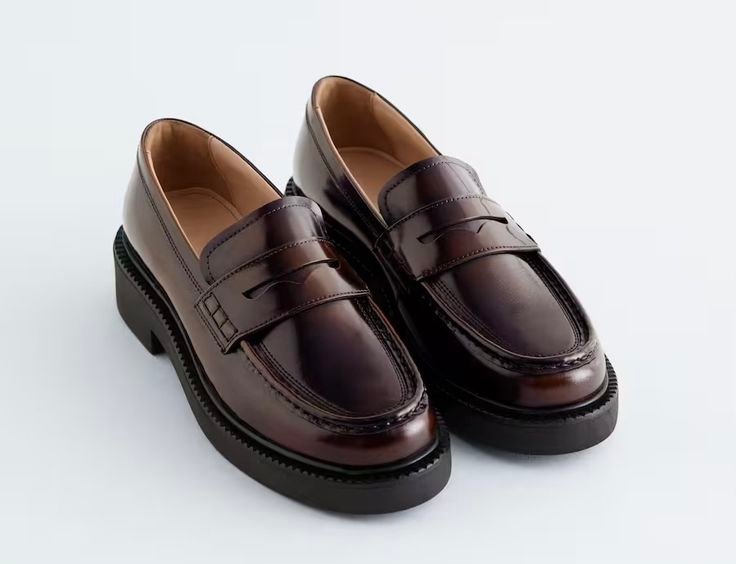
A well-constructed loafer with adequate toe room can be more comfortable than an inexpensive sneaker with poor structure.
For business-casual dressing, leather or refined synthetic uppers can also make a comfortable shoe look more intentional.
Warehouse and Light Industrial Work
Warehouse and industrial environments require much more than comfort.
Potential hazards may include falling objects, rolling equipment, sharp materials, electrical exposure, or other workplace-specific risks.
OSHA requires protective footwear in certain situations involving hazards such as falling or rolling objects and objects that can pierce the sole.
That means a comfortable lifestyle sneaker should never replace required protective footwear.
For these jobs, begin with the employer’s safety requirements and then look for the most comfortable compliant option.
How Work Shoe Materials Affect Comfort and Style
Material influences both physical comfort and visual appearance.
Leather
Leather can offer a polished appearance and works especially well in office environments.
It can also be durable, but the exact comfort depends on the shoe’s construction, lining, flexibility, and fit.
A stiff leather upper may require more adaptation than a softer construction.
Mesh and Engineered Textiles
Mesh and engineered textile uppers are often associated with lightweight walking and athletic-inspired footwear.
They can offer greater airflow than some closed, less breathable constructions.
The downside is that they may look too casual for conservative workplaces and may be less practical in environments requiring easy wipe-clean surfaces.
Synthetic Materials
Modern synthetic uppers can provide practical advantages such as easy cleaning and consistent construction.
However, material quality varies considerably.
A low-quality synthetic upper can feel stiff or trap heat, so the label alone should not determine your decision.
Suede and Textured Materials
Suede can make a comfortable work shoe look sophisticated, particularly in office environments.
It is less practical where footwear frequently encounters water, grease, mud, or cleaning chemicals.
This is where fashion and function have to negotiate with each other.
Comfortable Work Shoes for Men and Women
The basic comfort principles are the same for everyone: proper fit, sufficient toe room, secure heel placement, appropriate cushioning, and a sole suited to the workplace.
The differences often appear in footwear shape, styling, sizing systems, and available widths.
Men’s Work Shoes
Men’s professional work footwear commonly includes:
- Loafers
- Derbies
- Oxfords
- Chukka-style shoes
- Chelsea boots
- Walking shoes
- Minimal sneakers
- Safety shoes and boots
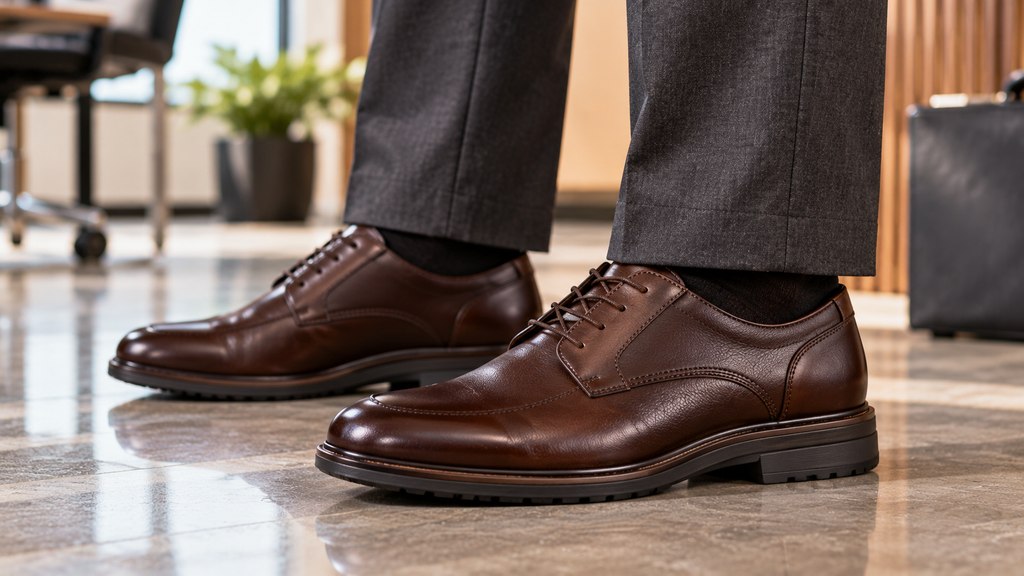
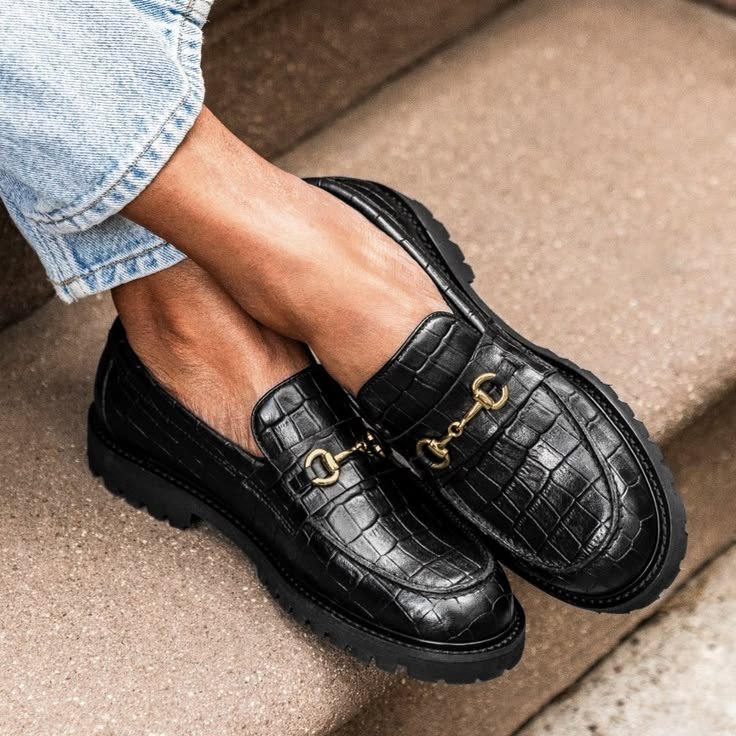
For business settings, a dark leather loafer or derby with a moderately structured sole can provide a more polished appearance than a bulky athletic shoe.
For physically demanding jobs, functionality should take priority over traditional dress conventions.
Women’s Work Shoes
Women’s work footwear includes a wider visual range:
- Ballet flats
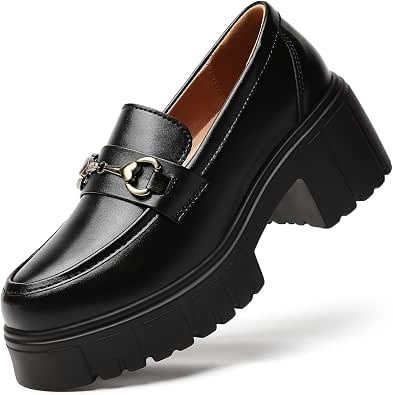
- Loafers
- Low block heels
- Mary Janes
- Ankle boots
- Professional sneakers
- Walking shoes
- Clogs
A useful styling principle is to consider heel height, toe shape, and overall proportion.
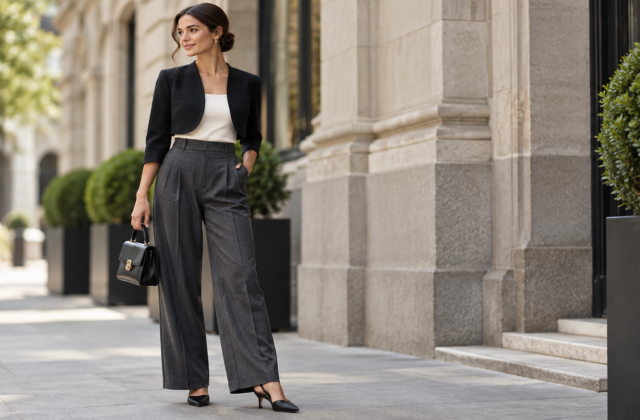
A low block heel can create a polished silhouette without the extreme geometry of a high heel. A streamlined loafer can work with tailored trousers, while a clean sneaker can complement contemporary business-casual clothing.
The goal is not to make comfort invisible. It is to integrate comfort into the overall outfit.
How to Find the Right Fit
Trying shoes on properly can prevent many buying mistakes.
Start with the socks you normally wear to work. A shoe that fits perfectly with thin dress socks may feel very different with thicker work socks.
Walk around.
Do not simply stand in front of a mirror.
Pay attention to:
- Heel movement
- Toe pressure
- Width across the forefoot
- Pressure over the instep
- Flexibility
- Arch sensation
- Overall stability
If one foot is larger, fit the shoe to that foot.
Also remember that a shoe that feels tight in the expectation that it will “stretch out” is usually a poor purchase. CCOHS specifically advises against expecting excessively tight footwear to stretch into a proper fit.
Common Mistakes People Make When Buying Work Shoes
Choosing Softness Over Fit
A thick foam midsole may feel impressive in the store.
But if the shoe is too narrow, cushioning will not solve the underlying problem.
Buying Based Only on Appearance
A sleek shoe may photograph beautifully and still become uncomfortable after several hours.
Think about your actual working conditions before considering the styling.
Wearing the Wrong Shoe for the Floor
Smooth fashion soles can be inappropriate in wet environments.
Similarly, extremely aggressive industrial tread may be unnecessary for a dry office.
Ignoring Width
Length is only one dimension.
People with broad forefeet can experience pressure even when the numerical shoe size appears correct.
Wearing Worn-Out Shoes Too Long
Outsoles and cushioning materials change with use.
Once the tread is substantially worn or the shoe no longer provides its original support, replacing it is usually more sensible than trying to preserve it indefinitely.
OSHA training materials recommend inspecting footwear regularly and replacing footwear before soles become worn smooth.
How to Balance Comfort With Professional Style
Comfortable footwear does not have to look orthopedic or overly athletic.
The trick is to match the shoe’s visual weight to the clothing.
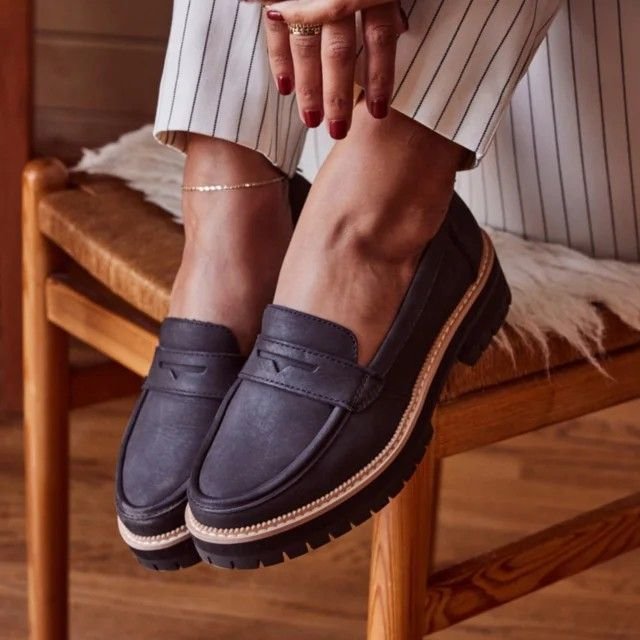
For tailored trousers, a streamlined loafer or refined leather sneaker generally works better than a heavily technical running shoe.
With chinos, smart-casual trousers, or straight-leg denim, contemporary sneakers and minimalist work shoes can feel more natural.
For women, a low-profile loafer, refined flat, clean sneaker, or modest block heel can maintain a professional silhouette.
Color also matters.
Black, brown, tan, navy, gray, and off-white tend to integrate easily into professional wardrobes.
A simple shoe in a versatile color can often create more outfit options than a highly distinctive pair.
When You Need Safety Footwear Instead of Regular Work Shoes
This distinction is important.
Comfortable work shoes are not necessarily safety shoes.
If your workplace exposes your feet to specific hazards, you may need protective footwear that meets applicable requirements.
OSHA identifies situations involving falling or rolling objects, puncture hazards, and electrical hazards as examples where protective footwear may be required.
Depending on the workplace, requirements can include:
- Safety toes
- Puncture resistance
- Electrical protection
- Chemical resistance
- Slip resistance
- Water resistance
- Specific certification or performance standards
Your employer’s safety policy and applicable local regulations should determine what protection is required.
The best approach is to find the most comfortable footwear that meets the required safety specification, rather than selecting ordinary footwear and assuming comfort is enough.
How to Make Work Shoes More Comfortable
Even a good shoe can benefit from thoughtful use.
Choose Appropriate Socks
Socks influence moisture, friction, and temperature.
Avoid socks that bunch underneath the foot or create tight pressure around the ankle.
Consider Insoles
A removable insole can sometimes be replaced with one that better matches your needs.
CCOHS specifically notes shock-absorbing insoles as an option for workers standing on hard surfaces.
However, adding an insole should not be used to force a fundamentally poor-fitting shoe to work.
Rotate Footwear
If practical, rotating between two suitable pairs can give each pair time to dry and recover between working days.
It also reduces dependence on one pair.
Keep the Outsole Clean
Traction depends partly on the condition of the outsole.
If the sole becomes heavily contaminated with workplace material, clean it according to the manufacturer’s guidance.
Replace Shoes at the Right Time
A shoe does not need to have a visible hole before it becomes unsuitable.
Loss of tread, compressed cushioning, structural breakdown, or changes in how the shoe supports your foot can all signal that replacement is appropriate.
What to Look for When Shopping Online
Online shopping makes footwear selection more convenient but removes the ability to physically test the shoe before ordering.
Before buying, check:
1. Size information
Look for the manufacturer’s own sizing guidance rather than assuming every brand fits identically.
2. Width options
Regular, wide, and extra-wide choices can make a significant difference for some feet.
3. Workplace suitability
Confirm whether the shoe is actually intended for your environment.
4. Outsole description
If slip resistance matters, verify that the shoe is specifically designed or rated for the conditions you encounter.
5. Return policy
This is particularly important with footwear because comfort cannot always be predicted from specifications.
6. Dress code
A technically excellent work shoe is not useful if it violates your workplace’s appearance requirements.
7. Protective standards
For industrial work, verify the exact safety standard and protection level rather than relying on marketing terms such as “work-inspired” or “rugged.”
The Difference Between Comfortable and Supportive
These words are often treated as interchangeable, but they are not.
A shoe can feel comfortable because it is soft.
A shoe can feel supportive because it keeps the foot stable.
The best work footwear often combines both without becoming excessively soft or rigid.
Think of the difference between sitting on a very soft sofa and sitting in a well-designed office chair. Softness alone is not the entire experience.
Work shoes operate under the same principle.
Should You Choose Sneakers or Traditional Shoes?
For many workplaces, the answer depends on the dress code.
Sneaker-inspired work shoes can offer excellent cushioning and flexibility, especially for employees who walk or stand throughout the day.
Traditional footwear such as loafers and derbies can be better suited to formal offices.
The interesting development in modern footwear is the growing middle ground: shoes with the visual language of traditional workwear but construction inspired by walking or athletic footwear.
That hybrid approach makes sense for contemporary wardrobes because professional dressing itself has become more flexible.
A tailored trouser with a minimalist sneaker can look intentional. A leather loafer with a cushioned, flexible construction can look traditional without feeling rigid.
How to Build a Practical Work-Shoe Wardrobe
If your lifestyle allows it, owning one pair for every situation is not always the smartest approach.
A small rotation could include:
A polished office shoe
For formal meetings, presentations, and conservative dress codes.
A comfort-focused walking shoe
For long days involving substantial movement.
A weather-appropriate option
For rain, cold weather, or outdoor commuting.
A safety shoe or boot
Only when your job requires protective footwear.
This approach also lets your clothing dictate the footwear rather than forcing every outfit into the same shoe.
For a fashion-focused wardrobe, this is particularly useful because footwear contributes significantly to the visual proportion of an outfit.
Final Thoughts
The best comfortable work shoes are not necessarily the softest, most expensive, or most fashionable pair available.
They are the shoes that make sense for your feet, your job, your workplace, and your wardrobe.
Start with fit. Then consider cushioning, support, stability, traction, materials, and workplace requirements. If safety protection is required, that comes before styling preferences.
From a fashion perspective, modern work footwear offers more flexibility than the old choice between uncomfortable formal shoes and bulky practical footwear. Sleek loafers, refined sneakers, supportive flats, modern boots, and purpose-built work shoes can all have a place in a well-considered wardrobe.
The smartest purchase is therefore not the shoe with the longest feature list. It is the one whose construction matches the way you actually spend your working day.
FAQ
What are the most comfortable work shoes for standing all day?
Look for a shoe with a secure fit, sufficient toe room, appropriate cushioning, stable construction, and an outsole suited to your workplace. Hard floors may increase the value of shock-absorbing cushioning or insoles.
Are comfortable work shoes always slip-resistant?
No. A shoe can be comfortable without being designed for slippery workplaces. If you work around water, oil, food, or other slippery substances, specifically look for footwear appropriate for those conditions.
Should work shoes have arch support?
Arch support can be useful, but the ideal amount varies between individuals. More support is not automatically better. Fit, stability, cushioning, and personal comfort should all be considered.
Are sneakers suitable as work shoes?
They can be, particularly in casual, retail, education, healthcare, or other workplaces that permit them. However, sneakers are not automatically suitable for environments requiring specific protective footwear.
How much toe room should work shoes have?
Your toes should have enough space to move without being compressed, while the heel and midfoot remain secure. The shoe should not depend on stretching to become comfortable.
Are expensive work shoes more comfortable?
Not necessarily. Price can reflect materials, construction, branding, or specialized features, but fit and suitability for your work environment are more important than price alone.
What are the best work shoes for restaurant employees?
Restaurant workers should prioritize footwear designed for the conditions they encounter, particularly appropriate slip resistance, secure fit, durability, and easy maintenance. OSHA guidance specifically discusses non-skid footwear in restaurant work environments.
When should you replace work shoes?
Replace them when the outsole is significantly worn, cushioning or structure has deteriorated, the shoe no longer provides adequate support, or its protective properties can no longer be relied upon. OSHA training materials recommend replacing footwear before soles become worn smooth.
Conclusion
The right work shoe should make a long working day easier, not become another source of discomfort. The most comfortable work shoes are the ones that match your actual routine, workplace, and personal fit—not simply the shoes with the softest sole or the most attractive design.
Start with the basics: enough room for your toes, a secure heel, suitable cushioning, reliable stability, and an outsole that matches the surfaces you work on. If your job involves water, grease, heavy equipment, or other hazards, workplace safety requirements should take priority over appearance.
Style still matters. A well-designed loafer, polished sneaker, supportive flat, or modern work shoe can fit naturally into a professional wardrobe without sacrificing practicality. The best choice is ultimately the one you can wear through your working hours while remaining comfortable, secure, and appropriately dressed.
Before buying your next pair, think beyond how the shoes feel for the first few minutes. Consider how they will perform after several hours of standing, walking, and moving. That simple shift in perspective can help you choose comfortable work shoes that are genuinely suited to your everyday life.