Dress pants are no longer limited to corporate offices, interviews, or formal events. A well-cut pair can sit at the center of a modern wardrobe, working with a dress shirt and leather shoes one day and a knit polo and loafers the next.
The difference between an ordinary pair of trousers and genuinely good dress pants usually comes down to three things: fit, fabric, and proportion. A beautiful wool fabric cannot rescue trousers that pull across the thighs, while an inexpensive pair can look surprisingly refined when the rise, leg shape, length, and color are right.
This guide explains what dress pants are, how they should fit, which fabrics make sense for different situations, how to choose between slim, straight, relaxed, and wide-leg silhouettes, and how to style them without making every outfit look like a traditional business uniform.
What Are Dress Pants?
Dress pants are tailored trousers designed to create a polished appearance. They are generally more structured and refined than jeans, sweatpants, or casual five-pocket trousers, but they do not necessarily have to be part of a matching suit.
Typical characteristics include:
- A tailored waistband
- A cleaner front and pocket construction
- Woven fabrics with a relatively refined surface
- A defined crease or pressed front on many styles
- A more deliberate leg shape
- Materials such as wool, cotton, linen, or blended fabrics
- Construction intended to maintain shape and drape
The term overlaps with dress trousers, formal trousers, slacks, and sometimes simply tailored trousers. The exact terminology varies by market and brand.
One important distinction is between dress pants and suit trousers. Suit trousers are specifically designed to coordinate with a matching jacket, usually using the same fabric and color. Dress pants are often sold separately and can be combined with different jackets, shirts, knitwear, and shoes.
That difference is what makes them especially useful for building a flexible wardrobe.
Historically, tailored trousers became increasingly important within men’s Western dress during the nineteenth century. The Metropolitan Museum of Art notes that long trousers had largely supplanted breeches within typical men’s ensembles by the 1820s and 1830s.
Today, their role is much broader. They can communicate professionalism, formality, relaxation, or fashion awareness depending on the cut and styling.
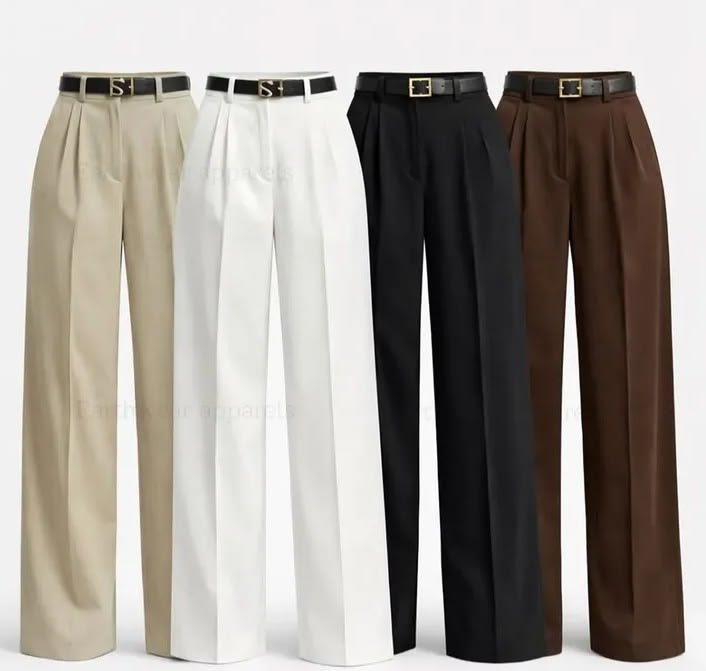
Why Fit Matters More Than the Price Tag
A pair of expensive trousers can look poor if the proportions are wrong. Conversely, reasonably priced dress pants can look polished when they fit properly.
The goal isn’t to make trousers extremely tight. Good tailoring creates a clean line while allowing enough room for movement.
Waist, Seat and Thigh
Start with the waist.
The waistband should sit securely without requiring a belt simply to prevent the trousers from falling. At the same time, you should not need to suck in your stomach or struggle to button the trousers.
Next, look at the seat and hips.
If the pockets flare outward, the trousers may be too tight through the hips. If there is excessive fabric collapsing underneath the seat, the trousers may be too loose or have an unsuitable rise.
The thigh should provide enough room for walking and sitting without producing horizontal stress lines.
A useful fitting principle is simple:
The fabric should hang from the waist and hips rather than cling to the body.
GQ’s 2026 dress-pants guide similarly emphasizes materials, construction, and fit, noting that trousers should hang cleanly rather than showing distorted lines around the pockets, legs, or calves.
Rise, Leg Shape and Hem
The rise is the distance between the waistband and the crotch.
A low rise creates a more contemporary, elongated torso effect, while a medium or higher rise can visually lengthen the legs and often works especially well with tailored jackets, tucked shirts, and traditional tailoring.
The leg shape should complement the rise.
A high-rise trouser with an extremely narrow leg can create a very different proportion from a high-rise trouser with a relaxed straight leg.
Then there is the hem.
A trouser that is too long creates unnecessary folds around the shoe. One that is too short can make traditional dress trousers appear accidentally cropped.
For a conservative professional wardrobe, a modest break remains an easy choice. A shorter, cleaner hem can work particularly well with loafers and contemporary tailoring.
The right length ultimately depends on the trouser width, footwear, rise, and intended aesthetic.
The Main Dress Pants Fits and Silhouettes
There is no single “correct” dress-pant silhouette. The right choice depends on body proportions, personal taste, workplace expectations, and the rest of the outfit.
Slim Fit
Slim dress pants narrow gradually from the thigh toward the ankle.
They create a streamlined appearance and can work well for people who prefer contemporary tailoring.
However, slim should not mean skin-tight.
If the fabric catches around the thighs or calves, pockets pull open, or the crease twists because the leg is too narrow, sizing up or choosing a different cut will produce a better result.
Straight Fit
Straight-leg dress pants maintain a more consistent width from thigh to hem.
They are one of the easiest silhouettes to build a wardrobe around because they avoid the extremes of both skinny and oversized trousers.
A straight silhouette also gives classic tailoring a modern feel without looking overly fashion-driven.
Relaxed Fit
Relaxed dress pants provide additional room through the thigh and leg.
They can be particularly effective with heavier fabrics, textured jackets, knitwear, and casual footwear.
The key is proportion.
A relaxed trouser looks intentional when the rest of the outfit acknowledges its volume. Pairing a generous trouser with an extremely tiny, tight top can make the outfit feel visually unbalanced.
Wide-Leg Dress Pants
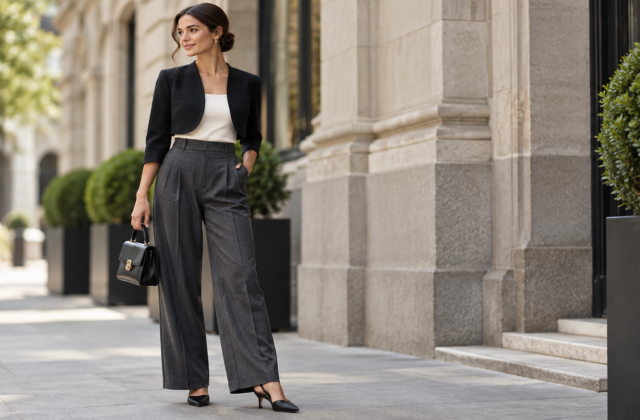
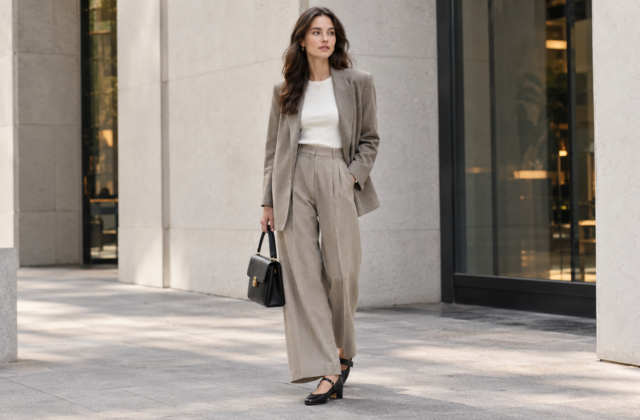
Wide-leg trousers have received considerable attention in contemporary menswear.
Current fashion coverage increasingly treats relaxed and wider trousers as alternatives to traditional narrow office pants. GQ’s 2026 coverage specifically frames dress pants as pieces that can move beyond conventional office dressing, while current fashion coverage has also highlighted wide-leg trousers with polished everyday styling.
Wide-leg does not mean shapeless.
A successful wide-leg trouser still needs:
- A controlled waistband
- Correct rise
- Good drape
- Appropriate length
- A deliberate relationship with footwear
Fabric matters especially here. A lightweight, stiff fabric may look awkward when cut very wide, while a fabric with enough weight and fluidity can create a much cleaner drape.
Pleated vs Flat-Front
Pleated dress pants contain folds at the front of the waistband.
Pleats can provide additional room around the upper leg and create a more traditional tailored appearance. They also work naturally with relaxed silhouettes.
Flat-front trousers remove that additional fold and create a cleaner visual surface.
Neither option is automatically better.
Choose based on the silhouette you want rather than treating pleats as old-fashioned or flat fronts as automatically modern.
Choosing the Right Fabric
Fabric changes the appearance, comfort, durability, and seasonality of dress pants.
Wool
Wool remains one of the strongest choices for refined trousers.
It can offer excellent drape, resilience, temperature management, and wrinkle recovery. Woolmark explains that wool’s natural fiber structure contributes to elasticity, breathability, moisture management, and shape recovery.
For a versatile wardrobe, wool trousers can be especially useful because they work across professional and dressier settings.
Different wool fabrics create very different effects.
A smooth lightweight wool can look sharp and formal. Flannel produces a softer, more textured appearance. Heavier wool can create stronger structure and a more substantial silhouette.
Cotton and Cotton Blends
Cotton trousers are generally more casual than fine wool dress pants.
They work well for relaxed offices, travel, dinners, and smart-casual outfits.
Cotton can also be useful in warmer conditions, particularly when woven into lighter fabrics.
The trade-off is that cotton typically does not produce exactly the same fluid drape associated with quality suiting wool.
Linen and Warm-Weather Fabrics
Linen is naturally associated with warm-weather dressing because of its lightness and relaxed texture.
Linen dress trousers can look excellent with:
- Lightweight shirts
- Knit polos
- Loafers
- Minimal leather sandals in appropriate settings
- Unstructured jackets
The wrinkles are part of the character.
Trying to make linen trousers look permanently pressed defeats some of the reason to wear the fabric in the first place.
Performance and Stretch Fabrics
Modern dress pants frequently incorporate stretch fibers for comfort.
This can be useful for commuting, travel, long working days, and people who spend substantial time sitting.
But stretch should not replace good construction.
A trouser can be comfortable and still look polished when the fabric maintains a matte surface, the waistband sits correctly, and the leg hangs cleanly.
For everyday use, performance fabrics can be practical. For an important formal event, however, the hand, drape, and surface of the fabric deserve more attention.
Dress Pants Colors Every Wardrobe Should Consider
If you’re building a wardrobe from scratch, don’t begin with unusual colors.
Start with versatile neutrals.
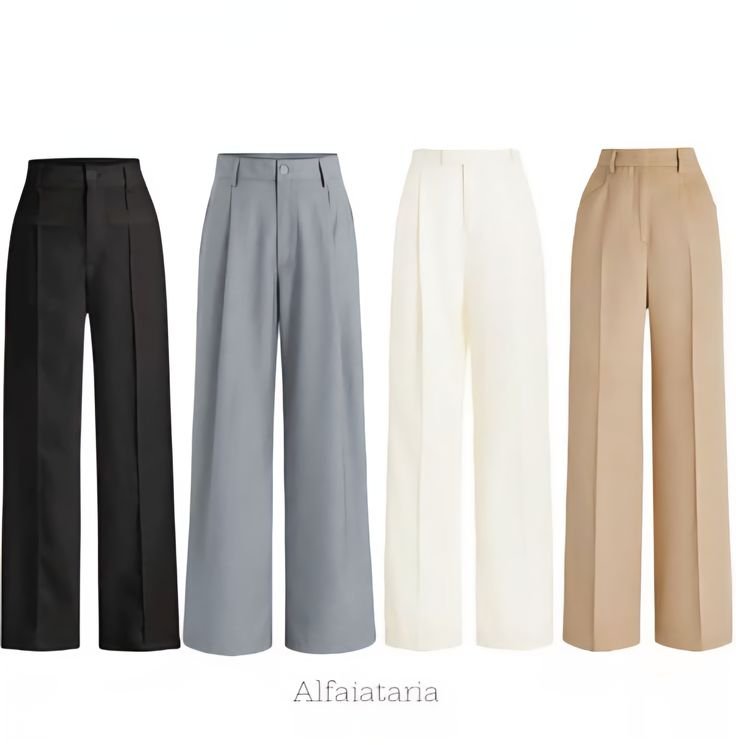
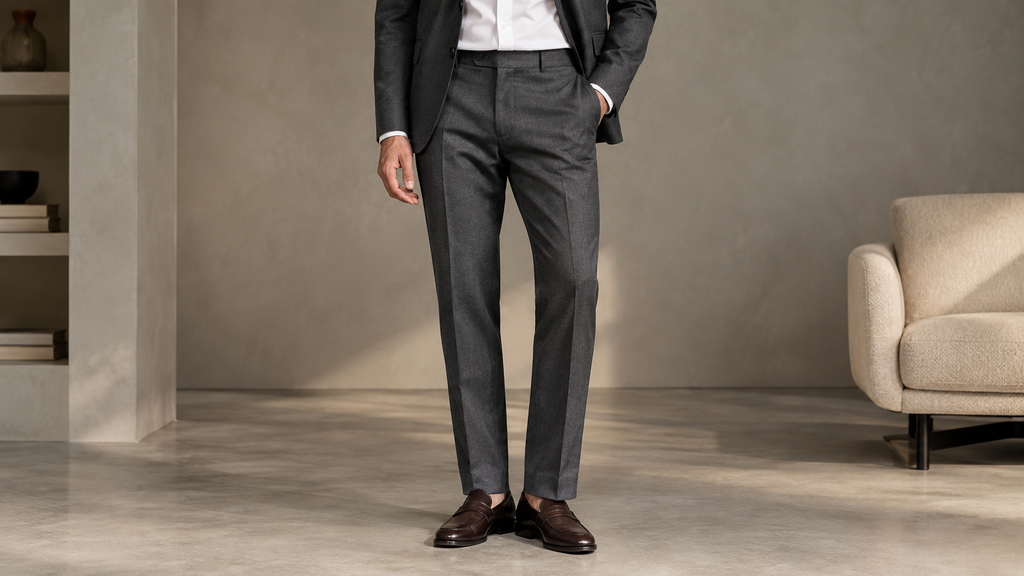
Charcoal Gray
Charcoal is one of the most useful choices for professional dressing.
It works with white, blue, pale pink, cream, black, and many patterned shirts.
Navy
Navy dress pants are less severe than black and highly adaptable.
They pair naturally with white shirts, light-blue shirts, polo shirts, sweaters, and sport coats.
Medium Gray
Medium gray is slightly more relaxed and can work beautifully with both formal and casual pieces.
It is particularly useful when you want to wear a darker jacket without creating an overly heavy outfit.
Black
Black dress pants are useful for evening events, minimalist wardrobes, certain professional environments, and outfits where the shoes or upper body provide the visual interest.
They can, however, appear more severe than charcoal or navy in daytime settings.
Brown and Earth Tones
Brown, taupe, olive, stone, and similar shades create more visual personality.
These colors are especially effective in relaxed tailoring, where the objective is less about corporate formality and more about texture and proportion.
Dress Pants vs Suit Pants, Chinos and Casual Trousers
The categories overlap, but they are not identical.
| Type | Typical Character | Best Uses |
|---|---|---|
| Dress pants | Tailored and polished | Work, dinners, events |
| Suit pants | Designed for matching jacket | Suits, formal business |
| Chinos | Cotton-based, casual | Smart casual, everyday |
| Jeans | Denim, casual | Everyday outfits |
| Linen trousers | Light and relaxed | Warm weather |
| Performance trousers | Stretch and practical | Travel, commuting, everyday work |
The easiest way to understand the difference is to look at fabric, construction, and intended formality.
A fine wool trouser can immediately make a T-shirt look more considered. A chino with a casual weave and visible texture will usually feel less formal even if the cut is similar.
How to Style Dress Pants in 2026
Dress pants are increasingly being styled outside traditional business outfits.
The current direction in menswear favors flexibility: tailored trousers can be combined with relaxed tops and casual footwear without automatically becoming formalwear.
GQ’s current coverage specifically recommends using dress trousers with knit polos, loafers, sneakers, and even casual hoodies depending on the desired effect.
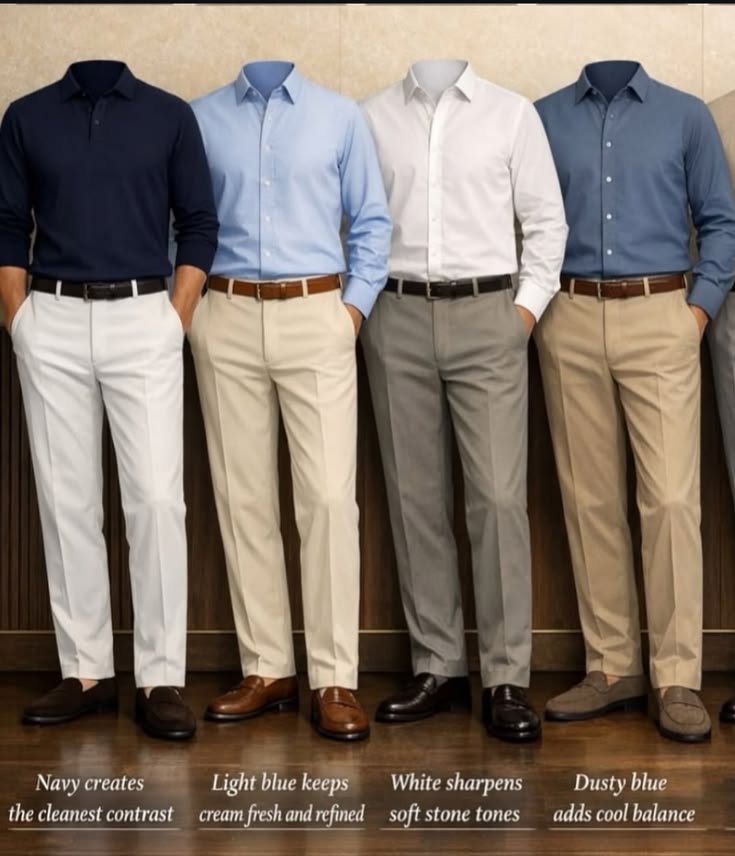
Dress Pants With a Dress Shirt
This is the classic combination.
For a professional setting, try:
Charcoal trousers + white shirt + black or dark-brown leather shoes
or
Navy trousers + light-blue shirt + brown leather loafers
Keep the shirt tucked when the trousers have a traditional tailored rise and waistband.
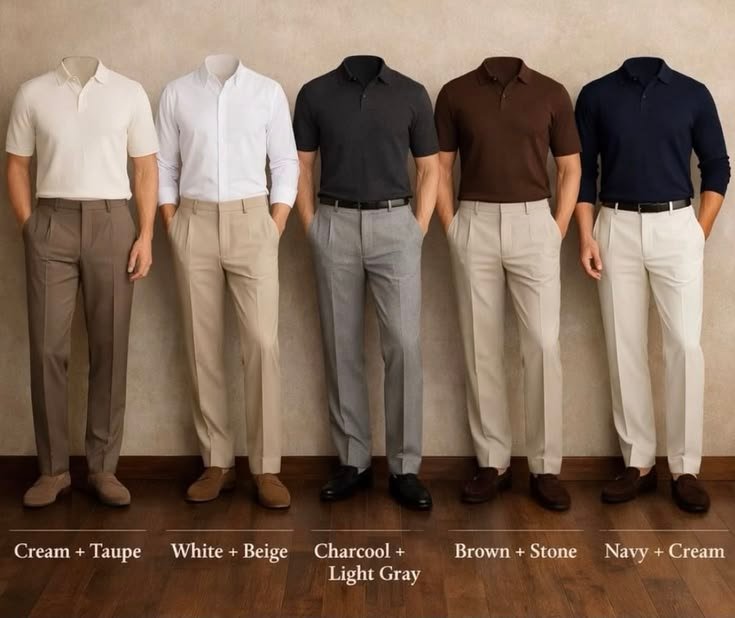
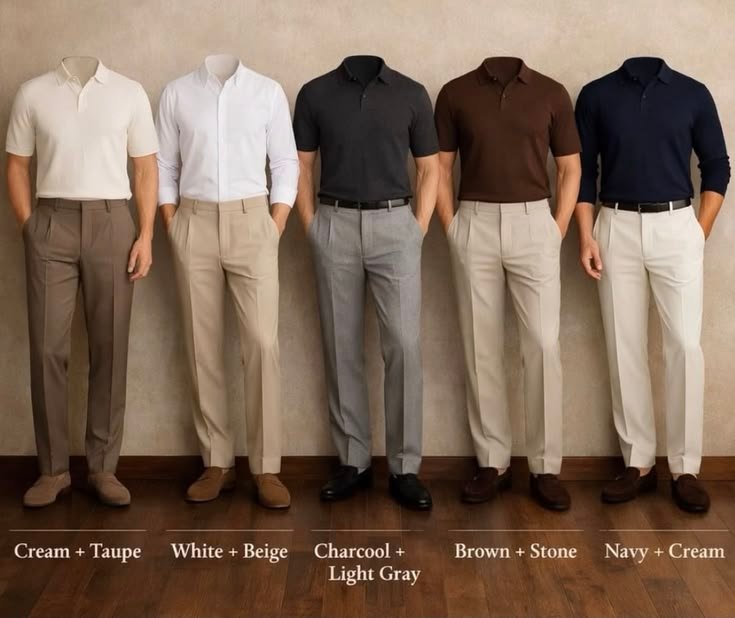
Dress Pants With a Knit Polo
A knit polo softens the formality of trousers without making the outfit sloppy.
This works particularly well with:
- Gray trousers
- Cream trousers
- Navy trousers
- Brown trousers
Loafers complete the look naturally.
Dress Pants With a Sweater
A fine-gauge sweater can create a sophisticated cold-weather outfit.
Try charcoal trousers with a navy, cream, burgundy, or forest-green sweater.
For a more relaxed silhouette, choose a straight or slightly wider trouser rather than an aggressively tapered one.
Dress Pants With Sneakers
Sneakers change the visual language of dress trousers.
The safest approach is to choose clean, understated sneakers rather than heavily technical running shoes.
White, cream, black, or minimal leather sneakers can work particularly well with contemporary trousers.
The trousers should also have enough visual weight to balance the footwear.
Dress Pants With a Blazer
A blazer and separate dress trousers create one of the most useful forms of tailored dressing: the separates outfit.
The jacket does not have to match the trousers.
For example:
Navy blazer + gray dress pants + white shirt + brown loafers
is a classic combination because the colors create clear separation without clashing.
Dress Pants for Different Occasions
The same trousers can communicate very different levels of formality depending on what surrounds them.
For the Office
Choose:
- Charcoal
- Navy
- Medium gray
- Dark brown
Pair with an appropriate shirt, leather shoes, and a structured jacket when required.
If your workplace is conservative, avoid exaggerated wide-leg silhouettes and highly casual sneakers.
For Weddings
Weddings require attention to the dress code.
For a formal wedding, fine wool trousers may be part of a complete suit or sophisticated tailored ensemble.
For a cocktail or less formal celebration, separate trousers can work with a blazer, dress shirt, loafers, or polished lace-up shoes.
The invitation should determine the level of formality rather than personal preference alone.
For Dates and Dinners
This is where dress pants become particularly useful.
A dark trouser, knit polo, loafers, and an unstructured jacket can look polished without appearing as though you came directly from a boardroom.
For Smart-Casual Events
Try:
Relaxed trousers + tucked T-shirt + overshirt + clean sneakers
or:
Pleated trousers + knit polo + loafers
The first outfit emphasizes casual contrast; the second leans toward refined tailoring.
How to Buy Better Dress Pants
Don’t begin by asking which brand makes the “best” trousers.
Begin by asking what you need them to do.
Think About Your Wardrobe First
If you already own several navy jackets, gray trousers may be more useful than another navy pair.
If most of your clothing is casual, a relaxed gray trouser could provide more versatility than an extremely formal black pair.
Examine the Fabric
Look at the surface under normal lighting.
Good dress trousers generally have a controlled, intentional texture rather than an excessively shiny synthetic appearance.
For wool, pay attention to the hand, weight, weave, and drape.
Check the Construction
Look closely at:
- Waistband finishing
- Stitching
- Pocket construction
- Seam quality
- Button attachment
- Hem finishing
- Inside waistband construction
The outside appearance tells only part of the story.
Prioritize Alterability
Some trousers offer enough extra fabric around certain seams to permit alterations.
This matters because trousers that are close to correct can often be improved substantially by a competent tailor.
Alteration potential should be considered alongside the initial fit rather than after buying something dramatically wrong in size.
Don’t Ignore Comfort
Try sitting down.
Walk around.
Climb a few steps if possible.
A trouser that looks perfect while standing still but becomes restrictive when seated is not a successful purchase.
Common Dress Pants Mistakes
Buying Too Tight
The biggest mistake is often confusing slim with tight.
Tailored clothing needs room to move.
Choosing the Wrong Length
Too much fabric pooling at the ankle can destroy the clean line of a trouser.
Wearing the Same Trouser With Every Shoe
Different shoes change how trousers appear.
Loafers, derbies, Oxfords, sneakers, and boots have different visual weights.
The trouser hem should respond accordingly.
Ignoring Rise
A rise that doesn’t suit your proportions can make the entire outfit look awkward even when the waist measurement is technically correct.
Overusing Black
Black is useful, but gray, navy, brown, olive, and stone can create much more variety.
Treating Dress Pants as Only Office Clothing
This is perhaps the biggest missed opportunity.
Modern tailoring works particularly well when contrasted with casual pieces.
How to Care for Dress Pants
Good trousers last much longer when they are not treated like ordinary casual pants.
First, give them time to recover between wears.
For wool trousers, Woolmark recommends hanging and lightly refreshing them rather than washing after every use; wool’s natural resistance to odor, stains, and creasing means frequent washing is often unnecessary. Always follow the garment’s care label for cleaning instructions.
A few useful habits:
- Use a proper trouser hanger.
- Empty pockets before storing.
- Brush away surface dust.
- Steam lightly when appropriate.
- Avoid unnecessary washing.
- Follow the care label.
- Repair loose hems promptly.
- Rotate multiple pairs rather than wearing one pair constantly.
For wool trousers, the fiber’s natural elasticity and wrinkle recovery are part of what makes it useful for tailoring.
Why Dress Pants Are Becoming More Versatile
The interesting development in modern menswear is not that dress pants have suddenly become fashionable. Tailored trousers have always had a place in fashion.
The change is how they are being used.
The old formula was relatively strict:
Dress pants + dress shirt + blazer + formal shoes
The newer approach allows:
Dress pants + T-shirt + sneakers
or:
Relaxed trousers + knit polo + loafers
or:
Wide trousers + casual jacket + minimal footwear
This reflects a broader movement toward mixing formal and informal elements rather than dressing every piece at the same level of formality.
Fashion history shows that trouser proportions have repeatedly changed. The V&A’s research on 1960s menswear, for example, documents the move toward slim trousers and then the wider silhouettes that emerged as the 1970s approached.
That context is useful because today’s wider trousers should not be treated as an entirely new invention. Fashion repeatedly revisits silhouettes, but changes the fabric, proportion, styling, and cultural context.
The strongest modern wardrobe therefore isn’t necessarily built around whichever trouser silhouette is currently most visible.
It is built around proportion that suits the wearer.
Final Thoughts
The best dress pants are not necessarily the most expensive, the slimmest, or the most formal.
They are the ones that fit cleanly, drape properly, suit the occasion, and work with the rest of your wardrobe.
Start with versatile colors such as charcoal, navy, and medium gray. Learn how different rises and leg shapes affect proportion. Choose fabric according to climate and use. Then experiment with pleats, wider legs, knitwear, sneakers, and other less traditional combinations.
A good pair of tailored trousers should not make you feel as though you’re wearing a costume for work. It should give you a reliable foundation that can move between professional, social, and relaxed settings with only a change of shirt, jacket, or shoes.
FAQ
What are dress pants?
Dress pants are tailored trousers designed for polished or refined outfits. They can be worn for professional settings, weddings, dinners, and smart-casual occasions depending on their fabric, cut, and styling.
How should dress pants fit?
They should sit securely at the waist, provide enough room through the seat and thigh, hang cleanly through the leg, and finish at an appropriate length for the shoes. They should not pull tightly or create excessive fabric pooling.
What is the best fabric for dress pants?
Wool is one of the most versatile choices because it offers good drape, resilience, breathability, and wrinkle recovery. Cotton, linen, and performance blends can be better choices for specific climates or more casual uses.
Are dress pants the same as suit pants?
No. Suit pants are specifically designed to be worn with a matching suit jacket. Dress pants are generally sold and worn separately and can be combined with shirts, sweaters, blazers, and other pieces.
Can you wear dress pants with sneakers?
Yes. Clean, understated sneakers can work particularly well with contemporary or relaxed dress pants. The overall outfit should deliberately balance the formality of the trousers with the casual nature of the sneakers.
Are pleated dress pants fashionable?
Yes. Pleated trousers can provide additional room and create a classic or contemporary relaxed silhouette. Their success depends more on proportion and styling than on whether pleats are considered traditional or modern.
What color dress pants should every man own?
Charcoal gray and navy are excellent starting points because they work with a wide range of shirts, jackets, and shoes. Medium gray is another highly versatile option.
Can dress pants be worn casually?
Absolutely. Pairing tailored trousers with knit polos, sweaters, simple T-shirts, loafers, or clean sneakers can create a polished casual outfit without making it look like conventional officewear.
Bilkul — article ke end mein yeh strong, natural SEO-friendly conclusion use karein:
Conclusion
Dress pants have moved well beyond the traditional office wardrobe. The right pair can work for professional settings, weddings, dinners, travel, and smart-casual outfits, depending on its fit, fabric, color, and styling.
The most important consideration is fit. A clean waistband, comfortable seat and thigh, balanced rise, and properly proportioned leg will make more difference than simply choosing an expensive brand. From classic charcoal and navy trousers to relaxed pleated and wider-leg styles, there is no single silhouette that works for everyone.
Fabric should also match the occasion and climate. Wool remains a versatile choice for refined tailoring, while cotton, linen, and stretch blends offer practical alternatives for casual or warmer-weather dressing.
Most importantly, don’t be afraid to mix dress pants with less formal pieces. A knit polo, simple sweater, clean sneakers, or loafers can make tailored trousers feel modern without losing their polished character.
A well-chosen pair of dress pants is ultimately an investment in versatility. Instead of following every change in trouser trends, focus on proportion, comfort, quality construction, and how naturally the pants fit into the wardrobe you already own.