Pregnancy changes the way clothes fit but it does not have to change your personal style. The right maternity dresses can make getting dressed easier while giving your growing body the room softness and flexibility it needs. From casual cotton dresses for warm days to polished styles for work weddings baby showers and maternity photos there are more options than the traditional oversized pregnancy dress.
The smartest approach is not simply to buy a dress labeled “maternity.” Look at the construction fabric stretch length neckline support and how the garment is likely to fit as your bump grows. Some non-maternity dresses can work beautifully during pregnancy too particularly styles with stretch adjustable waists generous silhouettes or wrap construction. Current maternity-fashion coverage increasingly recognizes this flexibility with several 2026 guides recommending conventional dresses alongside purpose-built maternity clothing.
This guide explains how to choose maternity dresses for different stages of pregnancy body changes seasons occasions and personal aesthetics so that comfort and style can work together rather than compete.
What Makes a Dress Maternity-Friendly?
A maternity-friendly dress is designed cut or constructed to accommodate a changing body especially around the stomach bust hips and sometimes the back. The best designs do not simply add extra fabric. They use thoughtful shaping to create room where it is needed while maintaining a flattering silhouette.
Stretch and recovery
Stretch is one of the most useful characteristics in pregnancy clothing. Jersey ribbed knits stretch cotton bamboo blends and other flexible materials can move with the body instead of restricting it.
Good stretch should feel comfortable rather than excessively tight. A dress that stretches easily but loses its shape after a few wears may not be a worthwhile investment. Look for fabric that can accommodate your changing measurements while still returning to a polished shape.
Room around the bump
Maternity dresses often use extra length or fabric through the front to prevent the hem from becoming noticeably shorter as the stomach grows. This is particularly useful with midi and maxi dresses.
Side ruching is another common construction detail. It gathers fabric along the sides so the dress can expand gradually as the bump develops without looking excessively loose during earlier months.
Adjustable construction
Wrap dresses tie-waist styles smocked bodices and adjustable straps can be especially practical because they allow some control over the fit.
A dress that can be adjusted as your body changes may offer more value than a highly structured garment designed around one particular stage of pregnancy.
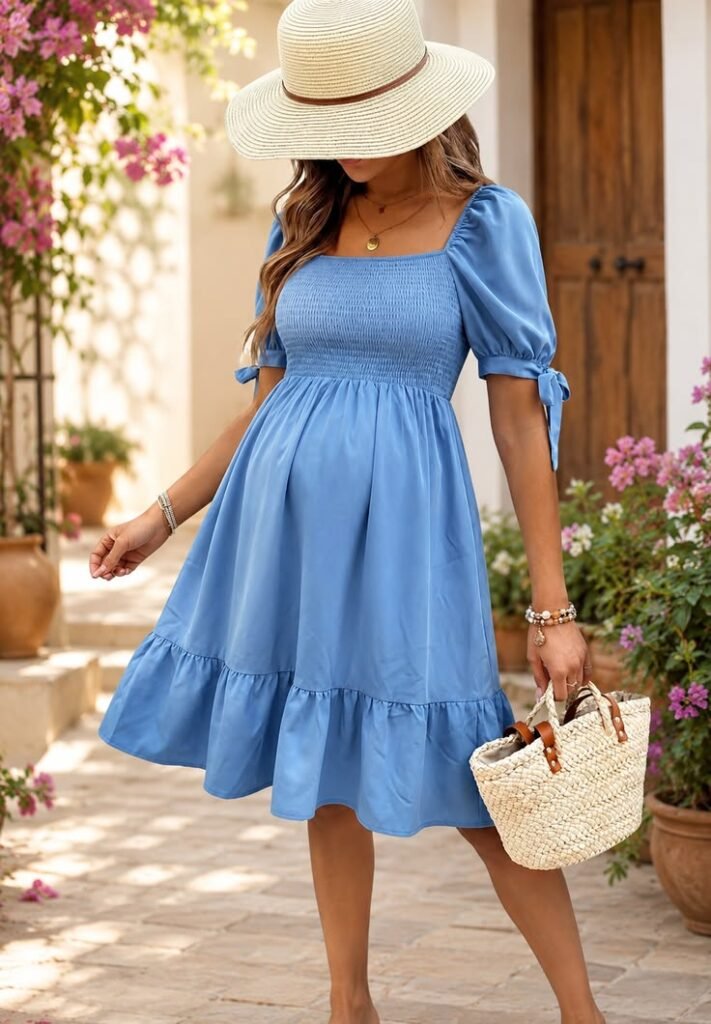
The Best Maternity Dress Styles to Consider
There is no single silhouette that works for every pregnant woman. Your preferred style should depend on your comfort season stage of pregnancy occasion and how much definition you want.
Wrap dresses
Wrap dresses remain one of the most practical choices because the waist can be adjusted as the bump grows. They also tend to create definition around the upper waist while allowing additional room below.
Another advantage is longevity. A well-designed wrap dress can often transition into postpartum wear because the adjustable construction accommodates a different body shape after delivery. Current maternity shopping guides also highlight wrap silhouettes for their adjustability and extended wear.
For work choose a knee-length or midi wrap dress in a refined jersey or woven fabric. For an event a satin chiffon or elegant printed wrap style can look considerably more formal.
Empire-waist dresses
An empire waist sits above the natural waistline generally beneath the bust. The skirt then falls away from the body creating generous space around the abdomen.
This makes the silhouette particularly useful when you prefer not to wear a fitted dress. It can also work well for formal maternity clothing because flowing fabric creates movement without sacrificing elegance.
Ruched maternity dresses
Side ruching is popular for a reason: it gives a fitted dress room to expand while maintaining a deliberate silhouette.
A ruched midi dress can be particularly versatile. Wear it with sneakers and a lightweight cardigan during the day then switch to flats or low heels jewelry and a structured bag for dinner.
Maxi dresses
Maternity maxi dresses combine length with generous fabric making them useful for casual days vacations baby showers and maternity photography.
For warm climates lightweight cotton linen blends viscose and breathable jersey can be more comfortable than heavy synthetic fabrics. In cooler weather a long-sleeved knit maxi dress can become the foundation of a layered outfit.
Shirt dresses
A shirt dress offers a more structured alternative to flowy maternity styles. The button-front design can provide adjustability while a relaxed cut accommodates a growing bump.
Look for styles with enough room through the torso rather than simply sizing up dramatically. A very oversized shirt dress can lose its shape and make the outfit look less intentional.
Sweater dresses
Sweater dresses can be excellent for fall and winter pregnancies. Stretchy ribbed knits naturally accommodate changing proportions while keeping the outfit streamlined.
Current fall/winter maternity coverage highlights sweater dresses alongside polished occasion styles as practical cold-weather options.
The key is choosing knitwear that is comfortable without becoming excessively heavy. Pregnancy can make temperature regulation feel different so breathable layering can be more useful than one extremely thick garment.
How to Choose Maternity Dresses by Trimester
Your wardrobe needs can change significantly throughout pregnancy. Instead of buying a large collection at once build gradually around pieces that solve your immediate fit and comfort problems.
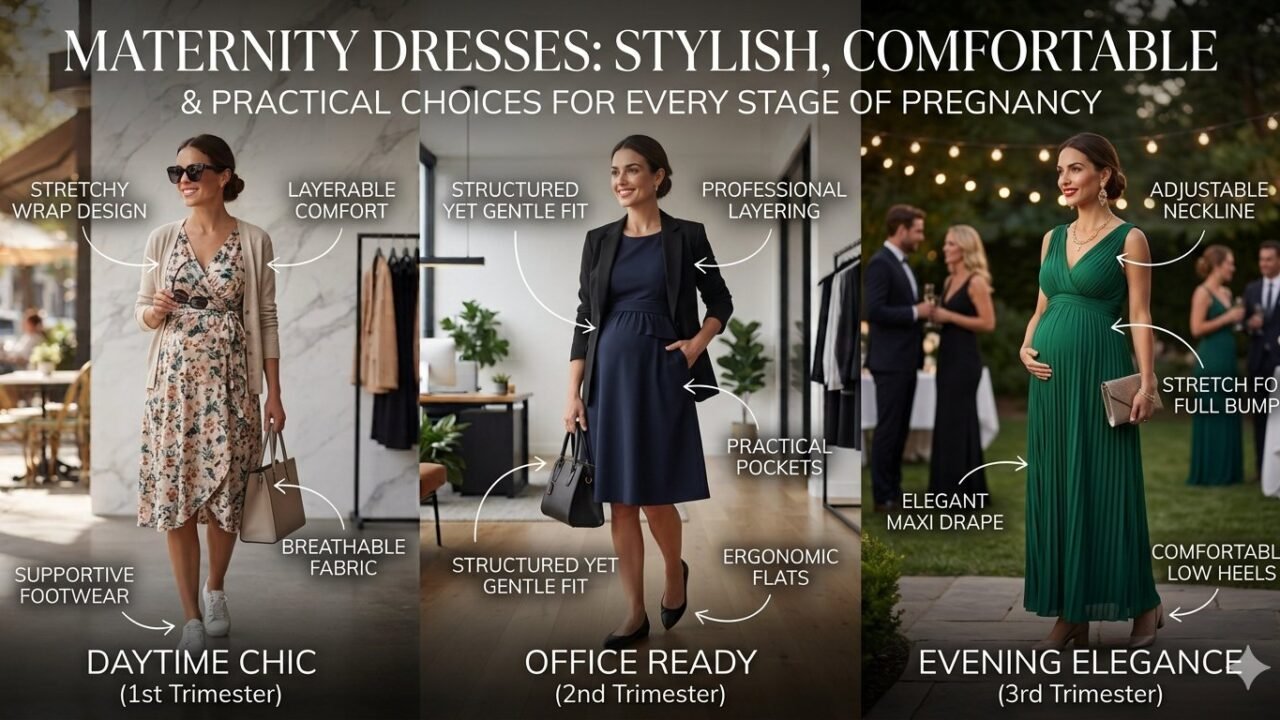
First trimester
During the first trimester you may not need maternity-specific clothing at all. Many people can continue wearing their existing dresses especially loose silhouettes stretch fabrics and relaxed shirt dresses.
This is a good time to identify which parts of your existing wardrobe still feel comfortable. Dresses with flexible waistlines can become useful transition pieces.
Second trimester
As the bump becomes more noticeable maternity construction starts becoming more valuable. Side ruching empire waists wrap designs and stretch fabrics can accommodate increasing measurements without making you feel restricted.
This is often the point when a small maternity capsule wardrobe makes sense: a casual dress a polished option for work a versatile midi and one occasion-ready piece can cover many situations.
Third trimester
Comfort becomes especially important in the final months. Look for breathable fabrics generous movement soft seams flexible waist areas and silhouettes that do not create pressure across the abdomen.
A dress that was comfortable at 24 weeks may feel very different later so avoid purchasing too many highly fitted pieces far in advance.
How to Choose the Right Fabric
Fabric has a major effect on how maternity dresses feel throughout the day.
Cotton and cotton blends
Cotton is a dependable choice for casual pregnancy clothing because it is soft versatile and available in everything from jersey T-shirt dresses to woven summer styles.
Cotton blends can add stretch and improve shape retention.
Jersey
Jersey is one of the most adaptable maternity fabrics. It drapes naturally and can stretch around a growing bump without creating the rigid feeling associated with structured woven fabrics.
It is particularly useful for everyday dresses wrap styles midi dresses and fitted silhouettes.
Ribbed knits
Ribbed fabric can combine stretch with a close-fitting appearance. A ribbed maternity dress can emphasize the bump rather than disguise it creating a contemporary silhouette.
This is a strong choice if you like minimalist fashion and prefer clothing that follows your shape.
Linen and lightweight blends
For hot weather lightweight linen and linen-blend dresses can be excellent choices. Their relaxed texture suits summer styling and can be paired with flat sandals woven bags and lightweight accessories.
Pure linen wrinkles easily so a blend may be preferable when you want a more polished appearance.
Satin and occasion fabrics
Satin chiffon velvet and other dressier fabrics can work beautifully for weddings maternity photos evening events and baby showers.
The construction matters more than the fabric name. A beautiful formal dress that restricts movement will probably become uncomfortable during a long event.
How to Style Maternity Dresses Without Losing Your Personal Style
Pregnancy clothing does not have to create an entirely new aesthetic. The easiest way to keep your style recognizable is to maintain the same approach to color accessories footwear and proportions that you already enjoy.
For a casual everyday outfit
Start with a simple jersey T-shirt or ribbed midi dress. Add clean sneakers a lightweight cardigan and a practical crossbody or shoulder bag.
For warmer weather replace the cardigan with an oversized linen shirt worn open.
For the office
A midi wrap dress knit dress or polished shirt dress can create a professional foundation. Add a tailored blazer if it remains comfortable across the shoulders and bump.
Choose simple accessories rather than trying to compensate for the changing silhouette with excessive styling.
For weddings and formal events
An elegant maxi dress can be one of the most effective maternity-event outfits. Look for flattering drape rather than excessive embellishment.
Soft neutrals jewel tones muted florals and classic black can all work depending on the dress code. A sophisticated neckline and well-placed accessories can make a simple maternity gown look highly polished.
For a baby shower
The best baby-shower dress depends on the setting. A daytime garden shower may suit a floral midi or flowing cotton dress while a formal venue could call for a more refined maxi silhouette.
The important consideration is comfort. You may spend several hours standing sitting greeting guests and taking photographs so an outfit should look good from multiple angles without requiring constant adjustment.
For maternity photos
Photography changes the way fabric behaves. Flowing dresses can create movement while fitted styles emphasize the shape of the bump.
For a timeless result consider a long dress with an elegant neckline and controlled draping. Neutral shades such as cream soft beige blush muted blue or sage can create a softer visual effect although stronger colors can produce equally striking photographs.
A current 2026 maternity-photo guide similarly recommends flowy maxi silhouettes in neutral tones as a versatile photographic option.
Should You Buy Maternity Dresses or Regular Dresses?
You do not necessarily need to choose one category.
Purpose-built maternity dresses generally make sense when the garment has specific pregnancy construction such as extra length through the front side ruching nursing access or an adjustable shape.
Regular clothing can also work when the design naturally accommodates a growing body. Sweater dresses relaxed shirt dresses flowing maxis loose T-shirt dresses and certain wrap dresses are good examples. Babylist’s 2026 guide specifically highlights several non-maternity dress categories that can work during pregnancy.
The better question is not “Is this labeled maternity?” but “Will this garment fit comfortably as my body changes?”
That shift can prevent unnecessary spending and give you access to a much wider range of personal styles.
What to Look for When Shopping Online
Online shopping can make maternity clothing convenient but pregnancy makes fit particularly https://stylebydesign.site/
Check the size chart
Do not automatically order several sizes larger than your pre-pregnancy size. Many maternity brands develop their sizing around a pregnant body so sizing up unnecessarily can make the shoulders neckline and overall proportions too large.
Read the individual brand’s measurements rather than relying only on the size label.
Examine the fabric composition
Look for information about stretch and fabric weight. A fitted dress with little elasticity may be less practical late in pregnancy than a similarly shaped dress with flexible fabric.
Study the garment measurements
Pay attention to length bust measurement and construction around the stomach. A dress that looks like a maxi on the model may fall differently depending on your height and bump position.
Think beyond pregnancy
A dress that works during pregnancy and postpartum can offer considerably more value. Nursing access adjustable wrap construction flexible fabric and forgiving silhouettes can extend the useful life of the garment.
This broader approach is reflected in current maternity fashion coverage where postpartum wearability is increasingly treated as an important consideration rather than an afterthought.
Building a Practical Maternity Dress Capsule Wardrobe
You do not need a closet full of pregnancy clothing. A carefully selected capsule can handle most everyday situations.
A practical starting point could include:
- One comfortable everyday midi or T-shirt dress
- One versatile wrap or ruched dress
- One polished work-friendly dress
- One lightweight warm-weather dress
- One sweater or long-sleeved dress for cooler weather
- One elegant dress for weddings baby showers or special events
- One maternity photoshoot option if photography is part of your plans
The exact number depends on your lifestyle climate work environment and how often you prefer to repeat outfits.
The goal is versatility not volume.
Maternity Dress Trends Worth Watching in 2026
Current maternity fashion is moving away from the idea that pregnancy clothing must hide the bump. Contemporary styling increasingly includes fitted silhouettes clean minimalism elevated occasionwear ribbed textures relaxed tailoring and dresses that transition into postpartum wardrobes. Current fashion and shopping coverage also shows growing interest in non-maternity pieces that can accommodate pregnancy.
Body-conscious silhouettes
A fitted maternity dress can look modern and sophisticated when the fabric has enough stretch and the construction provides room for growth.
Minimalist neutrals
Cream black taupe chocolate brown navy gray and soft earthy tones are easy to style and can make a maternity wardrobe feel more refined.
Soft tailoring
Shirt dresses relaxed blazers structured bags and polished flats can give pregnancy outfits a sharper appearance without relying on restrictive clothing.
Postpartum-friendly design
The strongest maternity pieces increasingly serve more than one phase. Wraps discreet nursing openings flexible necklines and adaptable silhouettes can remain useful after pregnancy.
Frequently Asked Questions About Maternity Dresses
When should you start wearing maternity dresses?
There is no universal week when you need to switch. Start when your regular clothing becomes uncomfortable or restricts movement. Some people need maternity clothing relatively early while others can continue wearing their existing wardrobe much longer. Current maternity clothing guidance similarly recommends using comfort and fit rather than a fixed pregnancy week as the deciding factor.
What type of dress is most comfortable during pregnancy?
Wrap dresses relaxed maxi dresses jersey dresses empire-waist styles and stretchy ruched dresses are often practical because they provide flexibility around a growing bump. The most comfortable option depends on your preferred fit climate and stage of pregnancy.
Can you wear normal dresses while pregnant?
Yes. Regular dresses can work particularly well when they have stretch an adjustable waist a loose silhouette or enough room through the torso. Sweater dresses shirt dresses wrap dresses and flowing styles are especially https://www.pinkblushmaternity.com/
Are maternity dresses useful after pregnancy?
Many are. Wrap dresses stretchy knits adjustable designs and dresses with nursing access can continue to be useful postpartum. Choosing versatile construction rather than highly specialized pregnancy-only details can increase how long you wear a garment.
What should you wear to a baby shower while pregnant?
Choose a dress that suits the venue and season while allowing comfortable movement. A floral midi elegant wrap dress flowing maxi or polished knit dress can all work. For a formal shower consider elevated fabric and accessories rather than simply choosing a more elaborate silhouette.
Are maternity dresses supposed to be loose?
Not necessarily. Maternity clothing can be fitted relaxed or flowing. A fitted dress can comfortably follow the bump when it uses sufficient stretch and appropriate maternity construction while a loose dress provides more freedom and a softer silhouette. The best fit is the one that feels comfortable and intentional rather than simply oversized.
Conclusion
The best maternity dresses are not defined by how much extra fabric they contain. They are defined by how intelligently they accommodate a changing body while still reflecting the wearer’s personal style.
A wrap dress can provide adjustable comfort. A ruched midi can emphasize the bump while growing with it. A maxi can work for everything from summer days to maternity photographs. A sweater dress can simplify cold-weather dressing while a polished shirt dress can bring structure to a professional wardrobe.
The smartest maternity wardrobe combines a few purpose-built pieces with regular clothing that naturally accommodates pregnancy. Prioritize fabric stretch construction length comfort and future wear instead of buying something simply because it carries a maternity label.
Pregnancy is a period of constant physical change but getting dressed does not have to feel like another challenge. With thoughtful silhouettes and versatile pieces maternity style can remain comfortable polished personal and genuinely enjoyable.