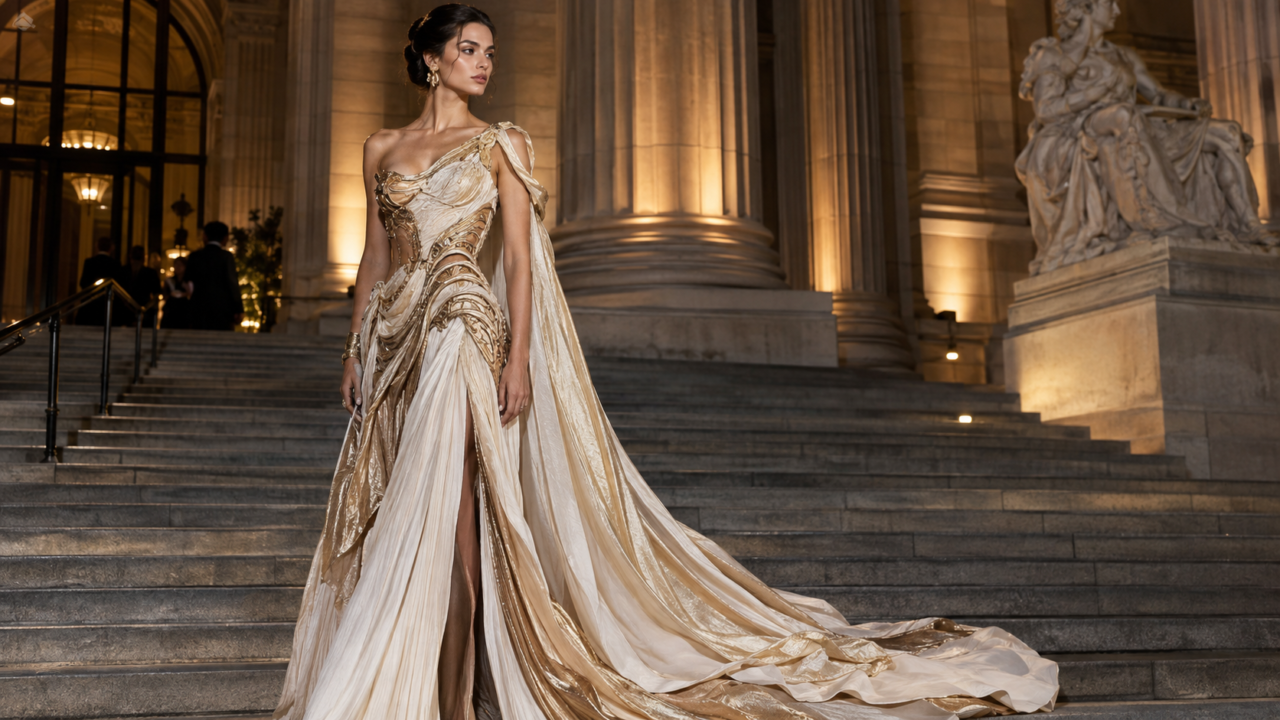
The Met Gala 2026 took place on Monday, May 4, at The Metropolitan Museum of Art in New York, bringing fashion, celebrity culture and art history together around one central idea: “Costume Art.” The evening’s dress code, “Fashion Is Art,” asked guests to interpret clothing as an artistic and embodied form rather than simply treating the red carpet as a display of luxury eveningwear.
The theme was connected directly to the Costume Institute’s spring 2026 exhibition, Costume Art. Opening on May 10, the exhibition examines the relationship between clothing, the body and visual art through nearly 400 objects from The Met’s collection. It is the inaugural exhibition in the museum’s new nearly 12,000-square-foot Condé M. Nast Galleries.
That context explains why the 2026 red carpet looked different from a conventional awards-show carpet. Many looks emphasized the body, sculpture, draping, historical references, unusual materials and constructed silhouettes. The clothes were designed to communicate an idea as much as a glamorous image.
For fashion readers, the most interesting part of the Met Gala 2026 is therefore not simply who wore what. It is how designers translated art, anatomy, historical dress and the human form into contemporary clothing.
What Was the Met Gala 2026?
The Met Gala is the annual fundraising benefit for The Costume Institute at The Metropolitan Museum of Art. The event traditionally takes place on the first Monday in May and serves as the major opening celebration surrounding the Costume Institute’s spring exhibition. Proceeds from the gala provide the Costume Institute with its primary source of annual funding for exhibitions, publications, acquisitions and operations.
In 2026, the event introduced the public to a new chapter for the Costume Institute through the opening of the Condé M. Nast Galleries.
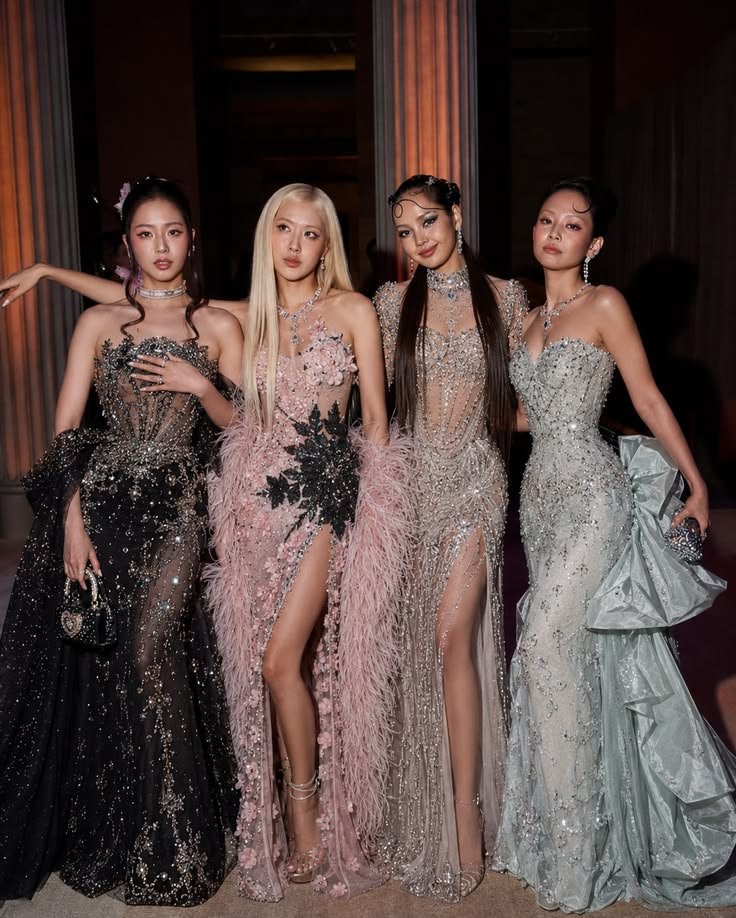
The evening was co-chaired by Beyoncé, Nicole Kidman, Venus Williams and Anna Wintour, while Anthony Vaccarello and Zoë Kravitz served as co-chairs of the Gala Host Committee. The host committee also included figures such as Sabrina Carpenter, Doja Cat, Gwendoline Christie, Alex Consani, Misty Copeland, Elizabeth Debicki, Lena Dunham, Paloma Elsesser, LISA, Sam Smith, Teyana Taylor, A’ja Wilson and Yseult.
This made the event more than a celebrity gathering. The guest list brought together performers, athletes, designers, models, artists and cultural figures, all responding to the same broad artistic prompt.
The result was a red carpet in which clothing itself became the main subject.
What Was the Met Gala 2026 Theme?
The official exhibition theme was “Costume Art.”
The exhibition explores representations of the dressed body throughout The Met’s collections. Instead of isolating fashion from painting, sculpture and other forms of visual culture, it places garments alongside artworks to demonstrate connections between the human body, clothing and artistic representation.
This distinction is important.
The theme was not simply “wear something artistic.” It encouraged designers and celebrities to think about what clothing does to the perception of the body.
A garment can lengthen the torso, broaden the shoulders, exaggerate the hips, conceal the body, expose it, create an illusion of anatomy or transform the wearer into something resembling a sculpture.
That made silhouette particularly important in 2026.
Understanding “Costume Art”
The phrase “Costume Art” deliberately connects two areas that are often discussed separately.
Fashion is usually associated with wearability, materials, construction and personal expression. Fine art is often discussed in terms of visual composition, historical context and artistic intention.
The 2026 exhibition challenges that separation.
According to The Met, Costume Art pairs garments from the Costume Institute with artworks from other parts of the museum’s collection. The pairings explore connections ranging from formal and conceptual relationships to symbolic and cultural ones.
The exhibition is also organized around different representations of the body. These include familiar categories such as the Classical Body and Naked Body, as well as bodies that have historically received less attention in art and fashion displays, including the Pregnant Body and Aging Body.
That approach gave designers an unusually broad creative vocabulary.
A reference did not have to be a painting or sculpture. The body itself could become the starting point.
What Did “Fashion Is Art” Mean?
The dress code for the 2026 Met Gala was “Fashion Is Art.” The Met described it as an invitation for guests to express their relationship to fashion as an embodied art form.
That wording left considerable room for interpretation.
One designer might respond through sculpture. Another might focus on historical costume. Someone else might explore anatomy, movement, draping or the relationship between fabric and skin.
This flexibility explains the variety on the red carpet.
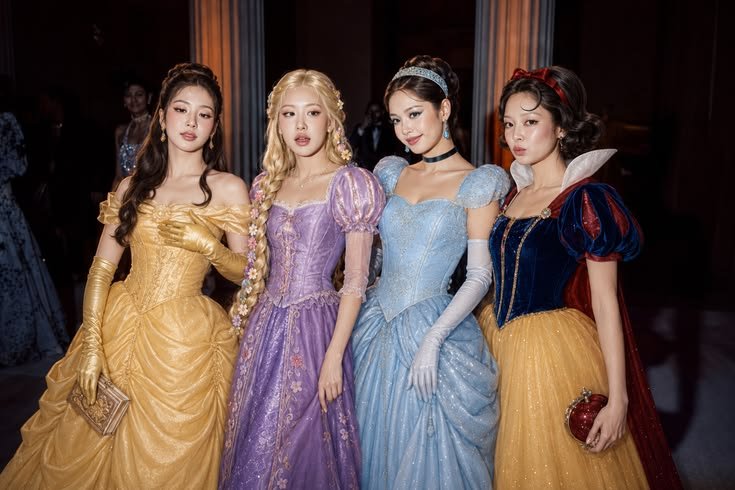
The strongest conceptual connection was often created through construction rather than decoration. A sculpted bodice, unusual train, architectural headpiece or dramatic drape could communicate an artistic idea without relying on obvious prints or painted motifs.
The Met Gala 2026 Dress Code and How Designers Interpreted It
“Fashion Is Art” was broad enough to support many different approaches.
Some looks emphasized historical references. Others explored the relationship between the body and clothing through sheer materials, molded forms, sculptural construction or exaggerated proportions.
This is where the Met Gala differs from a normal celebrity appearance.
At an ordinary premiere, the objective may be elegance, branding or creating a recognizable public image. At the Met Gala, the clothing has an additional responsibility: it needs to participate in a cultural conversation surrounding the exhibition.
That changes the design process.
A designer may begin with a historical artwork, a sculpture, an anatomical idea, a fashion archive or a particular body shape. From there, the idea has to become an actual garment.
That means solving practical problems involving:
- Pattern cutting
- Weight distribution
- Fabric behavior
- Movement
- Surface decoration
- Fastening
- Undergarments
- Footwear
- Accessories
- Red-carpet photography
A spectacular concept still needs to function as clothing.
This tension between concept and construction was one of the most interesting aspects of the 2026 event.
How the 2026 Red Carpet Connected Fashion With Art
The relationship between fashion and art became visible through several recurring design ideas.
The Classical Body
Classical sculpture provided one of the clearest references.
The human body has been represented through idealized proportions in Western art for centuries. Fashion designers can reinterpret those ideas through draping, sculpted construction, metallic surfaces and controlled exposure.
Kendall Jenner’s look provided a particularly direct example. She wore a GapStudio design by Zac Posen inspired by the Winged Victory of Samothrace, the ancient Greek sculpture displayed at the Louvre.
The significance of this type of reference is not simply that the garment resembles a famous sculpture.
The more interesting design question is how a static sculpture can become a moving garment.
Fabric moves differently from stone. A model walks rather than stands permanently on a pedestal. A dress has to accommodate the body underneath it.
That conversion from sculpture to clothing is a genuine design problem.
Sculpture, Anatomy and the Dressed Body
Other looks approached the theme through the relationship between clothing and the physical body.
Hailey Bieber’s custom Saint Laurent ensemble, for example, featured a sculpted bodice made from 24-karat gold with a blue silk chiffon skirt. Vogue reported that the design referenced Yves Saint Laurent’s fall 1969 couture work created in collaboration with French artist and sculptor Claude Lalanne.
The idea demonstrates how a garment can operate almost like wearable sculpture.
The bodice establishes a hard, constructed surface while the chiffon introduces movement. The contrast between rigid and fluid materials creates visual tension.
That contrast is fundamental to fashion design.
A completely rigid outfit can appear static. A garment made entirely from soft fabric may lack structural definition. Combining different material behaviors allows the designer to create movement, volume and shape.
Notable Met Gala 2026 Looks and Design Details
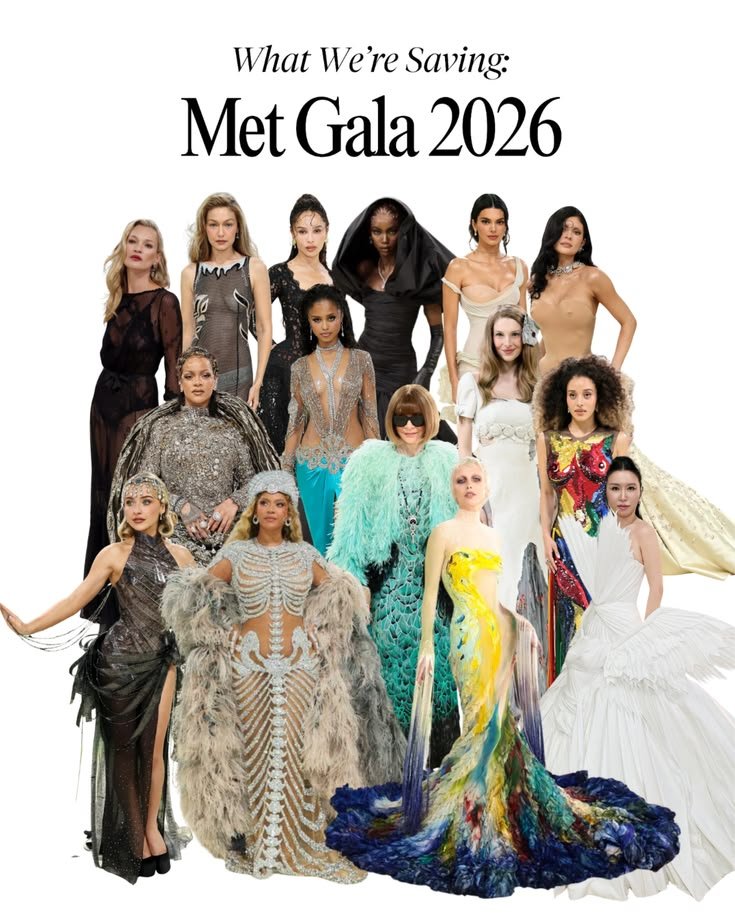
The Met Gala 2026 generated hundreds of red-carpet looks, but several ensembles are particularly useful for understanding the relationship between the theme and fashion design. Vogue’s full red-carpet coverage documented 255 looks, illustrating the scale of the event.
Beyoncé and Olivier Rousteing
Beyoncé appeared in a body-conscious design by Olivier Rousteing featuring a skin-tone mesh base and an embellished diamond skeleton extending down toward her fingers.
The design provides an unusually direct interpretation of the relationship between fashion and anatomy.
Rather than treating the body as something beneath the clothes, the garment visually references the body’s internal structure.
From a design perspective, the effect depends on contrast.
The mesh creates visual transparency while the skeleton-like embellishment establishes a strong graphic framework. The result makes the body itself part of the garment’s visual composition.
This is an effective example of the 2026 theme because the clothing does not merely decorate the wearer. It changes the way the viewer reads the body.
Nicole Kidman and Chanel
Nicole Kidman, one of the event’s co-chairs, wore a custom Chanel design by Matthieu Blazy.
Vogue reported that the deep red sequined gown required approximately 800 hours of work in the Chanel atelier and incorporated feathers around the hips and cuffs. Kidman described the collaboration with Blazy as meaningful after her long association with Chanel.
The look demonstrates the importance of couture craftsmanship.
Sequins can create a highly reflective surface, while feathers introduce softness, movement and volume. Placing those elements around particular areas of the body also changes the silhouette.
This is a useful lesson for anyone studying fashion design: embellishment is not simply decoration.
Where embellishment is placed can change proportion.
A textured surface around the hips can visually widen or emphasize that area. A vertical concentration of detail can draw the eye along the body. A train can extend the perceived length of a silhouette.
Rihanna and Maison Margiela
Rihanna arrived in custom Maison Margiela by Glenn Martens, wearing a sculptural design with an Art Deco-inspired headpiece. Vogue reported that the outfit drew from Maison Margiela’s Artisanal 2025 collection and incorporated a draped column silhouette inspired by medieval architecture in Flanders.
This look demonstrates how architectural references can become fashion.
Architecture and clothing share an interest in structure, proportion and volume.
A building has to support weight and define space. A garment also creates a small architectural environment around the body.
The column silhouette is particularly interesting because it creates a strong vertical line. Rather than emphasizing numerous separate garment components, the overall shape becomes the dominant visual statement.
Hailey Bieber and Saint Laurent
Hailey Bieber’s custom Saint Laurent look combined a sculpted 24-karat-gold bodice with a long blue silk chiffon skirt. The design referenced Yves Saint Laurent’s 1969 couture collaboration with sculptor Claude Lalanne.
The pairing of gold and blue also demonstrates how color can reinforce structure.
Gold has a visual association with metal and sculpture, while blue chiffon introduces softness and motion.
The contrast prevents the garment from becoming visually flat.
For fashion students, this is a useful reminder that color and material should not be considered separately. A color can change how a material is perceived, while a material can alter how a color behaves under light.
Margot Robbie and Chanel
Margot Robbie returned to the Met Gala wearing Chanel.
Her strapless gold lamé dress featured a cascading train lined with flower petals. Vogue reported that the Chanel atelier spent 761 hours creating the garment and used approximately 1,100 pieces of embroidery.
The construction illustrates how couture can use repetition to create surface complexity.
Thousands of small components can produce a larger visual effect that would be impossible to achieve through a single piece of fabric.
The train also adds a second dimension to the silhouette.
When a wearer walks, the train moves behind the body and changes the garment’s appearance from moment to moment. This is particularly valuable on a red carpet, where movement and photography are central to how an outfit is experienced.
Kendall Jenner and Zac Posen
Kendall Jenner’s GapStudio look by Zac Posen was inspired by the Winged Victory of Samothrace. Vogue described the design as a reference to the second-century Greek sculpture that greets visitors to the Louvre.
This is an especially clear example of historical art being translated into contemporary fashion.
The important point is not literal reproduction.
A fashion designer cannot simply copy a sculpture and place it on a person. The designer has to reinterpret its visual language through fabric, construction and movement.
That process is where fashion design becomes creative interpretation rather than costume replication.
The Most Important Fashion Design Ideas From the Met Gala 2026
The 2026 red carpet offers several useful lessons for understanding contemporary fashion.
Silhouette Can Communicate an Idea
Silhouette is often more important than surface decoration.
A garment can communicate strength through sharp shoulders, softness through draping, movement through asymmetric layers or architectural precision through structured construction.
The 2026 Met Gala repeatedly demonstrated that changing the outline of the body can transform the entire meaning of a look.
The Body Can Be the Starting Point
Many fashion designs begin with fabric or a historical reference.
The Costume Art exhibition encouraged another approach: begin with the body.
Where does fabric sit?
What does it conceal?
What does it reveal?
How does clothing change the perceived proportions of the wearer?
How does the garment behave when the person walks?
These questions move fashion design beyond surface appearance.
Historical References Work Best When Reinterpreted
Historical inspiration can easily become costume-like if it is copied too literally.
The more interesting approach is to isolate a principle from the past.
A designer might take:
- Draping from classical sculpture
- A silhouette from a historical gown
- Architectural geometry
- An anatomical reference
- A period-specific textile technique
- A traditional method of embellishment
Then the designer can rebuild that idea for a contemporary body and lifestyle.
This approach preserves the reference without producing a simple reproduction.
Material Contrast Creates Visual Depth
The 2026 red carpet included numerous examples of contrasting materials.
Hard and soft.
Transparent and opaque.
Matte and reflective.
Structured and fluid.
These differences give garments dimensionality.
For everyday fashion, the principle can be simplified. A structured blazer with a soft knit top, a smooth satin skirt with a textured sweater, or polished leather accessories with relaxed cotton clothing can create a similar balance without requiring couture construction.
Why the Met Gala 2026 Matters for Fashion History
The Met Gala has increasingly become an important public platform for discussing fashion as culture rather than simply clothing.
Vogue’s historical overview notes how Met Gala themes have encouraged increasingly theatrical and concept-driven red-carpet dressing over the past decade and a half.
The 2026 theme pushed that development further by explicitly connecting fashion to art.
The Costume Institute itself has a collection of more than 33,000 objects representing seven centuries of fashionable dress and accessories.
That institutional context matters.
Fashion is not simply a collection of seasonal trends. Clothing can preserve information about technology, social identity, gender, craftsmanship, cultural exchange, body ideals and changing ideas of beauty.
The Costume Art exhibition uses the museum’s wider collection to make those connections visible.
For fashion history students, this is particularly valuable because it shows clothing alongside other forms of cultural production.
What the Met Gala 2026 Says About Fashion in 2026
One of the clearest messages from the event is that fashion remains interested in the relationship between the physical body and constructed identity.
Technology can produce new textiles. Social media can accelerate trends. Digital fashion can change how clothing is visualized.
Yet the fundamental design problem remains physical.
A person wears the garment.
The garment has weight.
Fabric folds.
Seams create structure.
Movement changes shape.
Light interacts with texture.
The 2026 Met Gala made those physical qualities unusually visible.
Another important development is the continued use of archival fashion and historical art as design resources.
But archival influence does not necessarily mean nostalgia.
Designers can take an idea from decades or centuries ago and change its proportion, material, scale or context.
This is how fashion history becomes a living design resource.
How to Take Inspiration From Met Gala 2026 Without Copying Celebrity Looks
You do not need a couture atelier to use ideas from the 2026 Met Gala.
The easiest approach is to translate the design principle, rather than reproducing the garment.
Start With One Artistic Idea
Choose one reference.
It could be sculpture, architecture, anatomy, painting or historical clothing.
Then ask what visual quality interests you.
Is it:
- Curved shape?
- Strong vertical lines?
- Draping?
- Metallic texture?
- Exaggerated proportions?
- Historical tailoring?
- Transparency?
- Layering?
Build the outfit around that single idea.
Use Proportion Instead of Excess
Met Gala clothing often uses exaggerated proportion because the red carpet is a theatrical environment.
For everyday dressing, reduce the scale.
Instead of a dramatic architectural gown, try a sculptural jacket.
Instead of an enormous train, try a long flowing skirt.
Instead of a fully metallic garment, introduce metallic shoes or a small bag.
The design principle remains while the clothing becomes wearable.
Let One Piece Become the Focal Point
A common mistake is trying to make every item dramatic.
If your jacket has a strong silhouette, keep the trousers and top relatively simple.
If your dress has elaborate surface decoration, reduce the jewelry.
If the shoes are unusual, avoid competing accessories.
This creates visual hierarchy.
Good styling is often less about adding more and more about deciding where the eye should go first.
Think About Texture
You can create an artistic effect without expensive materials.
Try combining:
- Satin with knitwear
- Wool with smooth leather
- Sheer fabric with opaque layers
- Structured cotton with flowing fabric
- Metallic accessories with matte clothing
Texture creates depth even when the color palette is simple.
Use Art as Research
If the Met Gala has encouraged you to explore fashion and art together, look beyond celebrity photographs.
Study sculptures.
Look at historical garments.
Explore museum collections.
Examine textile construction.
Compare paintings from different periods.
Notice how clothing changes the apparent shape of the body.
That kind of research can produce much more interesting personal style than simply copying a celebrity outfit from social media.
The Difference Between a Red-Carpet Look and Everyday Fashion
The Met Gala exists in an environment where theatricality is expected.
A celebrity can wear an extremely sculptural gown for several hours because the garment’s purpose is partly visual storytelling.
Everyday clothing has different requirements.
Comfort, climate, movement, cost, durability and repeat wear become more important.
That does not make everyday fashion less creative.
It simply changes the design brief.
A useful way to adapt Met Gala inspiration is to ask:
What is the smallest wearable version of this idea?
If the original look uses a dramatic sculptural silhouette, perhaps the everyday interpretation is a structured blazer.
If the original relies on historical draping, try a draped top or skirt.
If the inspiration is anatomy, use a subtle skeletal jewelry motif rather than a full-body reference.
This approach keeps the creative idea while respecting real-life clothing needs.
What Made the Met Gala 2026 Different?
The 2026 event stood out because the theme was unusually focused on the relationship between fashion, art and the body.
Rather than providing a narrow historical costume prompt, “Fashion Is Art” gave designers freedom to work through multiple artistic languages.
That freedom produced different interpretations:
- Classical sculpture
- Anatomy
- Architecture
- Historical couture
- Surrealism
- Decorative arts
- Dramatic draping
- Sculptural accessories
- Embellishment
- Material contrast
The result was not one uniform visual trend.
Instead, the red carpet functioned almost like a collection of different answers to the same design question:
What happens when clothing is treated as an artistic object while remaining connected to a living body?
That question is much more interesting than simply asking which outfit received the most attention online.
Met Gala 2026 and the Future of Fashion Storytelling
The connection between museums and fashion continues to become more visible.
The Met’s new Condé M. Nast Galleries provide a permanent home for the Costume Institute’s annual spring exhibition, creating more space for fashion to be displayed alongside other museum collections.
That institutional change gives future exhibitions an opportunity to examine fashion through wider cultural and artistic contexts.
For designers, it also reinforces an important principle: inspiration does not have to come exclusively from previous clothing.
It can come from sculpture, architecture, painting, nature, anatomy, film, literature, technology or material science.
Fashion’s strength is its ability to turn those references into something worn on a human body.
That transformation—from idea to material, from material to garment, and from garment to movement—is what makes fashion design distinct.
Final Takeaway
The Met Gala 2026 was built around Costume Art and the dress code “Fashion Is Art,” but its significance goes beyond a single red carpet.
The event demonstrated how contemporary designers can use clothing to investigate the body, sculpture, history, architecture, material and movement.
Beyoncé’s anatomical reference, Nicole Kidman’s highly crafted Chanel gown, Rihanna’s sculptural Maison Margiela, Hailey Bieber’s gold Saint Laurent construction, Margot Robbie’s extensively embroidered Chanel and Kendall Jenner’s interpretation of Winged Victory each approached the theme differently.
The most useful lesson for fashion readers is not to copy any individual celebrity outfit.
Instead, look at the design decisions underneath the image: silhouette, proportion, material, texture, historical reference, construction and the way clothing changes the perception of the body.
That is where the Met Gala 2026 becomes more than celebrity fashion.
It becomes a case study in how fashion can function as an artistic language.
What was the Met Gala 2026 theme?
The 2026 Met Gala celebrated the Costume Institute’s spring exhibition “Costume Art.” The event’s dress code was “Fashion Is Art,” encouraging guests to explore fashion as an artistic and embodied form.
When was the Met Gala 2026?
The Met Gala 2026 took place on Monday, May 4, 2026, at The Metropolitan Museum of Art in New York. The related Costume Art exhibition opened May 10, 2026.
What was the Met Gala 2026 dress code?
The official dress code was “Fashion Is Art.” It was designed to encourage guests to interpret the relationship between clothing, art and the dressed body in their own way.
What is the Costume Art exhibition?
Costume Art is the Costume Institute’s spring 2026 exhibition. It pairs garments from the Costume Institute with artworks from across The Met’s collection to explore the relationship between clothing, the body and art.
Who were the Met Gala 2026 co-chairs?
The 2026 Met Gala co-chairs were Beyoncé, Nicole Kidman, Venus Williams and Anna Wintour.
Who designed Hailey Bieber’s Met Gala 2026 outfit?
Hailey Bieber wore a custom Saint Laurent design featuring a sculpted 24-karat-gold bodice and blue silk chiffon skirt. The look referenced Yves Saint Laurent’s 1969 couture collaboration with artist and sculptor Claude Lalanne.
Who designed Kendall Jenner’s Met Gala 2026 look?
Kendall Jenner wore a GapStudio look by Zac Posen inspired by the Winged Victory of Samothrace sculpture at the Louvre.
Where can I learn more about the Costume Art exhibition?
The Metropolitan Museum of Art provides official information about Costume Art, including exhibition details, objects, videos and related educational material. The exhibition is scheduled to remain on view through January 10, 2027.