Choosing sustainable clothing brands sounds simple until you start comparing labels. One brand highlights organic cotton another promotes recycled polyester while another talks about ethical factories carbon reduction or “conscious” collections. The problem is that these claims do not all mean the same thing.
A genuinely responsible clothing brand should be able to explain what its clothes are made from where they are produced how workers are treated and what happens to products after they are sold. A beautiful sustainability page alone is not enough.
If you want to know how to choose sustainable clothing brands the most useful approach is to evaluate the entire picture rather than searching for one perfect fabric certification or green label. Look at materials durability supply-chain transparency labor practices certifications repair options and the company’s overall approach to production.
This guide explains how to assess those factors without turning every shopping trip into a research project. It also shows how shoppers in the USA and other markets can recognize vague environmental claims and make more thoughtful fashion choices.
What Makes a Clothing Brand Sustainable?
There is no single feature that automatically makes a fashion brand sustainable. Sustainability in clothing involves several connected areas including materials manufacturing workers product durability transportation packaging use repair resale and end-of-life options.
A brand using organic cotton may still have limited supply-chain transparency. Another brand may use recycled fibers but produce huge quantities of short-lived trend pieces. A small label may make durable garments locally but provide little formal certification.
That is why the strongest approach is to assess evidence rather than branding language.
Fashion Revolution’s transparency research makes an important distinction: transparency does not prove that a brand is sustainable or ethical but disclosure gives consumers more information with which to evaluate a company’s practices.
For shoppers that creates a useful principle:
A sustainable clothing brand should be able to explain its choices clearly and specifically.
Look for information about:
- Fiber composition and material sourcing
- Manufacturing locations
- Supplier or factory information
- Environmental goals and progress
- Worker welfare and labor standards
- Relevant third-party certifications
- Product quality and expected longevity
- Repair resale recycling or take-back programs
- Packaging and shipping practices
You do not need every answer to be perfect. What matters is whether the brand is specific transparent and willing to show evidence.
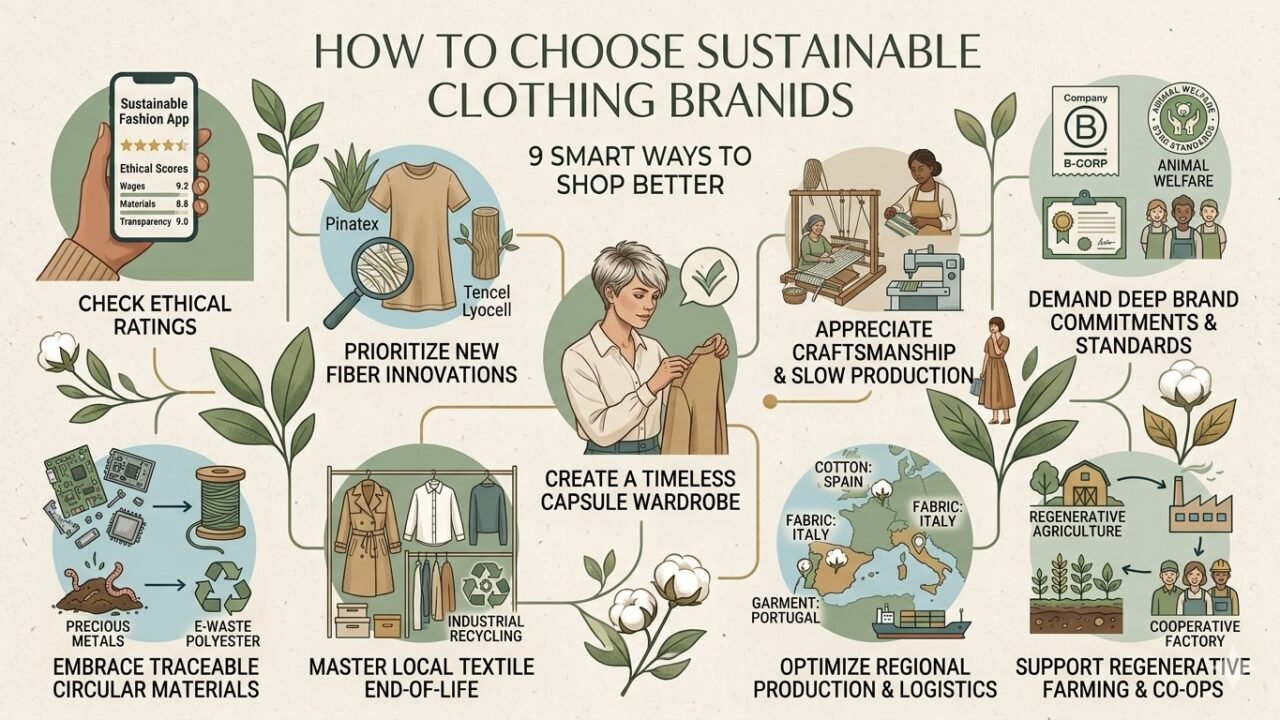
9 Ways to Choose Sustainable Clothing Brands
1. Start With the Materials But Do Not Stop There
Fabric is one of the easiest places to begin when evaluating a garment.
Look at the actual fiber composition rather than relying on phrases such as “eco collection” or “conscious fabric.” A clothing label can tell you whether an item is made from organic cotton conventional cotton linen wool recycled polyester regenerated fibers or a blend.
Materials such as organic cotton linen hemp and recycled fibers can have useful sustainability advantages depending on how they are sourced and processed. However no material should automatically be treated as environmentally perfect.
For example recycled polyester can make use of existing synthetic material while a natural fiber can still involve significant agricultural processing dyeing and transportation impacts.
The better question is:
Why did the brand choose this material and can it explain the decision?
Also consider the garment’s intended use. A lightweight linen shirt durable wool coat performance jacket and pair of everyday leggings have different functional requirements. Choosing a material that performs well and lasts is often more useful than following a simple “natural is always better” rule.
2. Look for Specific Certifications
Certifications can make sustainability claims easier to evaluate but you need to understand what a certification actually covers.
For example certifications and standards can address different parts of a garment’s production. One may focus on organic textile content another on harmful substances and another on social or labor requirements.
Common names shoppers may encounter include:
- Global Organic Textile Standard (GOTS)
- OEKO-TEX standards
- Fairtrade
- Global Recycled Standard (GRS)
- Responsible Wool Standard (RWS)
Do not assume that one certification covers every sustainability issue.
The Federal Trade Commission advises consumers to pay attention to what an environmental certification actually evaluates. A seal should have a clear basis and environmental claims still need appropriate substantiation.
This is particularly important when shopping in the USA where consumers encounter a large number of environmental marketing claims.
A useful habit is to click the certification information and ask:
What exactly has been certified?
If the answer is unclear the logo should not be treated as proof that the entire brand is sustainable.
3. Investigate Supply-Chain Transparency
A brand’s supply chain can tell you far more than its homepage slogan.
Responsible companies increasingly publish information about where their clothing is made which factories they use and what standards apply to production. Some also disclose supplier lists or provide information about sourcing and manufacturing partners.
Why does this matter?
Fashion supply chains can involve farms fiber processors mills dyeing facilities factories warehouses and distributors across multiple countries. The further information disappears into the supply chain the harder it becomes to evaluate working conditions and environmental practices.
Fashion Revolution describes global garment supply chains as complex and fragmented which is one reason transparency matters when evaluating responsibility in fashion.
You do not need a brand to reveal every commercial detail. But a company that provides meaningful information about production gives you a stronger basis for making a decision.
A useful warning sign is a sustainability page filled with attractive photographs and broad promises but almost no concrete information about factories materials policies or progress.
4. Separate Sustainable Fashion From Ethical Fashion
These terms overlap but they are not identical.
Sustainable fashion generally focuses heavily on environmental impacts including materials energy water waste chemicals emissions and product life.
Ethical fashion places greater emphasis on people and working conditions including worker safety wages forced labor discrimination and freedom of association.
A brand can perform better in one area than another.
For example a company might use a certified lower-impact material but provide limited information about labor conditions. Another company might have strong worker policies but rely heavily on conventional materials.
That is why choosing sustainable clothing brands requires a wider evaluation.
Ask two separate questions:
What is this garment doing to the environment?
How are the people making it being treated?
A responsible purchasing decision should consider both.
5. Judge Quality and Longevity
One of the most overlooked parts of sustainable fashion is simply how long you will wear the garment.
Buying an environmentally preferable T-shirt does not accomplish much if it loses its shape after several washes and gets abandoned at the back of your wardrobe.
Before buying inspect:
- Fabric weight
- Stitching
- Seams
- Buttons and zippers
- Lining
- Construction
- Shape retention
- Care requirements
- Overall fit
Consider how frequently you expect to wear the item.
A $35 shirt worn twice is not automatically a better wardrobe decision than a $100 shirt worn for years. Price alone does not determine sustainability but durability can significantly affect the value of a purchase.
This is also where personal style becomes important. A timeless blazer well-fitting pair of trousers classic knit or versatile dress can earn far more wear than an extreme trend that looks dated within a season.
The best sustainable clothing is often clothing that you genuinely want to keep wearing.
6. Watch for Greenwashing
Greenwashing happens when environmental messaging creates a more sustainable impression than the available evidence supports.
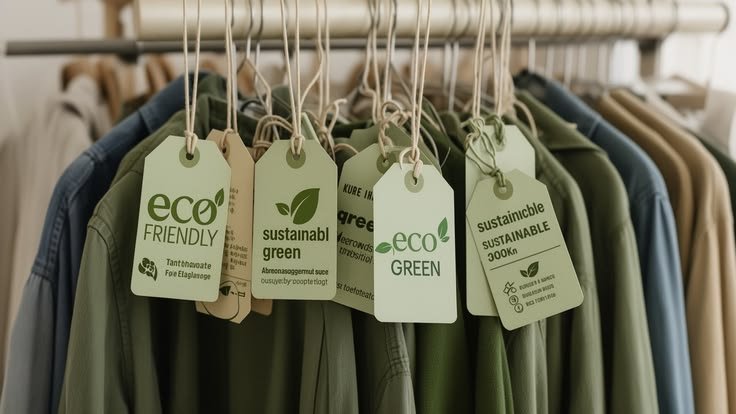
Words such as “green” “clean” “conscious” “planet-friendly” and “eco” can sound convincing but broad environmental claims require context.
The FTC’s Green Guides specifically warn against broad unqualified claims such as “green” or “eco-friendly” because consumers may interpret them as meaning that a product has an overall environmental benefit.
When you see an environmental claim ask:
What specifically makes this product better?
For example “made with recycled polyester” is more useful than simply calling a garment “eco-friendly.” Even then you should look for the percentage of recycled content and understand what part of the product the claim applies to.
Another red flag is when a brand highlights one small improvement while saying nothing about much larger environmental or social issues.
A sustainable collection should be evaluated as a whole not judged by a single green word printed on a hangtag.
7. Check Whether the Brand Encourages Repair and Reuse
Sustainability does not end when a garment is purchased.
Look for brands that offer:
- Repairs
- Replacement parts
- Resale programs
- Secondhand platforms
- Take-back programs
- Upcycling
- Care instructions
- Long-term product support
These services demonstrate that a company is thinking beyond the initial sale.
Repair is especially valuable for coats denim shoes bags outdoor clothing and other higher-cost pieces. A brand that makes repair practical can help customers keep products in use for longer.
You can also apply the same principle yourself.
Before replacing a damaged garment ask whether it can be altered repaired dyed patched or restyled. Sometimes a tailor can turn an outdated or damaged piece into something that feels completely different.
8. Consider Production Quantity Not Just Fabric
A common mistake is to evaluate a garment only by its material.
Imagine two brands.
Brand A uses a preferred fabric but constantly releases new collections and encourages frequent purchases.
Brand B produces fewer styles focuses on durability and encourages customers to repair and keep garments longer.
The second approach may better support a lower-consumption wardrobe even if neither company is perfect.
This does not mean every large fashion company is automatically unsustainable or every small label is automatically responsible. Production systems are complicated.
Instead look for evidence that a brand understands the consequences of overproduction.
Does it explain how collections are planned?
Does it discount huge amounts of unsold inventory?
Does it encourage customers to buy only what they need?
Does it design products for repeated wear?
These questions reveal more than a green leaf printed on packaging.
9. Choose Brands That Match Your Actual Wardrobe
The most sustainable purchase is often the item you will wear repeatedly.
Before buying from a sustainable clothing brand think about your existing wardrobe.
If you already own five black tops another black top may not improve your wardrobe simply because it is made responsibly.
Instead identify a genuine gap.
Maybe you need a breathable summer shirt durable work trousers a versatile blazer a winter coat or a pair of jeans that works with most of your shoes.
This approach prevents a common sustainability mistake: turning sustainable fashion into another form of overconsumption.
You do not need to replace your entire wardrobe with “better” products. Use what you already own repair what can be repaired buy secondhand when appropriate and purchase new clothing when it genuinely adds value.
How to Compare Sustainable Clothing Brands Before Buying
When two brands look equally appealing use a simple comparison method.
Compare Their Materials
Check the exact fiber composition rather than relying on collection names.
Ask whether the material makes sense for the garment’s purpose and whether the company explains its sourcing.
Compare Their Transparency
Look for factory information supplier disclosures sourcing policies environmental targets and progress reports.
Transparency itself is not proof of sustainability but a lack of meaningful information makes independent evaluation more difficult.
Compare Their Product Quality
Read customer reviews carefully.
Do people mention stretched fabric broken zippers fading shrinking poor stitching or sizing problems? Reviews can reveal practical durability issues that marketing pages rarely mention.
Compare Their Long-Term Approach
Look for repair resale take-back or care programs.
A brand that supports the life of a garment after purchase deserves closer consideration.
Compare the Claim With the Evidence
If a company says a product is “responsibly made” find out what that means.
If it says “recycled” determine how much of the garment is recycled.
If it says “ethical” look for information about labor standards.
If it says “organic” check whether a recognized standard or certification supports the claim.
This simple habit can dramatically improve your ability to identify meaningful sustainability efforts.
What Materials Should You Look for in Sustainable Clothing?
There is no universal ranking that makes one fabric the best choice for every garment.
Organic Cotton
Organic cotton can be an attractive option for everyday basics such as T-shirts shirts dresses and casual trousers. Look for credible certification when the brand makes organic claims.
Linen
Linen is valued for breathability and is particularly useful for warm-weather wardrobes. Its relaxed texture also works well with contemporary minimalist and resort-inspired styling.
Hemp
Hemp is increasingly used in casual and lifestyle clothing. It can produce durable fabrics and can be blended with other fibers to change the texture and performance.
Recycled Fibers
Recycled polyester and other recycled fibers can make use of existing materials rather than relying entirely on virgin inputs. However recycled content does not automatically make an entire garment sustainable.
Look at the percentage durability intended use and the brand’s broader production practices.
Wool and Other Animal Fibers
For wool sustainability considerations can include animal welfare land management traceability processing and garment longevity.
The important point is to avoid simplistic rules such as “natural always equals sustainable” or “synthetic always equals unsustainable.”
The better choice depends on material + manufacturing + durability + use + end of life.
How to Spot a Sustainable Clothing Brand in Five Minutes
You do not need to read an entire sustainability report before buying a T-shirt.
Use this quick five-minute process.
Step 1: Read the Product Label
Check fiber content country of origin and care information. In the USA most textile and wool products have labeling requirements covering fiber content and country of origin among other information.
Step 2: Visit the Brand’s Sustainability Page
Look for specific information rather than slogans.
Step 3: Check Certifications
Find out what any certification actually covers.
Step 4: Search for Factory or Supply-Chain Information
A transparent brand should provide meaningful information about production.
Step 5: Ask Whether You Will Wear It Often
If the answer is no do not buy it simply because the label says sustainable.
This final question is surprisingly powerful.
Sustainable Clothing Brands Are Not About Perfection
It is tempting to search for the “most sustainable clothing brand” but that can lead to unrealistic expectations.
Every garment has an impact. Fibers must be grown or produced materials must be processed garments must be sewn products must be transported and clothing eventually reaches the end of its useful life.
Even transparency organizations caution that their rankings should not be interpreted as proof that a brand is ethical or sustainable. Fashion Revolution explicitly says its transparency index measures disclosure rather than declaring which brands are sustainable.
That distinction is valuable for shoppers.
Instead of asking:
“Is this brand 100% sustainable?”
Ask:
“Does this brand provide credible evidence that it is addressing its environmental and social impacts and does this particular product make sense for my wardrobe?”
That is a much more useful question.
FAQs About Choosing Sustainable Clothing Brands
What should I look for when choosing a sustainable clothing brand?
Start with specific information about materials manufacturing supply chains worker conditions certifications durability and repair or resale options. Avoid relying only on broad claims such as “eco-friendly” or “conscious.”
Are sustainable clothing brands always more expensive?
No. Some sustainable brands have higher prices because of materials manufacturing labor or product quality but price does not automatically prove sustainability. Secondhand clothing durable basics and buying fewer pieces can also support a more responsible https://stylebydesign.site/
Is organic cotton always more sustainable?
Not automatically. Organic cotton can offer meaningful benefits but the overall impact of a garment also depends on processing dyeing manufacturing transportation durability and how long the garment remains in use.
How can I tell if a clothing brand is greenwashing?
Look for vague environmental language without supporting details. A stronger brand will explain specific claims identify relevant materials or processes and provide evidence or credible certifications where appropriate. The FTC advises that broad environmental claims should not mislead consumers.
Is buying secondhand more sustainable than buying new?
Secondhand shopping can be an effective way to extend the useful life of clothing that already exists. It can also reduce the need to purchase a new garment. However the best choice still depends on whether you actually need the item and will use it.
What is the most important factor when choosing sustainable clothing?
There is no single factor. A strong decision combines durability material choice credible production practices transparency and how frequently you will actually wear the garment. For many shoppers buying fewer pieces and using them longer is one of the most practical strategies.
Conclusion
Learning how to choose sustainable clothing brands is less about finding a perfect label and more about becoming a better-informed shopper.
Look beyond the words on the front of the packaging. Check the fabric composition. Investigate certifications. Look for supply-chain information. Separate environmental claims from labor claims. Consider construction quality and how long you will realistically wear the garment. Pay attention to repair resale and take-back programs. Most importantly question broad sustainability claims that are not supported by specific evidence.
A responsible wardrobe does not require replacing everything you already own. In many cases the smarter approach is to wear what you have repair what you can buy secondhand when it makes sense and choose new clothing carefully when you genuinely need it.
The strongest sustainable clothing brands are not necessarily the ones making the loudest environmental promises. They are the ones willing to explain their choices show their work improve over time and create clothing that people can actually keep wearing.
That is the real skill behind choosing sustainable fashion: not shopping perfectly but making better decisions with the information available.