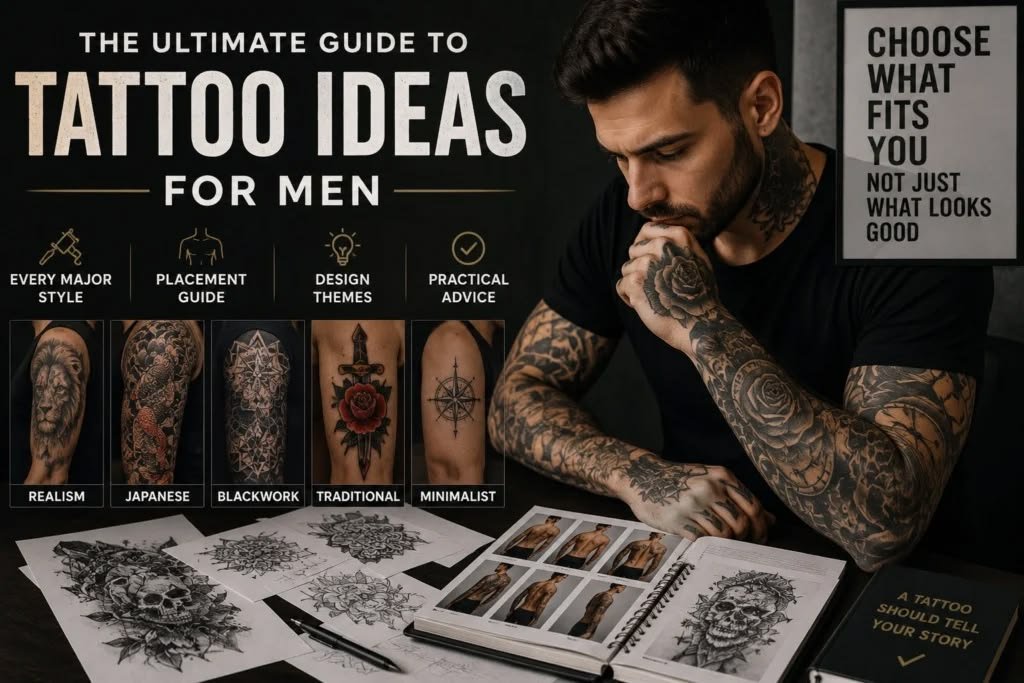
Choosing a tattoo style for men is less about finding the design that looks impressive in a photo and more about finding an artistic language that suits your personality body shape wardrobe and long-term taste. A lion rose skull dragon or geometric pattern can look completely different depending on whether it is done in realism blackwork American traditional fine line Japanese or another style.
That distinction matters because tattoo styles influence almost everything: how bold the finished piece appears how much detail it can hold which body placements work best and how easily the design can develop into a larger collection of tattoos.
For men considering their first tattoo or planning their next piece the smartest approach is to choose the style first subject second. This guide explains the major tattoo styles worth considering where they work best how to match them with your personal aesthetic and what to think about before booking an artist.
What Makes a Good Tattoo Style for Men?
There is no single tattoo style that belongs exclusively to men. Traditional Japanese realism fine line blackwork geometric lettering and other styles can work for anyone.
What often changes is the way people choose to combine style scale subject and placement. Larger pieces on the arm chest back shoulder and leg are common choices for men while black-and-grey work and bold graphic compositions are frequently requested. Current tattoo guides also emphasize that placement can influence the final appearance just as much as the artwork itself.
A good tattoo style should answer three practical questions:
- Does the visual language match your personal taste?
- Does the style suit the size and location you want?
- Can the artist you choose demonstrate strong work in that specific style?
The third point is particularly important. An artist who creates excellent realism may not be the right person for Japanese work or precise geometric tattooing. Tattoo styles involve different techniques composition principles and levels of technical control.
12 Tattoo Styles for Men Worth Considering
1. Blackwork
Blackwork is one of the strongest choices for men who prefer bold graphic tattoos. The style is built primarily around black ink and can range from large solid areas to intricate illustrative geometric ornamental or abstract designs.
Its biggest advantage is visual impact. A blackwork tattoo can look striking without relying on multiple colors.
For a modern wardrobe built around black denim neutral tones boots or streetwear blackwork can feel particularly cohesive. Large forearm upper-arm calf thigh and chest compositions can work well because the style can be adapted to different scales.
Blackwork is also broad enough to accommodate different personalities. You might choose a minimal black symbol a dense geometric sleeve an illustrative animal or a highly graphic abstract design.
2. American Traditional
American Traditional often called Old School is recognizable through bold outlines solid color strong shapes and classic imagery. Eagles roses snakes daggers anchors skulls and other traditional motifs are closely associated with the style.
This is a strong option if you want a tattoo that feels established rather than overly dependent on a short-lived trend.
The style works especially well for individual tattoos and patchwork collections. Several smaller traditional pieces can eventually become a cohesive sleeve without requiring every tattoo to be part of one continuous illustration.
Its visual strength also comes from restraint. Traditional tattooing does not attempt to reproduce every tiny detail. Bold outlines and clear shapes are part of its identity.
3. Black-and-Grey Realism
Black-and-grey realism is suited to people who want their tattoo to resemble a highly detailed photograph or realistic illustration.
Common subjects include portraits animals watches religious imagery landscapes flowers and dramatic objects. Instead of relying on bright color the artist creates depth through tonal variation shading highlights and contrast.
A realistic lion on the upper arm a family portrait on the chest or a detailed landscape on the forearm can make a powerful statement without looking cartoonish.
The major consideration is artist selection. Realism is unforgiving because small technical mistakes can become obvious when the finished tattoo is intended to look photographic.
4. Japanese Tattoo Style
Japanese tattooing often associated with Irezumi has a distinctive visual language built around subjects such as koi dragons phoenixes waves flowers masks and other traditional imagery.
One of its greatest strengths is composition. Instead of treating the tattoo as an isolated picture Japanese-inspired work can flow around the body and use background elements to connect different subjects.
This makes the style particularly effective for sleeves back pieces chest panels and larger thigh designs. Koi and dragons can be arranged to follow the body’s natural movement creating a tattoo that feels designed for the wearer rather than simply placed on the skin.
If you are considering Japanese tattooing research the style and its cultural context rather than treating traditional motifs as random decoration.
5. Fine-Line Tattoos
Fine-line tattooing offers a much quieter appearance than heavy blackwork or traditional designs.
The style uses delicate lines and can be used for small symbols botanical drawings minimalist animals architecture lettering or understated personal designs.
For men who dress in a polished minimalist contemporary way fine-line tattoos can complement rather than dominate an outfit.
However small and delicate does not automatically mean easy. Fine detail requires careful execution and extremely tiny designs should be planned with the natural limitations of tattooed skin in mind. Ask the artist to show healed examples rather than judging their work only from freshly completed tattoos.
6. Geometric Tattoos
Geometric tattoos focus on shapes symmetry repetition linework and structured composition. Circles triangles hexagons mandalas grids and other patterns can form the basis of the design.
This style works particularly well for someone who prefers clean visual structure.
Geometric designs can be minimalist or highly elaborate. A simple geometric symbol may suit the forearm or wrist while a large symmetrical composition can become a centerpiece on the chest shoulder back or thigh.
Precision is the key issue. A geometric tattoo can make small inconsistencies more noticeable because the viewer expects lines and shapes to align accurately.
7. Neo-Traditional
Neo-traditional tattoos take some of the bold characteristics of traditional tattooing and combine them with more elaborate shading detail dimensionality and broader color possibilities.
The result can feel more illustrative and dramatic while still maintaining strong outlines and readable shapes. Modern guides commonly distinguish neo-traditional from American Traditional through this increased detail and expanded visual range.
This style is a strong middle ground for someone who likes classic tattoo imagery but wants a more contemporary appearance.
Flowers animals mythical creatures portraits daggers and decorative compositions can all work well in neo-traditional.
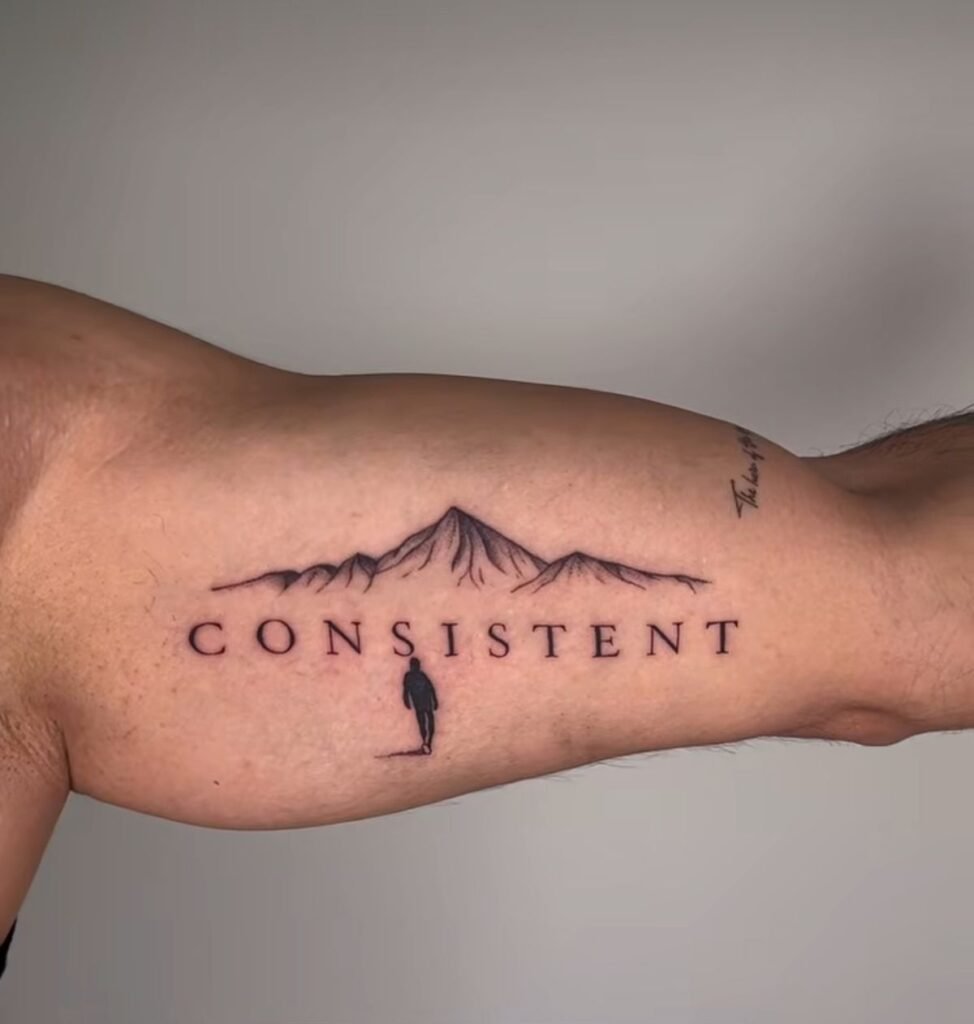
8. Minimalist Tattoos
Minimalist tattoos focus on simplicity rather than visual complexity.
A small mountain outline symbol date compass abstract shape or understated piece of lettering can communicate an idea without occupying a large area of the body.
Minimalism is especially appealing for a first tattoo because it can be relatively discreet. The forearm upper arm wrist ankle chest and calf are common areas to consider depending on the design.
The important thing is not to confuse minimalism with randomly making a detailed design smaller. Some concepts need enough space to remain readable. A skilled artist can simplify the idea while preserving what makes it recognizable.
9. Dotwork
Dotwork uses individual dots to create shading texture gradients and patterns.
It frequently overlaps with geometric ornamental mandala and blackwork designs. Instead of smooth shading the artist builds tonal transitions through carefully controlled stippling.
The effect can be subtle and highly detailed.
Dotwork suits people who appreciate intricate artwork and structured compositions. It can work particularly well on the forearm upper arm chest shoulder thigh and calf.
10. Lettering and Script
Lettering can be deeply personal but it deserves more planning than simply selecting a font from an online generator.
Names dates short phrases coordinates quotations and single words are common concepts. The font needs to match the meaning and the placement.
A clean serif design may create an elegant appearance while a hand-lettered script can feel more personal. Bold lettering may suit a larger forearm or chest composition.
Before committing examine the artist’s healed lettering work. Tiny text can lose clarity over time particularly when there is insufficient spacing between letters.
11. Illustrative Tattoos
Illustrative tattoos sit between several artistic traditions. They can resemble drawings graphic novels etchings sketches or detailed artwork.
This makes the category flexible. A black-ink wolf a surreal figure an architectural scene or a botanical composition can all be developed in an illustrative direction.
This style is particularly useful if you want something that feels artistic rather than immediately recognizable as a standard tattoo motif.
12. Realistic Color Tattoos
Color realism combines realistic rendering with a full color palette. Animals flowers landscapes objects and portraits can be rendered with substantial visual depth.
The result can be impressive but it requires an artist who understands color saturation contrast skin tone composition and realistic rendering.
Color also changes the maintenance conversation. Sun exposure affects tattoo appearance over time so good aftercare and sun protection are sensible parts of preserving the artwork.
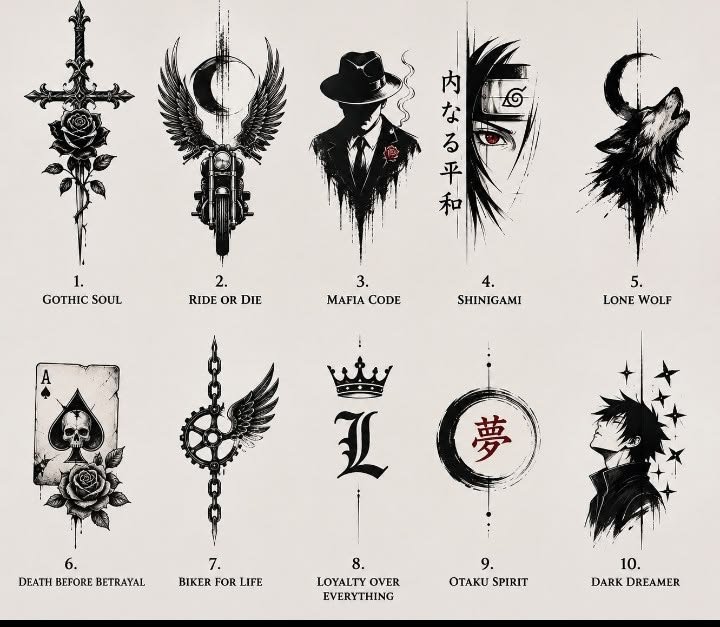
How to Choose the Right Tattoo Style
Start With Your Personal Aesthetic
Look at your existing style before choosing the tattoo.
If your wardrobe is mostly monochrome and structured blackwork black-and-grey realism geometric designs or minimalist work may naturally complement it.
If you prefer vintage clothing workwear denim boots and classic pieces American Traditional can create a strong visual connection.
If your style is expressive and artistic Japanese neo-traditional illustrative or color realism may give you more room to experiment.
The goal is not to make your tattoo match every outfit. It is to make sure the artwork feels consistent with the way you naturally present yourself.
Think About the Long-Term Design
Do not choose a tattoo solely because it looks impressive on Pinterest or Instagram.
Ask yourself whether you would still like the concept several years from now. Trends change quickly but personal taste also evolves.
A good approach is to separate subject from style.
For example you might love wolves but dislike hyper-realistic tattoos. That does not mean you need to abandon the idea. A wolf could be interpreted through blackwork geometric design American Traditional Japanese-inspired composition or illustrative linework.
The style gives the subject its personality.
Choose Placement Before Finalizing the Artwork
Placement affects proportions visibility movement and composition.
The forearm is versatile because it provides a relatively accessible canvas and allows many vertical or horizontal designs.
The upper arm and shoulder are useful for pieces that may eventually become part of a sleeve.
The chest offers space for larger compositions and can be kept relatively private when clothing covers it.
The back provides one of the largest canvases and works well for ambitious artwork.
The calf and thigh can accommodate substantial designs while giving the wearer control over visibility.
Hands fingers neck and other highly visible areas deserve more consideration because they can have greater social and professional implications depending on your environment.
Which Tattoo Styles Work Best for Different Personalities?
For the Minimalist Man
Consider fine line minimalist simple geometric or understated lettering.
The best designs usually have clean shapes and enough negative space to avoid visual clutter.
For the Bold and Athletic Look
Blackwork American Traditional Japanese and large geometric compositions can create a stronger visual presence.
Placement matters here. Shoulder upper arm chest and calf designs can interact naturally with the body’s proportions.
For the Classic Style
American Traditional is difficult to beat if you want bold recognizable tattoo art with a strong historical visual identity.
Neo-traditional is worth considering if you want the same confidence with morehttps://www.mrinkwells.com/
For the Artistic Personality
Illustrative Japanese geometric dotwork and blackwork styles provide substantial creative freedom.
Instead of copying a reference image work with the artist to develop an original composition around the idea you want.
For Someone Getting His First Tattoo
Start with a design that is meaningful enough to keep your interest but simple enough to understand.
The outer forearm or upper arm can be practical starting points because they offer useful space for many designs and allow relatively easy visibility control with clothing.
How to Find the Right Tattoo Artist
The best tattoo artist is not necessarily the person with the largest social-media following.
Look specifically for an artist who regularly works in your chosen style.
If you want realism examine realistic work. If you want geometric tattooing examine healed geometric work. If you want Japanese tattooing look for substantial Japanese compositions rather than one small dragon.
Pay attention to:
- Line consistency
- Shading quality
- Composition
- Proportion
- Healed results
- How the artist works with body shape
- Whether their portfolio consistently reflects your desired style
A portfolio full of different styles can demonstrate versatility but specialization can also be valuable. The right choice depends on the complexity of your design.
Common Mistakes to Avoid
Choosing a Style Because It Is Trending
A tattoo is permanent while trends are temporary.
You can take inspiration from current tattoo culture without copying a trend directly. A timeless concept interpreted in a style you genuinely enjoy is usually a stronger long-term decision.
Picking the Artist Before the Style
Artist quality matters but style compatibility matters too.
Choose the artistic direction first then search for artists who specialize in it.
Making a Detailed Design Too Small
A highly detailed image needs enough physical space.
Trying to squeeze a portrait complex landscape lettering and multiple symbols into a tiny area can compromise readability.
Copying Someone Else’s Tattoo Exactly
Reference images are useful for communicating direction but your final tattoo should be adapted to your body and preferences.
A professional artist can use references to understand the desired style composition subject and mood while creating a design that fits you.
Ignoring How the Tattoo Fits Future Work
If you think you may eventually want a sleeve chest piece or larger collection mention that during the consultation.
A single tattoo can be designed to stand alone but planning ahead can make future additions look much more intentional.
What Is the Best Tattoo Style for Men in 2026?
There is no universally best style. The strongest choice depends on the visual effect you want.
For bold impact blackwork and American Traditional are excellent choices.
For lifelike imagery black-and-grey realism or color realism makes sense.
For large flowing compositions Japanese tattooing is especially strong.
For clean and understated artwork fine line and minimalist styles are worth considering.
For structured artwork geometric and dotwork can be excellent options.
Current 2026 tattoo coverage continues to highlight a broad range rather than one dominant men’s style including minimalist work realism blackwork Japanese designs geometric tattoos and traditional approaches.
That variety is a positive development. Men no longer need to choose between a handful of stereotypical designs. Modern tattooing offers room for subtle artistic colorful symbolic traditional and highly personal work.
Frequently Asked Questions
What is the best tattoo style for men?
The best tattoo style for men is the one that matches your personal aesthetic desired subject placement and long-term preferences. Blackwork realism American Traditional Japanese geometric fine line and neo-traditional are all strong options.
What tattoo style looks the most masculine?
There is no objectively masculine tattoo style. Bold blackwork American Traditional Japanese geometric and large-scale realism are often associated with a stronger visual presence but the overall effect depends heavily on design size placement and composition.
What is a good first tattoo style for a man?
Minimalist fine-line traditional simple geometric or moderate-sized blackwork designs can be good starting points. The most important consideration is choosing a design that you genuinely want rather than choosing a style simply because it is considered easy for https://stylebydesign.site/
Which tattoo style ages best?
Bold well-spaced designs with strong outlines and clear shapes generally have advantages for long-term readability. American Traditional is a classic example because its visual language relies on strong outlines and solid shapes. However tattoo longevity also depends on placement sun exposure skin execution and aftercare.
Should men choose black or color tattoos?
That depends on the desired aesthetic. Black and grey can create a restrained versatile appearance while color can add energy and visual emphasis. Consider your wardrobe existing tattoos desired subject and the artist’s strength before deciding.
Where is the best place for a man’s first tattoo?
The outer forearm and upper arm are practical choices because they offer useful canvas space and can provide a balance between visibility and concealment. The best placement ultimately depends on the design and your personal and professional circumstances.
Final Thoughts
Choosing a tattoo style for men should start with the artwork’s visual language rather than a random list of popular designs. Blackwork creates graphic impact American Traditional delivers bold classic character realism focuses on lifelike detail Japanese styles excel at flowing large-scale compositions while fine line and minimalist tattoos offer a quieter approach.
The strongest tattoo is not necessarily the biggest or most complicated. It is the one where the subject style placement scale and artist’s skill all work together.
Before booking your appointment collect a few references decide what visual direction you genuinely like consider where the tattoo will sit on your body and then find an artist whose portfolio proves they can execute that style. That process gives you a much better chance of ending up with artwork that feels personal today and still feels like your style years from now.