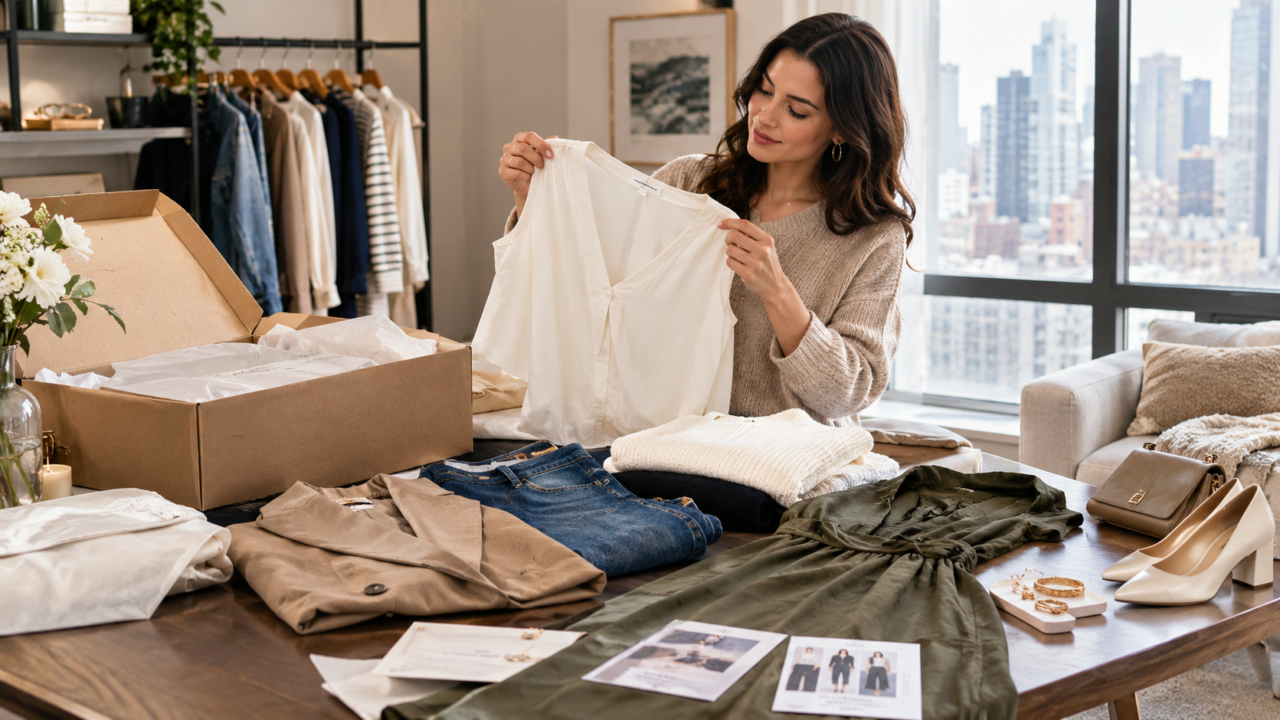
Finding clothes that fit your lifestyle, body shape, budget, and personal taste can take more time than most people expect. Clothing subscription boxes change that process by bringing curated fashion directly to your home. Some services send a stylist-selected box that you can try before buying, while others operate as clothing-rental memberships that let you rotate pieces without permanently adding them to your wardrobe.
For shoppers searching for the top-rated cloths subscription boxes in the US, the important distinction is that there is no single service that is best for everyone. A person rebuilding a work wardrobe needs something different from someone who wants designer dresses for events or a trend-conscious shopper who wants to experiment every month.
Current 2026 comparisons from Forbes Vetted identify Stitch Fix, Wantable, Nuuly, Dailylook, Rent the Runway, Armoire, and Trendsend as seven notable options, with different strengths ranging from overall personalization to value, casual fashion, designer rental, workwear, and human styling.
This guide compares those services by how they work, what type of wardrobe they suit, their pricing structure, flexibility, and the kind of fashion experience shoppers can realistically expect.
What Are Clothing Subscription Boxes?
A clothing subscription box is a fashion service that uses your preferences, measurements, lifestyle, or selected categories to send clothing to your home. Depending on the company, you may receive a stylist-curated selection, choose the individual pieces yourself, or select from a digital wardrobe and rent items for a set period.
The first is purchase-based styling. Services such as Stitch Fix, Wantable, Dailylook, and Trendsend send clothing for you to try. You purchase the pieces you want and return the rest. A styling fee may be charged, but it can often be applied toward your purchase.
The second is clothing rental. Instead of purchasing every garment, you pay for access to a rotating wardrobe. Nuuly, Rent the Runway, and Armoire fall into this category, although their plans and exchange systems differ.
That distinction matters because the financial value is different. A purchase box helps you build a permanent wardrobe. A rental service is more useful when you want variety without owning every garment.
Top-Rated Clothing Subscription Boxes in the US
Stitch Fix
Best for: Overall personalization and shoppers who want a stylist without committing to a traditional monthly subscription.
Stitch Fix remains one of the strongest choices for people who want personalized clothing recommendations but do not necessarily want a recurring rental membership. Its current model allows customers to request a Fix when they want one or set up automatic deliveries at a preferred frequency. Stitch Fix explicitly states that a subscription is not required.
The process begins with a style quiz covering preferences, sizing, fit, lifestyle, and price range. A human stylist then uses that information alongside Stitch Fix’s fit technology to select clothing and accessories.
Each Fix generally contains five pieces. The standard styling fee is currently $20 per Fix and is credited toward items you purchase. Shipping and returns are free, and the company says customers can choose delivery frequencies ranging from every few weeks to every three months, or simply order on demand.
One of Stitch Fix’s biggest advantages is the learning effect. Feedback from previous Fixes can help the stylist understand which silhouettes, fits, colors, and categories work for you.
That can be particularly useful if you know what you like aesthetically but dislike spending hours searching through online stores.
Stitch Fix also offers women’s, men’s, and children’s clothing, with options including petite, plus, and maternity categories.
Why choose it: You want personalized recommendations and the freedom to buy rather than rent.
Potential limitation: If your main objective is constant access to new designer or trend-driven pieces, a rental membership may offer more wardrobe rotation.
Wantable
Best for: Value-conscious shoppers who want a larger selection to try.
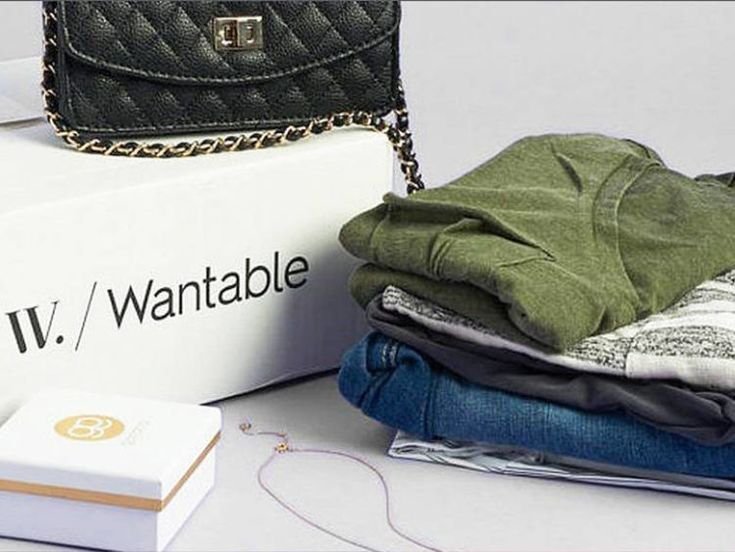
Wantable takes a slightly different approach by sending an Edit based on a selected category and your style preferences. Current information from Wantable says customers can choose categories such as Style, Active, Sleep & Body, or Men’s Active. A stylist selects nine items based on preferences, size, and budget.
The current styling fee is $20 and is credited toward a purchase when you keep at least one item. Shipping, returns, and exchanges are offered free according to Wantable’s current information.
The larger box is one reason Wantable can appeal to shoppers who want more experimentation. Nine pieces give you more combinations to consider than a smaller five-item box.
That can be particularly useful for someone building a seasonal wardrobe. For example, an Edit could contain a pair of trousers, a knit top, a blouse, a casual dress, and layering pieces. Even when you do not keep everything, seeing different combinations can help clarify your preferences.
Forbes Vetted currently identifies Wantable as its best-value choice among the women’s clothing subscription services it evaluated, particularly because of its larger nine-item box and $20 styling fee.
Why choose it: You want plenty of pieces to try without paying a high styling fee.
Potential limitation: The service uses themed Edit categories, so it may not offer the same open-ended wardrobe approach as a broad fashion marketplace.
Nuuly
Best for: Trend-conscious shoppers who prefer renting clothes rather than buying every new look.
Nuuly is fundamentally different from Stitch Fix and Wantable because it is a rental subscription. The current standard plan costs $98 per month after any introductory offer and allows members to choose six items from its available selection. The company says its inventory includes hundreds of brands and thousands of styles, covering categories such as workwear, denim, dresses, vintage pieces, and casual clothing.
The appeal is wardrobe flexibility.
You can choose six items, wear them during the month, and return the pieces rather than permanently adding them to your closet. Laundry and dry cleaning are included, and members can purchase pieces they decide they want to keep.
Nuuly also allows members to pause or cancel, which makes the service more flexible for shoppers who do not need a fresh rental every month.
From a fashion perspective, rental can make sense for people who enjoy changing their aesthetic. You might experiment with western-inspired clothing for one trip, statement pieces for another month, and more polished workwear later.
The model also helps reduce the pressure to buy an item simply because it is exciting for one season. You can test a silhouette before deciding whether it deserves permanent closet space.
Forbes Vetted currently lists Nuuly as a strong casual clothing choice, highlighting its range of everyday styles, trend-focused pieces, and size availability.
Why choose it: You want variety, experimentation, and access to many styles without buying everything.
Potential limitation: Availability can fluctuate, especially for popular seasonal pieces and particular size-color combinations.
Rent the Runway
Best for: Designer fashion, special occasions, and shoppers who want access to premium labels.
Rent the Runway is one of the clearest choices for someone who views fashion as a rotating wardrobe rather than a collection of permanent possessions.
Its current subscription structure allows members to choose five items per shipment, with different plans determining how many shipments can be received each month. The company currently lists plans starting at $129 per month after introductory pricing, with higher-priced plans allowing more frequent shipments.
The service offers access to hundreds of brands and thousands of styles. Members can choose pieces across categories including dresses, tops, bags, and other fashion items.
This model is particularly interesting for occasion dressing.
A wedding guest may not want to spend hundreds of dollars purchasing a dress that will only be worn a few times. The same applies to holiday events, professional functions, vacations, parties, or formal dinners.
Rent the Runway also handles cleaning and pressing as part of the service.
The styling advantage is obvious: instead of repeatedly buying garments for individual events, you can rotate higher-end fashion through your wardrobe.
Why choose it: You want designer fashion and frequent wardrobe rotation.
Potential limitation: It costs considerably more than entry-level styling services, so the value depends on how frequently you use the wardrobe.
Armoire
Best for: Professional wardrobes and polished everyday dressing.
Armoire is another rental-focused service, but its positioning is especially attractive for people who need sophisticated clothing for work.
Forbes Vetted currently lists Armoire as its best work-clothing subscription among the services it evaluated. The service offers rental plans designed around a rotating wardrobe, with options for different numbers of items and exchanges.
The concept is useful for professionals who want variety but do not want to own a large number of office outfits.
Consider a typical workweek. Instead of purchasing multiple blouses, trousers, dresses, jackets, and seasonal layers, a rental model lets you rotate a smaller wardrobe of higher-quality pieces.
Armoire’s emphasis on professional styling can also be useful for shoppers whose clothing needs are more specific than simply “casual fashion.”
A polished office wardrobe requires attention to proportion, fabric behavior, tailoring, and versatility. A structured blazer that works with trousers, denim, and a dress is more useful than a statement piece that works only once.
Why choose it: Your wardrobe is heavily focused on workwear and sophisticated everyday clothing.
Potential limitation: It is a rental service, so it may not be the best choice if your primary goal is building a permanent wardrobe.
Dailylook
Best for: Shoppers who want a highly personalized box with a broad selection.
Dailylook focuses heavily on personal styling. Its current service information says stylists can select up to 12 items per box, with flexible delivery options and free shipping both ways.
The larger box size makes Dailylook appealing for people who want to create complete outfits rather than evaluate individual pieces.
That distinction is important.
A blouse may look attractive by itself but become much more useful when it works with jeans, tailored trousers, a skirt, or a jacket already hanging in your closet.
A good stylist therefore needs to think beyond individual garments and consider wardrobe relationships: color coordination, silhouette balance, occasion, proportion, and repeat wear.
Dailylook also emphasizes the ability to preview and modify the box before shipment, which can give shoppers more control over what arrives.
Forbes Vetted currently identifies Dailylook as its variety pick, particularly for shoppers interested in a mix of established and less familiar brands.
Why choose it: You want a larger, stylist-curated selection and more control before the box ships.
Potential limitation: The styling fee is higher than Wantable and Stitch Fix, so the service makes more sense when you intend to purchase several pieces.
Trendsend
Best for: Shoppers who prefer human styling and complete outfit ideas.
Trendsend is operated by Evereve and uses human stylists to curate clothing around a customer’s preferences. Forbes Vetted currently describes it as its personalized clothing subscription pick.
One interesting part of the service is the emphasis on outfits rather than isolated garments.
A strong styling box should make it easier to imagine how pieces work together. For example, a pair of trousers becomes more valuable when the stylist provides a compatible blouse and layer rather than treating every garment as a separate purchase.
Trendsend also allows different delivery frequencies, including monthly, bi-monthly, quarterly, and on-demand options, according to Forbes Vetted’s current review.
That flexibility can make sense for seasonal shoppers. You might need a refresh before summer, another before autumn, and a more formal update during the holiday season rather than receiving clothing every month.
Why choose it: You want a human stylist to create coordinated looks around your lifestyle.
Potential limitation: Its size availability may not be as broad as some competitors, so shoppers should check current sizing before signing up.
Clothing Subscription vs. Clothing Rental
The biggest decision is not necessarily which company has the best clothes. It is deciding whether you want to own or rotate them.
Purchase-based subscription boxes are essentially personalized shopping services.
You receive clothing, try it at home, keep what works, and return the rest. The pieces that stay become part of your permanent wardrobe.
This model works well when your closet needs practical additions.
Imagine you have enough dresses but lack versatile trousers, lightweight jackets, or everyday tops. A stylist can help fill those gaps.
Rental subscriptions work differently.
You pay for temporary access to garments and return them after wearing them. This makes them particularly useful for fashion experimentation, travel, special occasions, seasonal dressing, or people who simply dislike repeating the same outfits frequently.
The financial calculation is also different.
Buying a $150 dress means the garment remains yours. Renting a dress for a smaller portion of that cost may be more economical if you only expect to wear it once or twice.
But if you wear something every week for several years, purchasing may provide better long-term value.
The right choice therefore depends on cost per wear, not just monthly price.
How to Choose the Right Clothing Subscription Box
Personalization and Stylist Control
Look at how much influence you have over what arrives.
Some services rely heavily on a style quiz and stylist selection. Others let you preview your box or select individual pieces.
If you have very specific preferences, more control can be useful.
For example, someone who wears only neutral colors and straight-leg trousers may become frustrated with a service that repeatedly sends experimental silhouettes.
On the other hand, a shopper who wants to discover new styles may enjoy having a stylist introduce unfamiliar shapes.
Stitch Fix uses a style profile and feedback system to refine recommendations over time.
Budget and Pricing
Do not compare monthly subscription prices without checking what the payment actually gives you.
A $20 styling fee is not equivalent to a $98 rental membership.
One is a styling charge that can be credited toward clothing you purchase. The other provides temporary access to multiple garments.
Before joining, determine:
- Is there a monthly membership fee?
- Is there a styling fee?
- Does the fee become shopping credit?
- How many garments are included?
- Are shipping and returns included?
- Are cleaning costs included?
- Can you pause?
- Can you cancel easily?
- What happens if you keep nothing?
Those details often matter more than the headline price.
Sizing and Fit
Fit should be one of your highest priorities.
A beautiful garment is not useful if its shoulder width, rise, sleeve length, or waist placement is wrong for your body.
Pay attention to size availability, measurements, fit feedback, and whether the service learns from previous purchases.
Stitch Fix, for example, says its styling process combines customer profile information, fit technology, brand selection, and feedback from previous Fixes.
Rental services create another challenge: even if a company carries your size, a particular garment may not be available when you want it.
That is why planning matters for weddings, vacations, holidays, and other important events.
Frequency and Flexibility
Do not subscribe to a monthly box simply because the service calls itself a subscription.
Think about your actual shopping behavior.
If you buy clothes only four times a year, quarterly or on-demand styling may make more sense.
If you constantly need new work outfits, a rental service with frequent exchanges may be more useful.
Stitch Fix is particularly flexible because customers can request Fixes on demand or select recurring delivery intervals.
Nuuly and Rent the Runway are more appropriate for shoppers who specifically want an ongoing rental wardrobe.
Are Clothing Subscription Boxes Worth the Money?
They can be, but the answer depends on how you shop.
A subscription box is most valuable when it solves a real problem.
If you dislike browsing dozens of websites, struggle to understand which silhouettes suit you, need professional clothing, or want to experiment with fashion without buying everything, personalized styling can save considerable time.
The value becomes less obvious if you already enjoy shopping, know your preferred brands and sizes, and rarely need wardrobe updates.
There is also a psychological advantage to styling services: they can introduce pieces you would not have searched for yourself.
That can be useful, but it requires an open mind.
A stylist may send a color outside your usual palette or a silhouette you would normally ignore. Instead of rejecting it immediately, consider whether the difference is actually flattering.
Fashion development often happens at the boundary between familiarity and experimentation.
Rental services have another advantage: they can help prevent the closet from becoming a storage space for short-lived trends.
If you want to try a dramatic silhouette for one season, renting can provide the experience without committing permanent closet space.
Common Mistakes to Avoid
One common mistake is choosing a service based entirely on the lowest advertised price.
The cheapest option is not automatically the best value.
A $20 styling fee can be excellent if you find several useful pieces. It can be poor value if you dislike the selections and never purchase anything.
Another mistake is ignoring your existing wardrobe.
Before subscribing, think about what you already own.
If your closet is full of black trousers, receiving another pair does not solve a wardrobe problem.
Create a short list of genuine gaps:
- Everyday tops
- Work trousers
- Casual dresses
- Lightweight layers
- Denim
- Occasionwear
- Seasonal pieces
- Accessories
Then communicate those needs clearly to your stylist when the service allows it.
A third mistake is expecting perfect results from the first box.
Personal styling improves when the service receives useful feedback.
Tell the stylist what worked and what did not. Do not simply say that you disliked an item. Explain why.
Was the fabric too heavy?
Was the neckline uncomfortable?
Did the rise feel wrong?
Was the color difficult to combine with your wardrobe?
Specific feedback gives future selections more direction.
Another mistake is confusing novelty with value.
A subscription can deliver a constant stream of new clothing, but a wardrobe does not become better simply because it becomes larger.
The strongest wardrobe is usually built around pieces that work together.
Which Clothing Subscription Box Is Best for You?
If you want an easy starting point, Stitch Fix is one of the strongest all-around options. Its combination of personal styling, flexible ordering, broad categories, and no required subscription makes it approachable for first-time users.
If getting more pieces for a relatively modest styling fee matters most, Wantable deserves attention.
If you want to rent contemporary clothing rather than buy everything, Nuuly is a strong choice.
If designer clothing and special occasions are your priority, Rent the Runway is the more obvious fit.
For professional wardrobes, Armoire offers a rental-oriented alternative with an emphasis on polished clothing.
If you want a large stylist-curated box and more control before it ships, Dailylook is worth considering.
And if you prefer a human stylist focused on complete looks, Trendsend can be particularly interesting.
These distinctions are more useful than a simple ranking because the best service depends on what you expect the box to accomplish.
Final Verdict
The top-rated cloths subscription boxes in the US are not interchangeable. Some are essentially personal-shopping services, while others function as rotating digital closets.
For most first-time shoppers, Stitch Fix offers a particularly accessible entry point because there is no required recurring subscription and its styling fee is credited toward purchases.
Wantable makes sense for shoppers who want a larger selection in each Edit. Nuuly is better suited to people who value wardrobe rotation and trend experimentation. Rent the Runway takes the concept into designer territory, while Armoire focuses more heavily on polished professional dressing.
The smartest approach is to decide what problem you are trying to solve before choosing a company. If you need clothes to own, look at purchase-based styling. If you need variety without permanent ownership, consider rental. If you want designer pieces for occasional use, calculate the cost per wear. And if fit is your biggest concern, prioritize services that collect detailed measurements and learn from your feedback.
A good subscription should not simply send you more clothes. It should make your wardrobe more useful, more intentional, and easier to dress.
FAQ
What are the best clothing subscription boxes in the US?
Stitch Fix, Wantable, Nuuly, Rent the Runway, Armoire, Dailylook, and Trendsend are among the notable clothing subscription services currently available in the US. Their strengths differ, so the best choice depends on whether you want to buy clothing, rent it, access designer pieces, or receive personalized styling.
Is Stitch Fix actually a subscription?
Not necessarily. Stitch Fix currently allows customers to order a Fix on demand and does not require a recurring subscription. Customers can also choose automatic delivery schedules if they prefer regular styling.
What is the difference between a clothing subscription and clothing rental?
A clothing subscription can refer to either model, but purchase-based services generally send clothing that you can buy after trying it. Rental services charge for temporary access and require you to return the garments.
Is Nuuly worth it for everyday clothing?
Nuuly can make sense for shoppers who want frequent wardrobe variety without purchasing every garment. Its current standard plan includes six rental items per month, with cleaning and returns included.
Which clothing subscription is best for designer fashion?
Rent the Runway is particularly suited to designer-focused rental. Its current subscription offers access to hundreds of brands and thousands of styles, with five items kept at home at a time on its listed plans.
Which clothing subscription is best for work clothes?
Armoire is a strong option for professional wardrobes because its rental model focuses on polished clothing that can be rotated rather than permanently purchased. Forbes Vetted currently identifies it as its work-clothing pick.
Are clothing subscription boxes cheaper than shopping normally?
Not automatically. Their value comes from convenience, personalization, wardrobe rotation, or access to clothing you might not otherwise buy. Compare the total subscription or styling cost with how much you would realistically spend on clothing without the service.
Can I cancel or pause clothing subscription services?
Policies differ. Some services offer on-demand ordering or flexible pauses, while rental services have specific renewal and return requirements. Always check the current cancellation terms before joining.