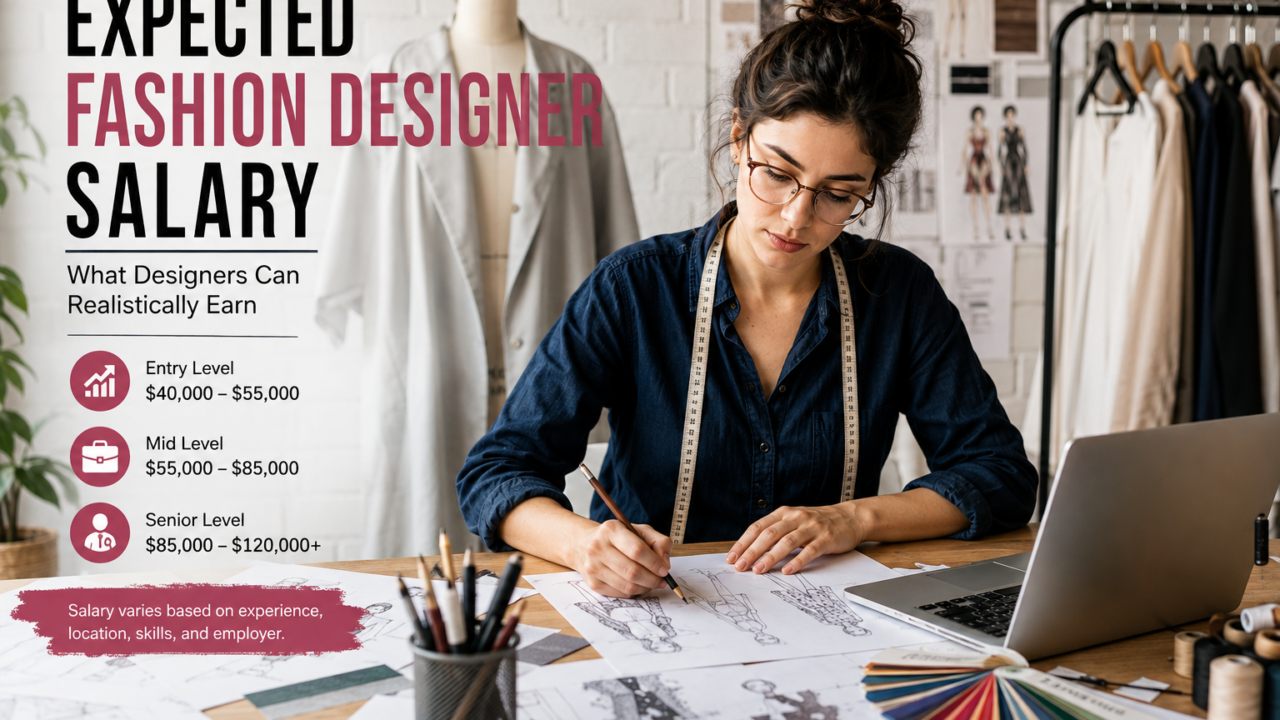
Choosing a career in fashion can be exciting but creativity alone does not answer one of the biggest practical questions: what is the expected fashion designer salary?
The answer depends on far more than a job title. A fashion designers income can change significantly based on experience location education technical skills the type of employer and the part of the fashion industry they work in. A designer creating mass-market apparel for a large company may have a very different salary from someone working in luxury fashion sportswear costume design or as an independent designer building a personal label.
For aspiring designers in the United States and professionals comparing opportunities around the world understanding these differences is essential. Salary expectations should be based on the reality of the industry rather than the highest numbers seen in job advertisements or social media success stories.
This article explains what influences the expected fashion designer salary how earnings typically develop throughout a career which fashion roles may offer stronger income potential and what designers can do to improve their long-term value in a competitive industry.
What Is the Expected Fashion Designer Salary?
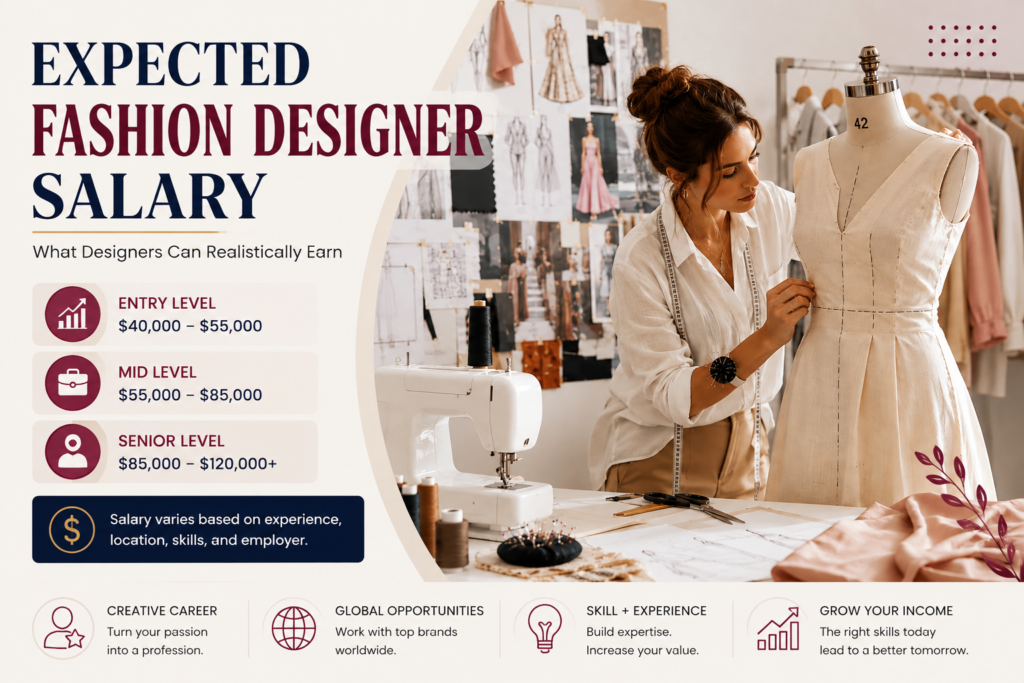
There is no single salary that represents every fashion designer. Fashion design covers a wide range of roles from entry-level assistant designers to senior creative professionals leading product categories or entire design teams.
In the United States fashion designer salaries can vary considerably depending on the employer and level of responsibility. An early-career designer may begin with a relatively modest salary while building technical knowledge and a professional portfolio. Designers with several years of experience strong commercial understanding and specialized skills can earn substantially more.
The highest compensation is often associated with senior leadership established brands specialized product categories and positions where the designer has direct responsibility for commercially important collections.
For a realistic view of salary it helps to think in terms of career stages rather than searching for one universal number.
Entry-Level Fashion Designer Salary
An entry-level fashion designer is usually still developing professional confidence production knowledge and industry relationships. Common responsibilities may include assisting with mood boards technical sketches fabric research sample coordination trend research color selection and design revisions.
At this stage employers are often evaluating more than artistic talent. They want to see whether a designer understands how a garment moves from an idea to a finished product. A graduate with excellent illustration skills but limited knowledge of construction fabric behavior fit or production may need time to become fully effective in a commercial environment.
Starting salaries can also depend heavily on location. Jobs in major fashion centers may offer higher pay but housing and everyday living costs can reduce the financial advantage.
Mid-Level Fashion Designer Salary
After gaining experience designers often take on greater ownership of collections or product categories. They may research trends independently develop seasonal concepts communicate with factories or suppliers review samples and work closely with merchandising and product development teams.
This is where a designer’s earning potential can become more closely connected to practical business value.
A mid-level designer who understands both aesthetics and production is generally more valuable than someone who focuses only on creative concepts. Fashion companies need designs that can be produced priced appropriately fit the target customer and support the overall direction of the brand.
Specialization can also become more important at this stage. Experience in areas such as denim activewear knitwear accessories footwear luxury products or technical apparel can create stronger opportunities than a completely general portfolio.
Senior Fashion Designer and Leadership Salaries
Senior designers are usually expected to contribute at a higher strategic level. They may lead categories mentor junior designers approve concepts manage seasonal calendars and coordinate with merchandising marketing production and executive teams.
A senior role requires strong judgment. The designer must understand what is creatively relevant while also recognizing what fits the brand customer price point and production capabilities.
Design directors creative directors and other leadership positions can command significantly higher compensation although these roles are limited and highly competitive. Their responsibilities often extend beyond designing individual garments. They may shape the visual direction product identity and long-term creative strategy of a brand.
What Factors Affect a Fashion Designer’s Salary?
The expected fashion designer salary is influenced by several connected factors. Looking only at years of experience can give an incomplete picture.
Experience and Professional Track Record
Experience matters because fashion companies value designers who can consistently move ideas through the complete development process.
A professional portfolio showing commercially successful collections strong technical work and experience with recognized product categories can strengthen a designer’s position during salary negotiations.
Years in the industry are useful but the quality of that experience often matters more. A designer who has spent five years handling substantial responsibility may be more competitive than someone with the same number of years in narrowly defined support roles.
Location and Cost of Living
Fashion employment is concentrated in certain cities and regions. In the United States major metropolitan areas with established fashion retail media or luxury industries may offer more opportunities.
New York has traditionally been one of the country’s most important fashion centers while Los Angeles has strong connections to apparel manufacturing entertainment denim streetwear and contemporary fashion. Other cities and regions may offer opportunities through retail companies manufacturers sportswear businesses and growing independent brands.
Higher salaries in expensive cities should always be considered alongside the cost of housing transportation and other daily expenses. A lower salary in a more affordable area can sometimes provide a better overall financial situation.
Remote and hybrid work have also changed parts of the industry although many design and product development positions still benefit from physical access to samples fittings showrooms factorieshttps://stylebydesign.site/ and creative teams.
Type of Fashion Employer
The company a designer works for can have a major effect on compensation.
Large apparel corporations may offer structured salary levels benefits and clearer promotion paths. Luxury brands may provide opportunities to work with premium materials and highly developed design systems although competition for positions can be intense.
Mass-market retailers need designers who understand commercial products customer demand pricing and seasonal volume. Sportswear and performance brands may place a high value on technical knowledge. Smaller labels may offer more creative responsibility but sometimes have less predictable financial resources.
An independent designer faces an entirely different income structure. Building a personal label can create substantial potential but income may be irregular especially during the early stages.
Specialization and Technical Skills
One of the clearest ways to improve career value is to develop expertise that goes beyond general fashion styling or illustration.
Technical fashion knowledge can include pattern awareness garment construction fit analysis textile understanding digital design tools product development and manufacturing processes.
Specialized designers can be particularly valuable because they solve specific problems for employers. For example designing outerwear requires different knowledge from designing lingerie footwear denim or performance clothing.
Creative vision remains important but employers also need designers who can communicate effectively with technical teams and understand the limitations and possibilities of production.
How Education Affects Fashion Designer Earnings
A degree in fashion design can provide structured training portfolio development and access to industry networks. However a degree alone does not guarantee a high salary.
Employers usually pay attention to the combination of education portfolio quality technical skills internships and professional experience.
A strong fashion education can help a designer understand the design process in a more organized way. Students may learn illustration textiles garment construction pattern development fashion history digital tools and collection development.
Still practical experience often becomes the deciding factor when entering the job market.
Is a Fashion Degree Necessary?
A formal degree can be useful but it is not the only route into fashion design. Some professionals develop their careers through vocational training technical programs apprenticeships internships or direct industry experience.
For someone without a degree a strong portfolio becomes even more important. Employers need evidence that the candidate can design communicate ideas understand products and contribute to a professional workflow.
The best path depends on the individual’s resources career goals and the type of fashion role they want to pursue.
Which Fashion Design Jobs Have Stronger Earning Potential?
Fashion design is not one single career. Some roles focus mainly on creativity while others combine design with technology management or https://www.careergirls.org/commercial strategy.
Apparel Designer
Apparel designers create clothing for categories such as womenswear menswear childrenswear casualwear formalwear or contemporary fashion.
Income can vary depending on the size of the company product category and level of responsibility. Designers working for established brands may have more predictable salaries than those working for small independent labels.
Technical Designer
Technical designers focus on how garments are constructed and fitted. Their work may involve measurements specifications fit sessions construction details and communication with production teams.
This role can be attractive for people who enjoy the practical side of fashion. Strong technical skills can also make a professional valuable across different apparel categories.
Footwear and Accessories Designer
Footwear and accessories require specialized knowledge of materials construction components and manufacturing.
Designers with expertise in bags shoes jewelry or other accessories may build highly focused careers. Because the skills can be specialized strong professionals may have valuable opportunities with established brands.
Sportswear and Performance Apparel Designer
Performance apparel combines fashion with function. Designers may need to consider movement durability comfort weather resistance and material performance.
Knowledge of technical textiles and product innovation can increase a designer’s professional value in this area.
Costume Designer
Costume designers work in entertainment theater television film and live performance. Income can vary widely based on the size and budget of a production location professional reputation and the nature of the employment arrangement.
This path may appeal to designers who enjoy storytelling and character development rather than commercial seasonal collections.
How Fashion Designers Can Increase Their Salary Potential
Increasing income in fashion usually requires more than simply waiting for annual raises. Designers who develop useful skills and take on greater responsibility often have stronger career leverage.
Build a Portfolio That Shows Professional Value
A portfolio should demonstrate more than attractive sketches.
A strong professional portfolio can show research concept development color direction material choices technical details garment development and finished products. Employers want to understand how a designer thinks and how that thinking translates into a product.
Including a clear explanation of the designer’s role in collaborative projects can also be useful. Fashion is often created by teams, so clarity about individual contribution matters.
Learn the Commercial Side of Fashion
A beautiful design is not automatically a successful product.
Designers who understand target customers pricing merchandising seasonal calendars and market positioning can contribute more effectively to a business.
This does not mean creativity should be replaced by sales thinking. The strongest commercial designers usually understand how to balance originality with relevance.
Develop Technical and Digital Skills
Digital fashion tools continue to influence how collections are developed and presented. Skills related to design software technical specifications 3D visualization and digital workflows can strengthen a designer’s profile.
Technology should support design ability rather than replace it. A designer who understands proportion construction materials and customer needs is better positioned to use new tools effectively.
Choose a Valuable Area of Specialization
Specialization can help a designer stand out in a crowded field.
Someone with deep knowledge of knitwear denim tailoring technical outerwear footwear or another category may be easier for employers to place in a specific role than a candidate with only broad general experience.
The best specialization is usually one that matches both personal interest and real industry demand.
Learn How to Negotiate Professionally
Salary discussions should be based on responsibilities experience skills and market conditions.
Before negotiating designers should understand the scope of the role. Managing a category leading junior team members traveling for product development or handling additional responsibilities may justify a different compensation level.
Benefits bonuses flexibility professional development and promotion opportunities can also be part of the overall employment package.
Expected Fashion Designer Salary in the USA Compared With Global Markets
The United States remains one of the largest and most influential fashion markets but fashion design is a global profession.
Salary levels can differ substantially between countries because of local wages living costs manufacturing structures currency differences and the size of the domestic fashion industry.
Fashion Careers in Major Global Markets
Cities such as New York Paris Milan London Tokyo Seoul and other international centers offer different career environments.
Paris and Milan are strongly associated with luxury and heritage fashion. London has a reputation for design education emerging talent and creative experimentation. New York offers opportunities across luxury contemporary fashion retail and commercial apparel. Asian markets continue to play major roles in manufacturing consumer trends beauty\ streetwear and fashion technology.
A higher salary in one country does not automatically mean a better career. Designers should consider visa requirements working conditions career progression language industry networks and cost of living.
For global professionals international experience can also improve career development by exposing designers to different production systems and consumer markets.
Is Fashion Design a Good Career Financially?
Fashion design can provide a sustainable and rewarding career but it is not a guaranteed path to high income.
The industry is competitive and early-career salaries may not always match the public perception of fashion as a glamorous profession. Designers often need time to build portfolios develop relationships and gain technical confidence.
Financial prospects generally improve when a designer becomes known for reliable skills and valuable expertise.
A realistic approach is to treat fashion as both a creative discipline and a professional industry. Designers who understand the business side of product development are often better prepared for long-term career growth.
For someone considering the field, the key question should not only be, “How much do fashion designers make?” It should also be, “What kind of designer do I want to become, and what skills will make my work valuable?”
Practical Career Advice for Aspiring Fashion Designers
Aspiring designers should begin building professional habits early.
A portfolio should be updated regularly rather than created only when applying for jobs. Internships, student projects, freelance work, and collaborations can all provide useful material if the designer can clearly explain the work.
It is also helpful to follow the complete journey of a garment. Understanding design is essential, but learning about fabrics, sampling, fit, production, and retail creates a more complete professional foundation.
Networking remains valuable, although it does not need to feel artificial. Attending industry events, connecting with classmates and colleagues, participating in professional communities, and maintaining a clear online portfolio can create opportunities over time.
Career growth is often gradual. A designer may begin in one category and later move into a more specialized role, management position, or different market segment. Remaining adaptable can be just as valuable as having a strong personal aesthetic.
Frequently Asked Questions
What is the expected fashion designer salary for beginners?
Entry-level fashion designers generally earn less than experienced professionals because they are still developing industry knowledge and professional responsibility. Starting pay varies by location, employer, education, technical skills, and the type of fashion business. A strong portfolio and relevant internship experience can improve early career opportunities.
Can fashion designers earn six figures?
Yes, some fashion designers can earn six-figure incomes, particularly in senior, specialized, management, or leadership roles. However, this is not the standard salary for every designer. Reaching that level usually requires significant experience, valuable expertise, responsibility, or success within a profitable company or personal business.
Do fashion designers make more in New York or Los Angeles?
Both cities offer important fashion opportunities, but salary depends on the specific employer and role. New York has a broad range of fashion companies and corporate headquarters, while Los Angeles has strong connections to apparel manufacturing, denim, entertainment, contemporary fashion, and streetwear. Cost of living should be considered alongside salary.
What type of fashion designer earns the most?
There is no single category that always pays the most. Senior designers, design directors, creative leaders, and highly specialized professionals can have strong earning potential. Compensation is often influenced by responsibility, employer size, product category, technical expertise, and commercial impact.
Is fashion design a stable career?
Fashion design can provide long-term career opportunities, but stability depends on skills, adaptability, and the health of the employer or market. Designers with strong technical knowledge, commercial awareness, and the ability to work across changing trends and technologies may have broader career options.
Can a freelance fashion designer earn a good income?
Freelance fashion designers can earn good incomes, but earnings are often less predictable than a traditional salary. Income depends on the number and quality of clients, project scope, rates, professional reputation, and the ability to manage the business side of freelancing.
Conclusion
Understanding the expected fashion designer salary requires looking beyond a single number. Income can change dramatically depending on experience, specialization, location, employer, and professional responsibility.
For new designers, the strongest long-term strategy is to build a combination of creative ability, technical knowledge, and commercial awareness. A portfolio may open the first door, but the ability to develop products, solve design problems, communicate with teams, and understand the market is what can support career growth over time.
Fashion remains a competitive industry, and financial success is not automatic. Still, designers who develop valuable expertise and make thoughtful career choices can move beyond entry-level roles into specialized, senior, or leadership positions with stronger earning potential.
The most useful way to approach the expected fashion designer salary is to connect salary expectations with a career plan. Decide which part of the industry interests you, identify the skills that employers value in that area, and build experience that gives you greater responsibility. That approach provides a far more realistic path to higher earnings than simply chasing the highest advertised salary.